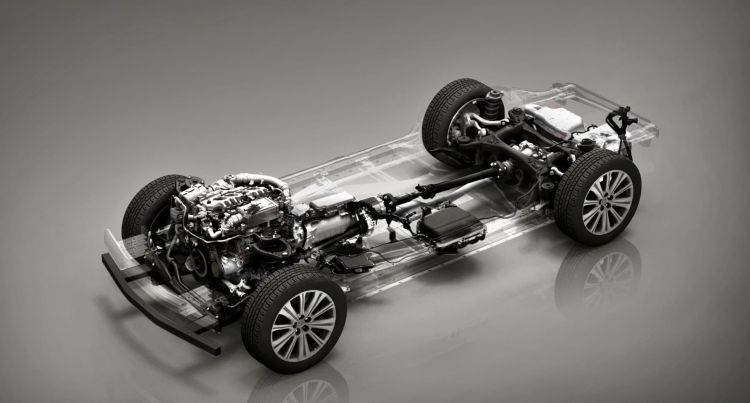
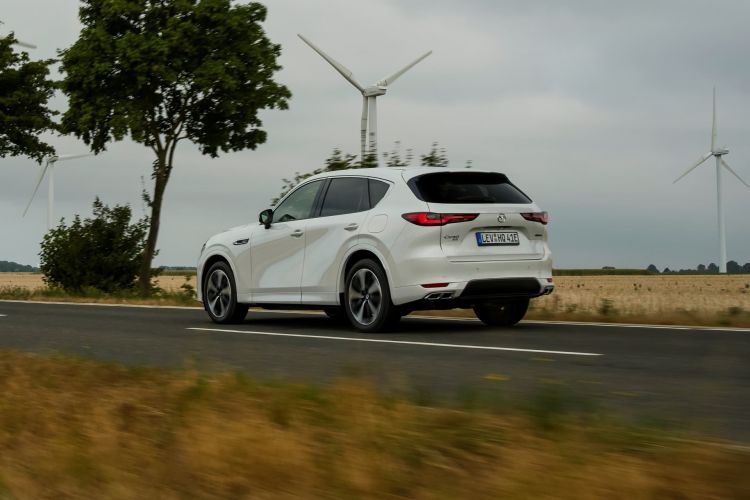
The new generation of Mazda engines with 6 cylinders in line finally discovers the details about its gasoline variant, however we have a surprise and not a good one. It will be in the Mazda CX-60 where the 6 in line will be released, engines that will be available in Europe from 2023 Both in diesel and gasoline version. And although we already knew the details of the diesel versions, today we are going to discover that the benefits of the 3.3 Skyactiv-X 6-cylinder engine will not be as spectacular as expected.
It has been in the Australian market where we have been able to see for the first time the details of the new Skyactiv-X 6-cylinder engine. This engine with 3.3 liters of displacement will develop a maximum power of 280 hp between 5,000 and 6,000 rpm and maximum torque of 450 Nm between 2,000 and 3,500 rpm. Taking into account the cylinder capacity, the declared maximum power is striking, a figure that we can consider modest considering that Today it is easy to find 2.0 Turbo engines capable of moving around 300 hp on the market.existing cases like that of AMG where it is possible to far exceed 400 hp.
3.3 liters and 6 cylinders for only 280 CV of power in exchange for a low consumption?
To put this gasoline engine in context, we must bear in mind that Mazda’s new 6 inline also has an alternative 3.3 turbodiesel capable of reaching 254 hp and 550 Nm, in addition to a plug-in hybrid variant of 327 hp and 500 Nm based on a 2.5 naturally aspirated four-cylinder. But if we look further into the Mazda range internationally, we also discover from the existence of a 2.5 Turbo 4-cylinder petrol engine capable of developing 250 hp and 433 Nma variant that unfortunately is not marketed in Europe.
Therefore, although we will still have to wait a few weeks to find out the final homologation figures for the new 3.3 Skyactiv-X 6-cylinder for Europe, the data in Australia already tells us that this gasoline engine will not be a propellant that stands out for its power. . Having said that, where this propellant could stand out is in efficiency, since we know that Mazda has designed this new generation of engines to meet the new Euro 7 regulations without problems. The combination of a new generation of the Skyactiv-X system, together with a more advanced 48-volt micro-hybrid system, will allow very tight consumption to be achieved, something that in fact the diesel variants have already shown by homologating low-cycle WLTP consumption and emission records really low.
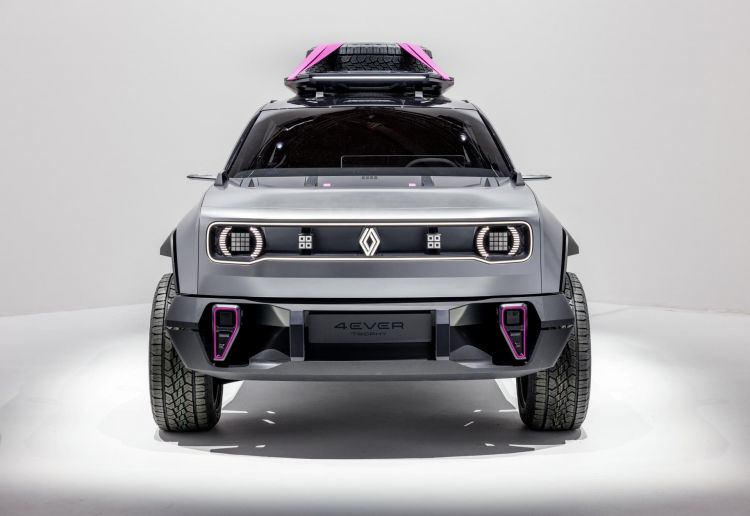
The Renault 4 is back! The return of the mythical Renault model is official, a return for the 4 cans that fills us with nostalgia, but also with surprise to discover that it will give life to a compact size electric SUV in the purest Renault Captur style. Scheduled for launch in 2025, the Renault 4EVER Trophy is the first preview of the new production Renault 4discovering what its neo-retro design will be like and how it will seek to reinvent the philosophy of the well-known 4.
After the bombshell that was the discovery of the return of the Renault 5, now the French firm repeats the formula to discover the return of the Renault 4. That family car launched in 1962 that mobilized millions of families in urban and rural environments, wants to return to the streets adapting its philosophy to the demands of the new times, an idea that comes to life through this Renault 4EVER Trophy prototype that was presented at the Paris Motor Show that opened its doors today.
The Renault 4 will become an electric SUV that will be on the streets in 2025
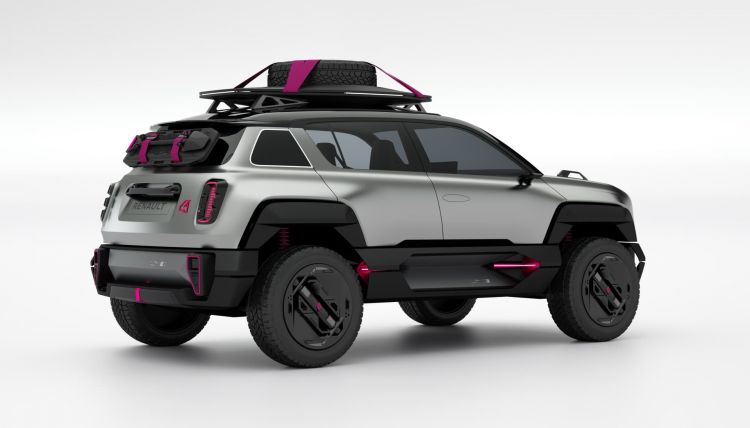
With a very striking exterior design, the French manufacturer presents us with a bodywork with clear off-road airs, hence the nickname Trophy that has been used to refer to this prototype. Renault wants the new 4 to be a tribute to the original model, but also an adaptation of its approachwhich is why it will maintain a vision of a versatile and all-terrain car that is now defended by SUVs.
Analyzing the aesthetics of the Renault 4EVER Trophy, what we find are clear nods to its predecessor as evidenced by the design of the front grille, the LED emulation of round headlights, the side view of two volumes with a recognizable third window and a pronounced drop for the tailgate or the use of rear lights with LED technology which are clearly inspired by the pilots of the original Renault 4.
But if we look beyond its design, this Renault 4EVER Trophy hides a production model that will be developed on the CMF-BEV platform which will also give life to the electric Renault 5. The new Renault 4 will be on the streets in 2025with only 100% electric versions and a single body positioned within the B-SUV segment, which is where Renault currently has the Captur.
If we pay attention to the measures of this concept, we find that the Renault 4EVER Trophy perfectly complies with that B-SUV positioning, as it declares a length of 4,160 mm and a wheelbase of 2,570 mm. In fact, if we compare it with the current Captur, this Renault 4EVER is slightly smaller since the current Captur has a length of 4,227 mm and a wheelbase of 2,639 mm.
The electrification is penetrating. At least in the high-end car. Otherwise it would not be explained the third plug-in hybrid that adds a greater volume of registrations in Spain so far this year is a premium product of the star brandfrom Mercedes Benz.
An SUV, which has its corresponding plug-in hybrid version, which has just been renewed and which, thanks to its range of engines and the incorporation years ago of a sportier bodywork, called the GLC Coupé, whose renewal will take place next year, has become also in the best-selling model of Mercedes in Spain.
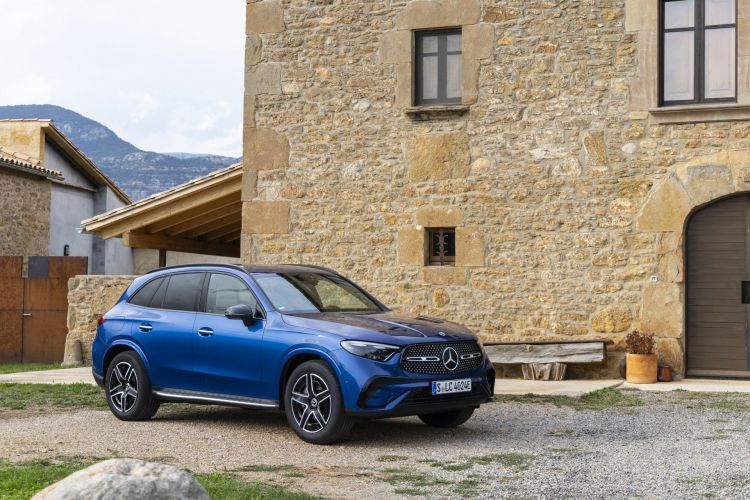
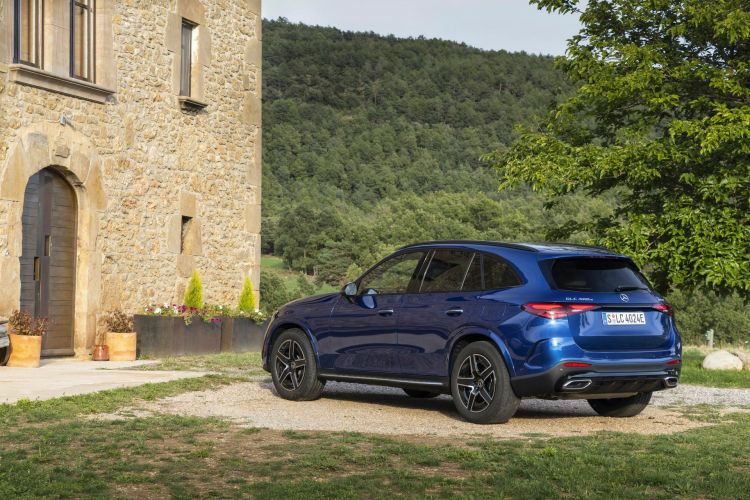
This is the best-selling high-end plug-in hybrid in Spainthe Mercedes GLC.
The best-selling high-end plug-in hybrid in Spain
As we told you, The Mercedes GLC is among the best-selling plug-in hybrids in Spain, with 1,363 units registered so far this year, and only surpassed by the Peugeot 3008 (2,020 units) and the Lynk&Co 01 (1,976 units). One in four Mercedes GLC units that are registered in Spain are plug-in hybrids. And the GLC and GLC Coupé range is the best-selling Mercedes-Benz in our country, with 4,770 units, surpassing the sales of the A-Class range (4,659) and Mercedes GLA (3,670 units).
The success of the Mercedes GLC, and its plug-in hybrid versions, also lies in a range in which there was room for a gasoline plug-in hybrid320 hp, and also an unprecedented and exclusive solution from Mercedes-Benz, a diesel plug-in hybrid 306 hp. Both versions are still available, above €70,000, in the Mercedes GLC Coupé, whose renewal will take place next year.
The price range in which the Mercedes GLC is located, which starts at close to €60,000 in its access version, and which exceeds €70,000 in its plug-in hybrid versions, give even more value to these figures. The Mercedes GLC plug-in outsells plug-in hybrid versions of high-volume models like the Tucson or Kuga.
The Mercedes GLC is renewed and continues betting on the plug-in hybrid
The Mercedes GLC has just been renewed, with a new generation that, without revolutionary advances, has improved in all areas to continue enjoying the commercial pull that the figures that we mentioned earlier reflect. In the video test of my partner Sergio, which you can see on these lines, we tell you our impressions of this SUV.
And, of course, plug-in hybrids will continue to be the backbone of the GLC range, with two petrol and one diesel plug-in hybrid alternatives. Mercedes-Benz has also opted for a plug-in hybrid solution with a high-capacity 31.2 kWh battery, with which the electric range of these versions ranges between 118 and 130 kilometers.
At its launch, the Mercedes GLC is available with a version 300e, gasoline plug-in hybrid, which delivers 313 hp of power, with a price of 74,925 euros. And soon there will be a version 400egasoline plug-in hybrid, which already reaches 381 horsepower, and a 300 ofdiesel plug-in hybrid, 335 hp.
If we focus on the premium segment, we find other plug-in hybrid alternatives that are among the ten best-selling models in Spain for this technology. The DS7 Crossback ranks eighth, with 967 plug-in hybrid units registered in 2022, and is perhaps the most original and striking alternative thanks to the design that DS has been able to imprint on its products. On the other hand, the Volvo XC40 is the tenth best seller, with 930 plug-in hybrid units registered in 2022.
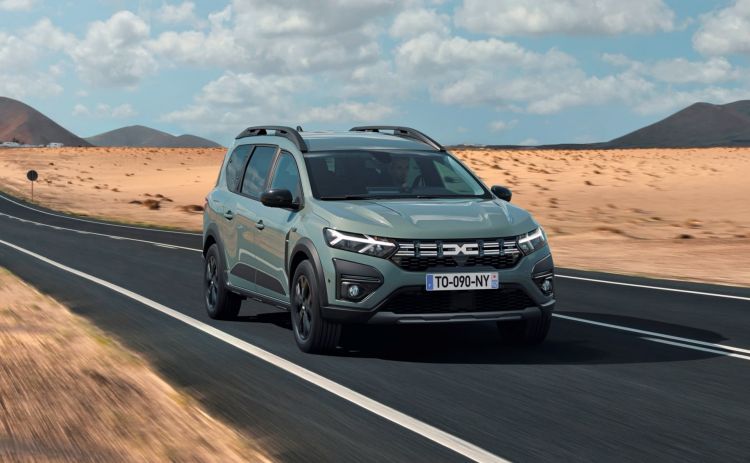
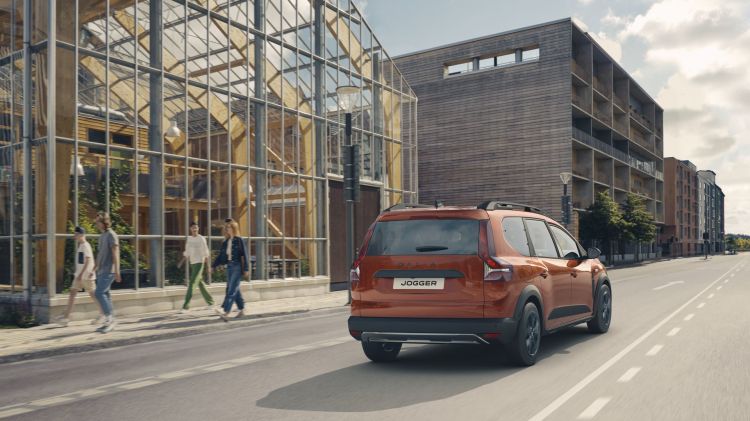
Thinking today of a 7-seater car is synonymous with SUV, a segment that has gone and is gradually killing minivans. However, brands like Dacia still give hope to those who need a car for the whole family without it being an SUV and for little money. And so they show it with the Dacia Jogger, a minivan that swims against the tide with a tempting offer that allows you to take it home for 159 euros per month.
But we must be aware that enjoying said price entails financing with the signature. In this way, it is necessary to read the fine print of the offer, since otherwise we risk finding ourselves with a final result far from what we imagined, mainly because of the interests to which the financing is subject.
This is the Dacia Jogger that you can take home for less than 160 euros per month
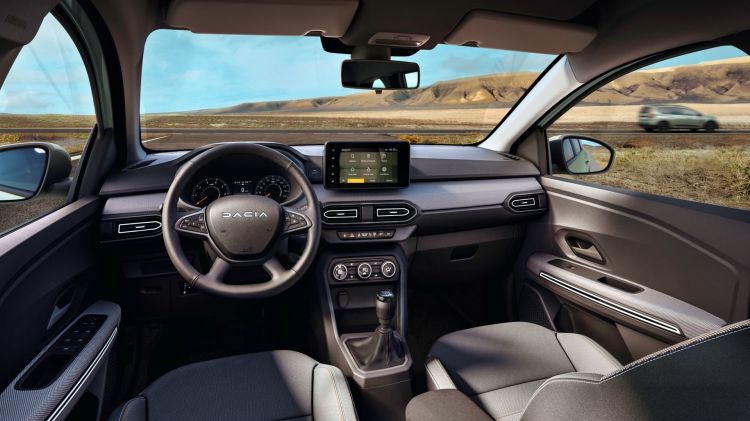
But before talking about numbers we must know what Dacia Jogger we get for 159 euros per month. Specifically it is about the Expression variant associated with the ECO-G enginethat is, the two access options, but which also offer many advantages such as a fairly complete standard equipment and with the ECO label.
And it is that this is demonstrated by a standard endowment made up of elements such as 16-inch wheels, LED headlights, speed limiter regulator, 8-inch touch screen, rear parking aids, manual air conditioning, automatic lights and 7 seats among others.
As far as mechanics is concerned, the Dacia Jogger ECO-G boasts a 1.0-liter turbocharged three-cylinder engine capable of delivering 101 hp and 170 Nm of torque. Modest figures that are managed by means of a six-speed manual gearbox and that allow a 0 to 100 in 12.3 seconds and a top speed of 175 km/h. But the advantage of this engine is that it also runs on LPG, thus giving the Dacia minivan the DGT ECO label.
But, what requirements does the Romanian firm ask us when it comes to checkout? The first is an entry of 3,814.08 euros and which would give us access to 36 installments of 159 euros and a last one of 13,287.60 euros. To this we must add an APR of 10.92%, a TIN of 7.75%, an opening commission of 482.48 euros and a payment protection of 530.11 euros.
All this causes the final price to pay for the Dacia Jogger go up to 23,308.16 euros, an equally good figure if we take into account how the market is and that we have 7 seats and an ECO label. However, it seems somewhat high compared to the 19,848 euros that the firm asks for a Jogger of the same configuration but paid in cash.
The Dacia Jogger in What car do I buy?
Now, we must clarify that the Dacia Jogger it is not the only economical car with 7 seats available on the market, although this implies going to the SUV segment in most cases. This is something we discovered through What car do I buy?Diariomotor’s comparator where we will find the largest offer of new cars and second hand.
The drift seen as a discipline of motor sports is currently booming, and it is an attraction that usually attracts many people. These can be thrill-seekers or spectators who share the adrenaline rush.
Everyone, at some point, has liked a sports car, either for its speed and definitely for its ability to drift. The drift like a motorsport It goes beyond what you have seen in movies and here we are going to tell you what it is and other things you should know.
What is drift?
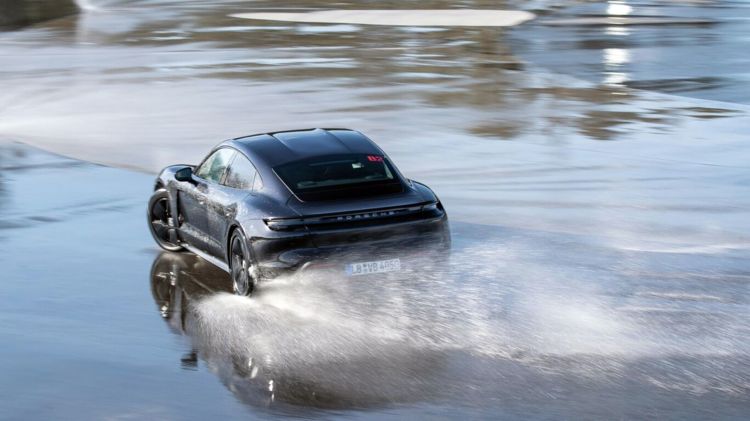
Car skidding consists of using oversteer to make the car drive sideways in corners. This has to happen at high speed while maintaining speed all the time and the driver remains in full control of the car.
In other words, skidding is turning a car sharply, thus causing traction on the rear wheels of the car. Driver control the car to make a full turn. Skidding is achieved when the rear angle is greater than the front angle to the point where the wheels face in the opposite direction of the turn.
The car can be found turning left, but the front wheels are facing right. That’s when the skid occurs.
What cars are best for drifting?
In theory, all cars have the ability to drift. However, the cars that have rear wheel drive are the best when using this technique. A four-wheel drive car can also do a good drift.
It is also preferable that it be a car with a manual transmission so that the driver can exploit its full potential. the only way to do a good drift is having complete control of the gears and the clutch.
Cars built to drift they have a special differential that distributes and balances the power between the front and rear axles. In these types of cars, drivers do not have driving aids such as anti-lock braking system or traction control to maintain full control of the car when needed.
What tires are considered best for drifting?
Drifting needs more than a few tires, as the technique quickly wears down the rubber on the tires. If you want to start drifting, you can buy relatively cheap rear tires and invest more in front tiresbecause these are essential for grip, traction and cornering control.
Professionals often use grippy front tires or even slick tires, which are tires that do not have any design on the tread.
Tire pressure also has a big impact and is highly dependent on the type of car being used as well as personal preference. You have to think that the drift is an elegant artistic composition that uses a four-wheeled vehicle as an instrument..
What self-respecting motor enthusiast does not remember the mythical Maserati MC12 with special affection. That racing car marked an era inside and outside the circuits, discovering today its spiritual successor to the delight of all those who seek a Maserati-style supercar. For this reason today we are going to test the new Maserati MC20and we are not only going to drive it, but we are going to analyze it in detail to discover if we are facing that way of understanding motorsport where the soul defines the car and not vice versa.
We have had to wait a long time for the Maserati range to once again have a supercar with all of the law. But I tell you from now on that this wait has been worth itWell, the Italian firm has taken its time, but in return it has not created another high-performance car in its category, but has managed to give life to a machine that looks and feels different, something that many manufacturers pursue, but that is seldom achieved.
Maserati has achieved the most difficult, and that is to make the MC20 not feel like a copy of what Ferrari, Lamborghini or McLaren already offer.
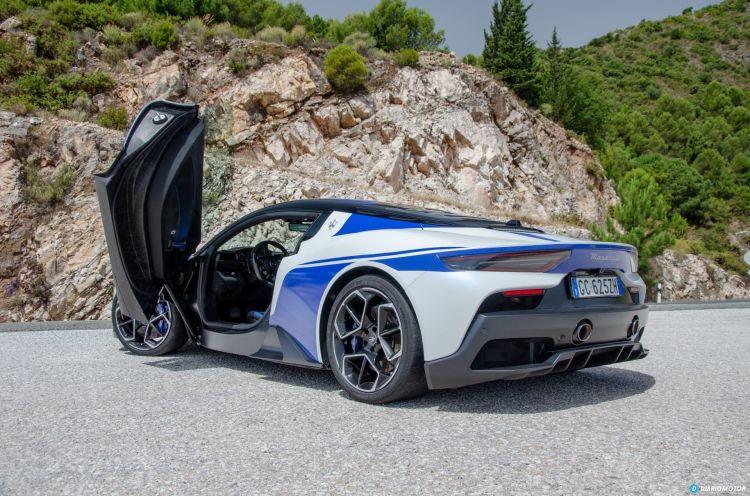
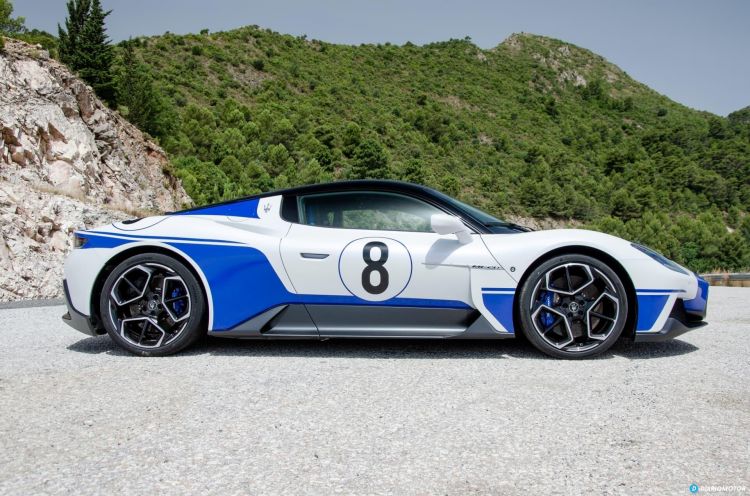
Aesthetically the Maserati MC20 I dare to consider it as a true work of art. The design department of the Italian firm, led by Klaus Busse, has made a haute couture suit that oozes sportiness, elegance and personality. It is not easy to find success in such a combination, but this MC20 has achieved it with great mastery.
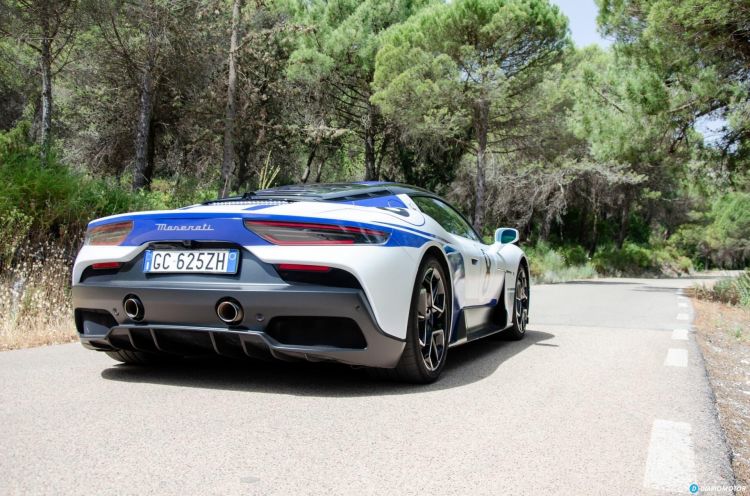
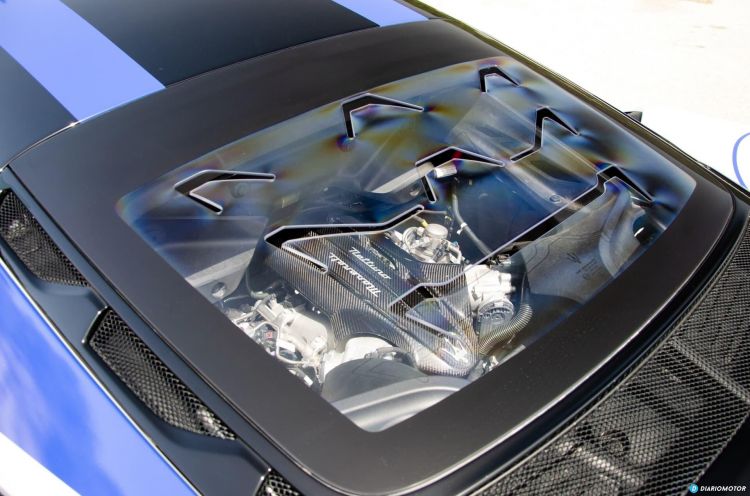
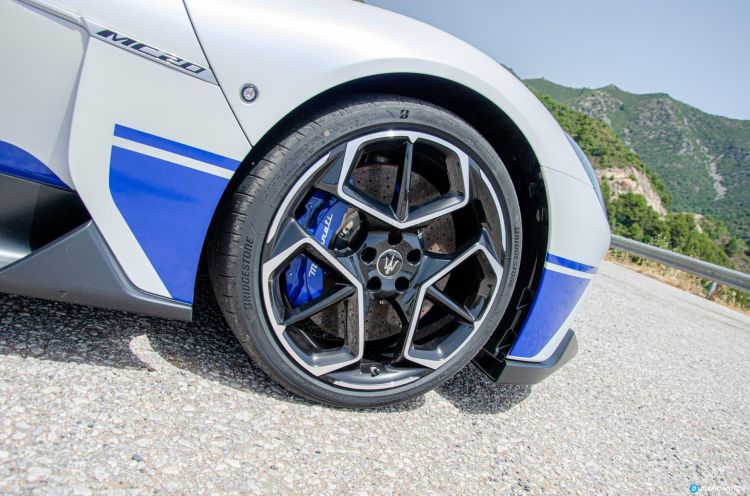
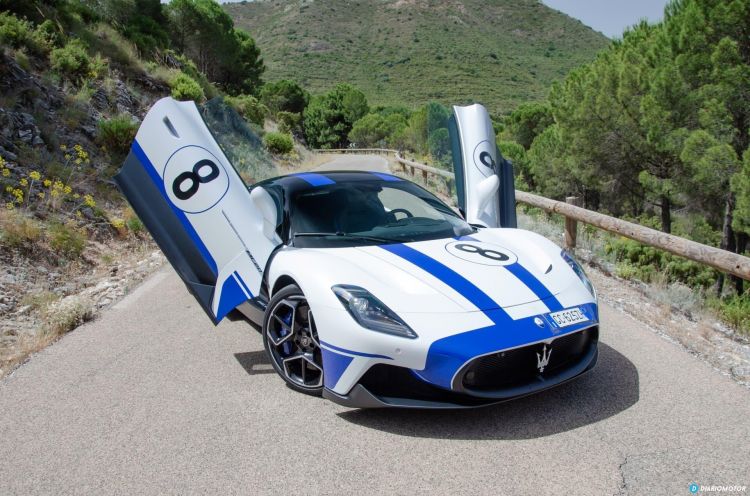
With 4,669 mm in length, 1,965 mm in width and just 1,221 mm in height, this is a car that speaks of speed in the first person. East It is an imposing car, although without falling into the baroque or the stridency that are so fashionable today. The lines of its bodywork draw a car with presence and character, as evidenced by its huge front air intake, the beautiful wheels, the voluptuous wheel arches or the transparent engine cover with the Maserati logo, but as a whole it is not they perceive excesses that make it more striking. Even despite the color configuration of our test unit, the truth is that we are facing a car that maintains elegance and has done well to avoid aerodynamic appendages.
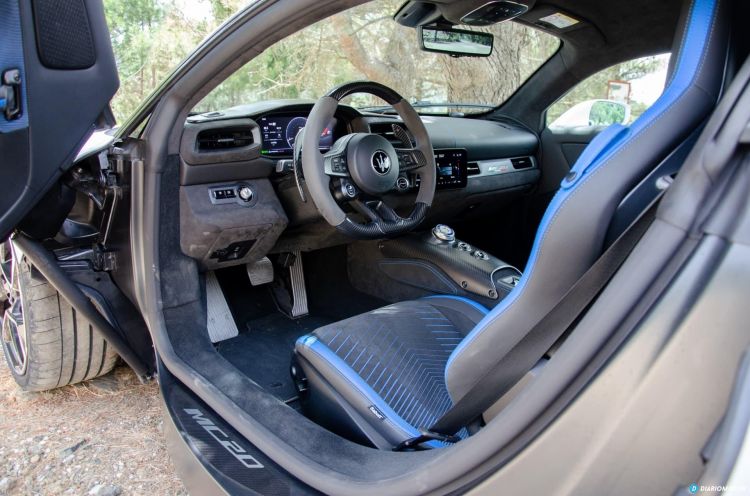
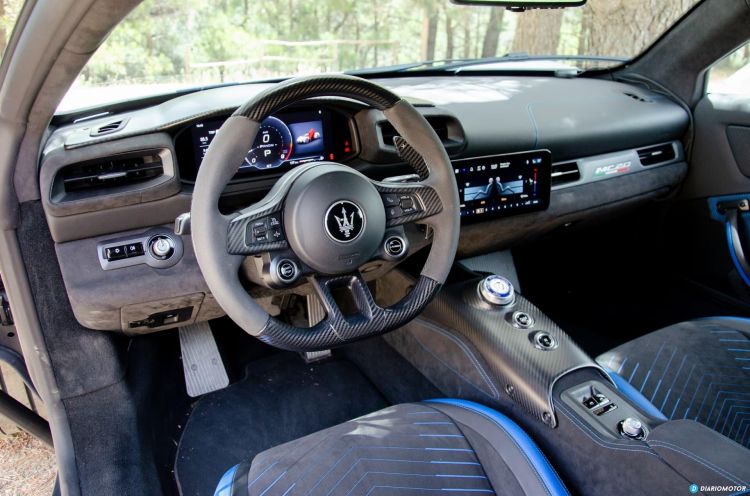
To give life to the interior, Maserati has maintained that philosophy of minimalism and subtlety seen on the outside, giving life to a simple cabin aesthetically, but of good quality and sporty design. Accessing it through a spectacular doors with butterfly style openingthe first thing we observe is that the carbon monocoque chassis manufactured by Dallara displayed in all its splendor. This chassis is one of the great keys that define the MC20, and not only because of its rigidity and lightness, but also because of its philosophy, making it very clear that we are dealing with a car that will have a racing variant.
sitting on their sports seats signed by Sabelt, the first thing that surprises me is how easy it is to access, the comfort of the seats and the space available in the cabin. Looking further I notice an interior that is upholstered in black Alcantara, but with numerous details in blue that give that point of distinction and sportiness that such a car demands. The level of quality in general terms is high, also finding different parts in aluminum and carbon fiber that put the icing on the vision that this car defends.
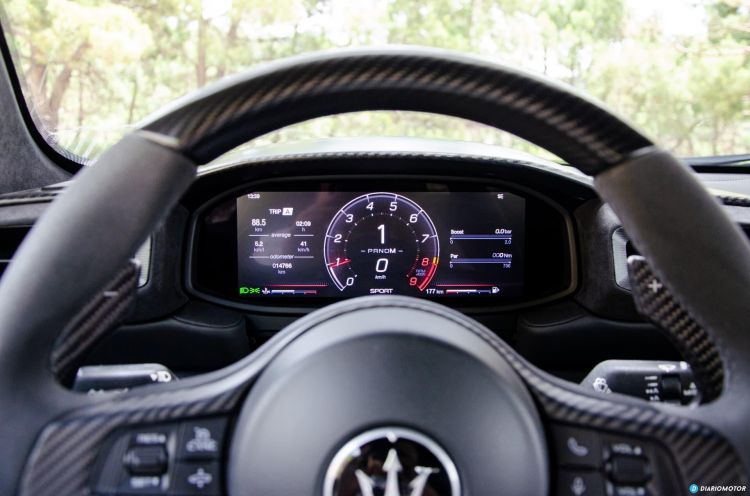
As I was saying a few lines before, the interior of the MC20 is quite simple in terms of design, something that perfectly defines the driving position. It comes to life through a impeccable touch steering wheel, where carbon fiber and Alcantara are combinednail huge carbon paddles fixed on the column (as it should be) and a digital instrument panel that modifies its design depending on the selected driving mode: WET, GT, Sport, Corsa or ESC off. By the way, the selection of these programs, in addition to the two modes available for the suspension, is done from a rotary control located on the center console, quite close at hand while driving. However, this device has been revised with the arrival of the MC20 Cielo to integrate a screen that improves viewing.
And finally we move on to driving. Seat and steering wheel adjusted, I close the door by raising my left arm, press the start button located on the steering wheel itself and the Nettuno engine comes to life. The engine wakes up with a hoarse, metallic sounda sound that mixes chords that come to us from the engine itself, located just a few centimeters from our head, and from the double exhaust outlet that crowns the rear diffuser. It’s not a shrill sound, let alone exaggerated, but it’s not common in turbocharged V6s either.which shows that Maserati has kept its promise when it comes to “manufacturing” a melody with personality.
We insert first and I head to one of my favorite roads in Malagaa route that starts in San Pedro de Alcántara, continues in Ronda and culminates touring the spectacular Sierra de las Nieves. It is a very special track for me, firstly because as a native of Malaga I know it like the back of my hand, secondly because it offers a changing track that allows you to get the most out of a car like this, and thirdly, because the beauty of the different landscapes we drive through it is really unique.
Covered the first kilometers I realize that this MC20 is not a radical car at all, in its GT mode it is a noble and even comfortable car, easily adapting to the different asphalts and the poor condition of some sections without disturbing driving. Engine and transmission are capable of working very smoothly, with a quick response to any hint I make about the accelerator, but allowing driving without demanding too much. At this point, the MC20 reminds me more of the philosophy of an R8 than that of a Huracán so that we understand each othershowing that despite being a supercar, it is quite usable, which distances it from that more radical spirit typical of Ferrari or even indomitable in the Lamborghini style.
But we reach the first twisty section, a twisting road that forces me to select the “Sport” mode.. Instantly the engine becomes more protagonist, the change becomes more direct and the suspension tenses its muscles. The personality change is clear and the curves follow each other at a really high rate. The good manners as GT have now been transformed into a car that asks for more, that likes to spin high in laps and that encourages you to squeeze every gear change. I especially like the touch and the information that the address returns, a crucial point to feel comfortable in a car like this.
The 630 hp of the 3.0 V6 Twin-Turbo allow us to run a lot, but a lotbeing an engine that feels comfortable in the upper-middle part and that gives its best sound precisely by bringing each relationship to the cut. By tone and volume I cannot deny that this V6 makes me miss the volume and rage of the atmospheric V8 or V12 of yesteryear, but I like the performance of this V6 a lot and together with the 8-speed transmission they make it very easy ” piloting” taking each stretch to the limit. Also, in Sport and Corsa modes it is clearly seen how the differential gains in character to finish each turn with a certain oversteerwhich provides a plus of fun that ends up becoming addictive.
Surprisingly, although the tires and brakes were already somewhat damaged after so many tests by other colleagues, the reactions of the MC20 in any of its modes are noble. Even forcing it, correcting the trajectory or speeding up the braking is possible without having to fight with the car. This MC20 has a high margin to be able to look for the tickles without scares and thus be able to play with the rear on demand, but even exceeding that margin already in Corsa mode, the feeling of control is very high.
Now that it is time to draw conclusions, I reflect deeply on what I experienced today during this test day with the Maserati MC20, thus trying to answer the three questions that I had in my head before testing this car and which I think are the most important for find out if Maserati has made the right choice with this launch.
The Maserati MC20 is a true toy for adults whose price starts at 265,388 euros
First, Is the Maserati MC20 a worthy successor to the MC12? Yes, ignoring the mysticism and exclusivity that the MC12 has reached at this point, the new MC20 is a more than worthy successor by preserving that same philosophy as a supercar. Is the V6 Nettuno up to the task? Yes, because although I will not be the one who denies an atmospheric V12 or even V8, the truth is that Maserati has managed to give life to an engine that runs a lot and very well, lacking some sound, but that hides tons of fun. Does the MC20 offer something really different in its category? Yes, and I think that here is the real key to this car, because it was what this model needed the most, but also the most difficult to achieve.
With this MC20, Maserati has not limited itself to creating a supercar by copying what Ferrari, Lamborghini or McLaren already offer in their respective ranges. Maserati has created an MC20 with an approach, design and driving that exudes its own personality. And that friends I think is, by far, the best thing about this car.
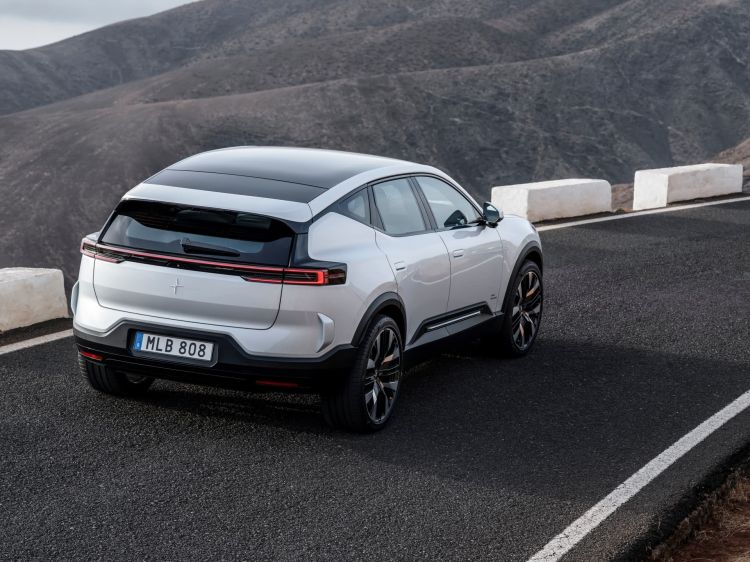
From the hands of Polestar, the segment of the large electric SUVs You just got an interesting breath of fresh air. With the launch of Polestar 3 We are facing an electric SUV that is going to make it quite difficult for cars like the Tesla Model X, the BMW iX, the Audi e-tron or the also new Volvo EX90 and Mercedes EQE SUV. To achieve this, in addition to the up to 517 CV of power and 610 km of autonomy, the Polestar 3 also wants to play the trick of offering a more adjusted price than that of its rivals.
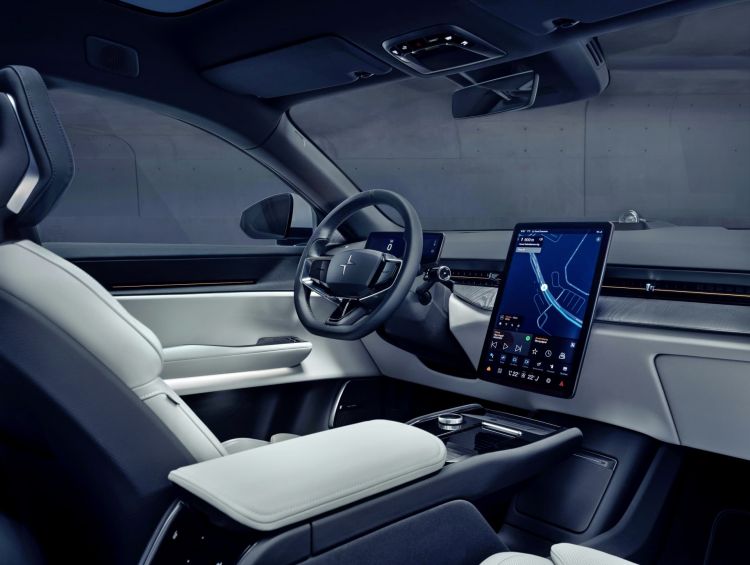
Already available for sale in Spain, the Polestar 3 is a completely new SUV created by Polestar to gain a foothold in the segment of large premium SUVs. Although Polestar is a brand closely linked to Volvo, in the Polestar 3 we find a sportier and more striking design that gives life to an SUV of 4.9 meters in length. Its approach is also very technological, discovering inside a multimedia system with a 14.5″ touch screen equipped with the latest software and hardware, as well as a wide range of safety systems and driving assistants that allow the Polestar 3 be one of the few current cars that can boast of level 3 autonomous driving.
The simplest Polestar 3 already offers 489 hp and up to 610 km of autonomy
Its landing in the European market takes place under a single propulsion configuration, although it is available in two variants. We are talking about a configuration that makes use of an electric motor on each axle, thus allowing you to enjoy all-wheel drive. The lithium-ion battery has a useful capacity of 107 kWh, which allows it to homologate up to 610 km of autonomy under the WLTP cyclebeing able to use recharging in alternating current at powers of up to 11 kW and in direct current up to 250 kW.
As we said, we can only buy the Polestar 3 in two versions: Long Range Dual Motor from 92,900 euros and Performance Pack from 99,500 euros. In the future, the arrival of more affordable and less-performing versions is expected, but for now the range is built around these two options. In the case of the Polestar 3 Long Range Dual Motor, the maximum power is 489 CV, the maximum torque of 840 Nm and the autonomy reaches 610 km, in addition this version does the 0-100 km/h in 5 seconds and its speed tip is 210 km/h.
In the case of making the jump to the Performance Pack version of the Polestar 3, what we add is a revision of the drive train software to enjoy 517 hp and 910 Nmwhich allows the 0-100 km/h to be reduced to 4.7 seconds, but also the autonomy by remaining at 560 km. The maximum speed remains intact at 210 km/h.