• This electric (and solar) car has the same autonomy as a diesel: it has covered 1,000 kilometers in 12 hours on one charge

    Until now, the only electric car capable of Go over a thousand miles on a single charge It has been the Mercedes Vision EQXX: it overcame that barrier both in its first attempt (1,008 kilometers) and in the second (1,202 kilometers). Now, an Australian vehicle wants to ‘compete’ it by showing that, with a 38 kWh battery, it can also achieve such autonomy.

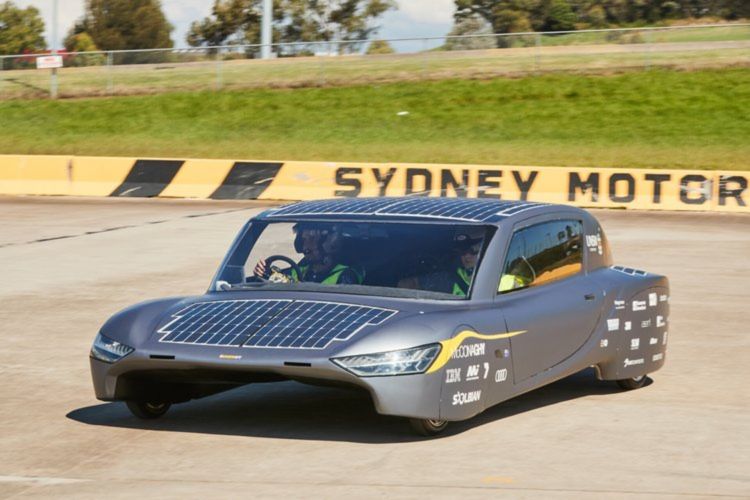
    Sunswift 7 is the electric and solar car, developed by a group of engineering students from the University of New South Wales (Sydney, Australia). On December 18, 2022, traveled, in 11 hours, 53 minutes and 32 seconds, 1,000 kilometers and to cover this distance he only needed one charge. In the absence of official confirmation, his would be the Guinness record, since the Mercedes Vision EQXX took a couple of days to complete the 1,202 kilometers.
    Consumption: 3.8 kWh/100 km

    The test took place at the Australian Automotive Research Center (AARC) circuit located in Victoria. During the 240 laps he gave, the Sunswift 7 maintained a speed of 84.17 km/h and consumption was 3.8 kWh/100 km. Or what is the same: between four and six times less than a conventional electric car. The Dacia Spring, for example, is one of the most efficient models… and its consumption, according to the WLTP Cycle, is 12 kWh/100 km.

    During the experiment, the Sunswift 7 only stopped to repair a punctured tire and to change drivers. It even stars in a moment of tension because each ‘pit-stop’ could not last more than fifteen minutes… and they had to solve a battery problem in 14 minutes and 52 seconds.
    perfectly efficient

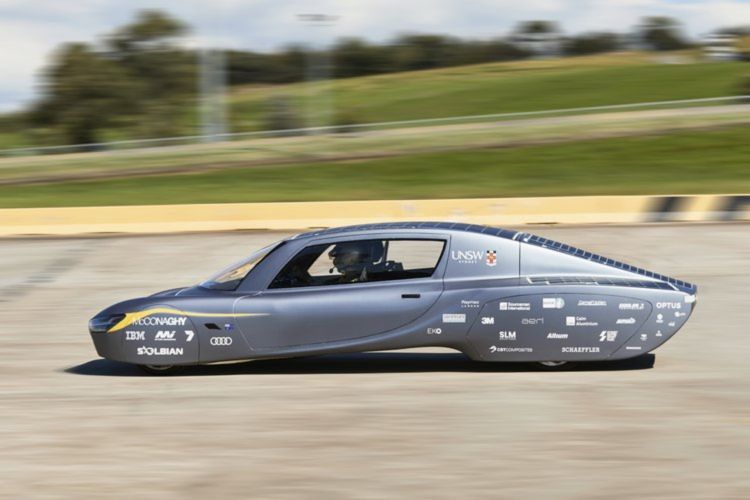
    Sunswift Racing is not new to the world of electric and solar cars: has been working on them since 1996. The first was the Sunswift 1: it worked thanks to 7.88 square meters of solar panels and was capable of driving at a maximum speed of 70 km/h. The Sunswift 7 is, for now, his latest creation.

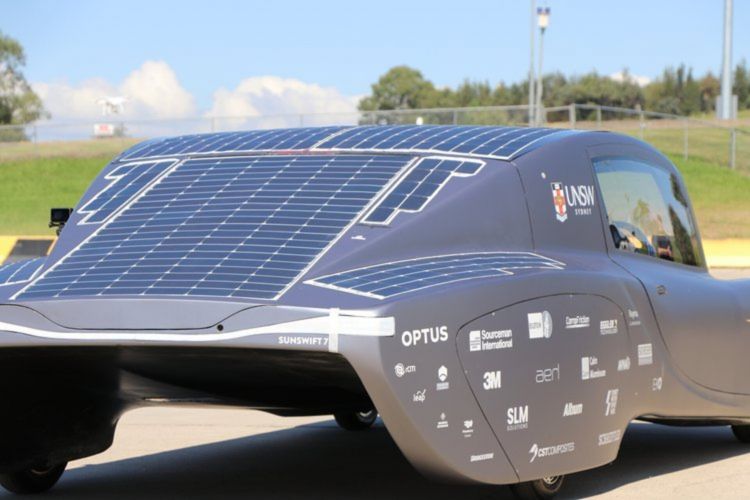
    It is equipped with a battery that has a capacity of 38 kWh and with conventional photovoltaic panels. The key to its autonomy is its weight (500 kilos) and its aerodynamic design with which it achieves very low rolling and air resistance. Not in vain, has a drag coefficient of 0.095 Cx: that of the Mercedes Vision EQXX is 0.17 Cx and that of the Lightyear 0 is 0.175 Cx, while the Mercedes EQS has 0.20.
    It will not go to production

    One of the members of the project is Richard Hopkins, Sunswift Racing team principal and former Red Bull Racing chief operating officer with whom he won four F1 world championships. He himself reveals that the project has not been raised to produce and market the Sunswift 7. First of all, they have put efficiency above comfort, disregarding elements such as airbags, ABS, brakes… and it does not have windshield wipers either. or air conditioning.

    To this we must add that “its cost is prohibitive, but we have shown that, if we want to, it is possible to make cars that are more efficient, more sustainable and more respectful of the environment”.

  • The European Union wants to end products (and cars) that are said to be “eco” or “green”, but are not.

    For some time now we have seen how more and more products (including cars) are accompanied by tag lines such as green, eco, sustainable, climate neutral and a long etcetera – Do not confuse these messages with the legal treatment that is being made of environmental labels. We are also getting more and more messages about how this or that brand intends to achieve CO neutrality.2 in five or ten years.

    The shadow of the so-called green washing hovers over many of these messages, commonly used in brand communication, and even in advertising campaigns and product names. That environmental arguments be used solely and exclusively as an argument to win over the customer, hiding that neither the product that is marketed, nor the processes under which it has been manufactured, are environmentally friendly.

    In 2020, the European Commission set out to analyze 150 environmental claims on different products, finding that the majority (53%) provided “vague, misleading or unsubstantiated information”. Hence, the European Union has proposed a specific regulation that places limits on these environmental claims and, above all, that they can only be used on a well-founded basis, using objective data and a reference, and under standards that allow those environmental achievements to be accredited. (Reuters).

    The European Union wants to put limits on the environmental claims launched by brands, to avoid deceiving the consumer and incurring in the so-called green washing

    Suspicious environmental messages

    Under suspicion, messages such as “climate neutral”, “offset 100% of CO2” and “carbon neutrality”, insofar as there are mechanisms that, such as emission bonds, although it is true, are beneficial for promoting efficiency practices and offering new lines of business to those companies that are really contributing to the compensation of emissions, can send misleading messages to customers.

    As we told you before, The standard used and the reference point to launch claims such as “50% reduction in emissions by 2030” are also important. or a “50% reduction in water consumption by 2030”. If a brand does not provide us in which areas this emission or consumption reduction is going to be carried out and, above all, if the reference taken to achieve this reduction is not provided, the allegation has no foundation (Bloomberg).

    The member countries of the European Union will have to regulate and impose sanctions on those brands that use unsubstantiated environmental messages, nor use a regulated methodology to accredit them.

    According to euractivwhich has had access to a draft of the European Commission’s plan to end false, misleading, or unsubstantiated environmental allegations, the member countries of the European Union will have to regulate and monitor this type of messages, and impose sanctions that are “effective, proportionate and dissuasive” to brands from carrying out this type of environmental messages if they are not duly justified.

    With the approval of this regulation, which is expected to be carried out throughout this year, the European Union expects that all messages used are based solely on legally recognized methodologies and the rest are strictly prohibited.

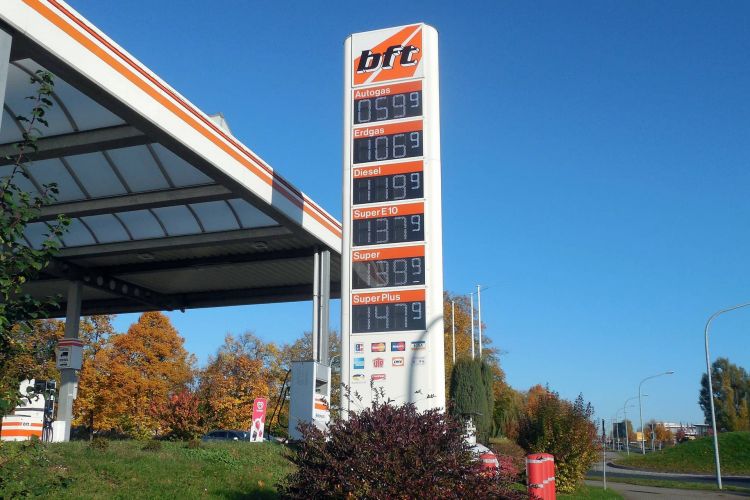
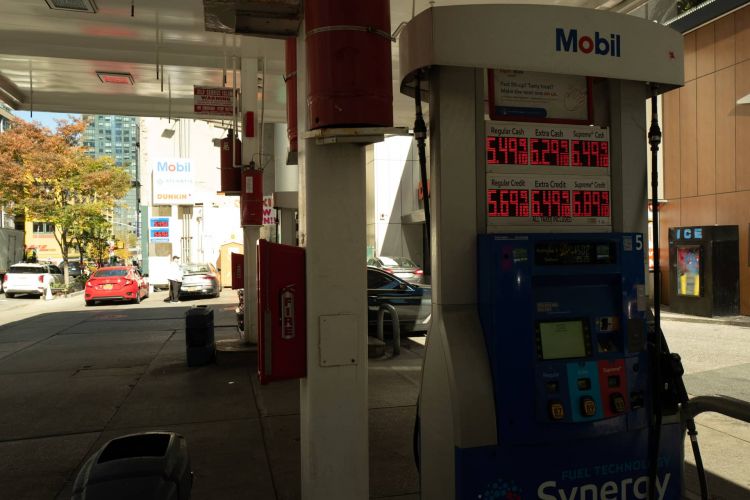
  • Not only because of the rise in oil: we are paying more for gasoline and diesel due to a new law

    Three weeks ago the bonus of 20 cents on fuel ceased to be general to apply only to professional drivers. Since then, individuals have been able to appreciate a rise in the price of gasoline and diesel: It is not caused solely by the disappearance of the discount and the behavior of oil. In her The arrival of a new standard with a European stamp has a lot to do with it.

    The Fuel Quality Directive

    Since January 1, as it appears in the Official State Gazette, the Community Fuel Quality Directive (FQD) that affects gasoline and diesel has been applied. This legislative act establishes a series of objectives that all EU countries must meet and, in this specific case, decrees the arrival of a series of measures with which they seek reduce greenhouse gas emissions that fuels generate throughout their life cycle.

    This decrease should be 6% compared to the reference value, which is the greenhouse gas emissions that fossil fuels, used in the European Union, produced in 2010.

    Between three and six cents

    To achieve the objective set by the aforementioned directive, there is a path to follow: increase the percentage of biofuel present in each liter of fuel (both gasoline and diesel). It would therefore go from the current 7.5% to 10.5%. The difference may not seem very big, but the key lies in the price of biofuels: they are much more taxed than fossil fuels, which is why they are more expensive.

    If its presence increases, so does the final price of gasoline and diesel that drivers find at the pumps of the service station. According to estimates by the Spanish Confederation of Service Station Employers (CEEES), the entry into force of this directive will translate into a rise of between three and six cents per litre.

    How much have they risen since January 1?

    If we add to this the rest of the factors present in the equation, we will have the explanation for the registered increase since January 1: the price of gasoline has increased by 17% and diesel by 15%. According to the latest European Union Oil Bulletin, if we compare current prices with those of the same week in 2022, we will find an increase of 7.8% for gasoline and 21.8% for diesel.

    What average figures are there, currently, in Spain? A liter of gasoline costs 1.62 euros and diesel costs 1.68 euros. Figures with which to fill a 55-liter tank costs 89 and 92 euros, respectively.

    However, the price of gasoline and diesel, in Spain, is still far from its historical maximum: the first is 16.6% below the 1.94 euros that we paid the week of June 20, 2022 and the second is 11.6% lower than the 1.9 euros of the week of June 27. Figures that, in addition, are lower than the average for the Euro Zone and the Europe of the 27.

  • This SUV wants to put an end to the biggest problems of the electric car, but it will not do so in Spain

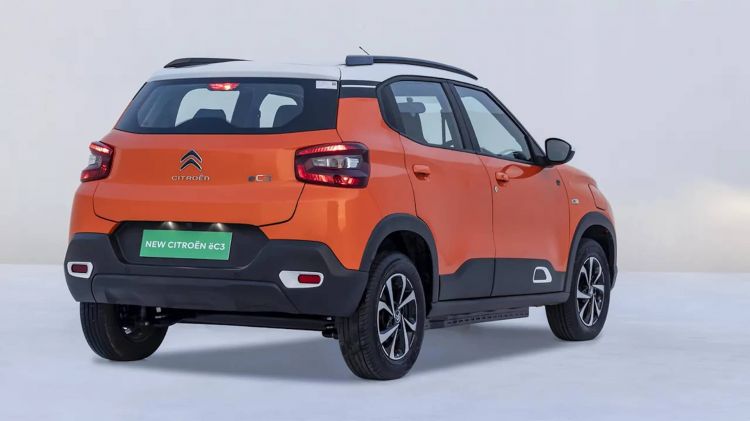
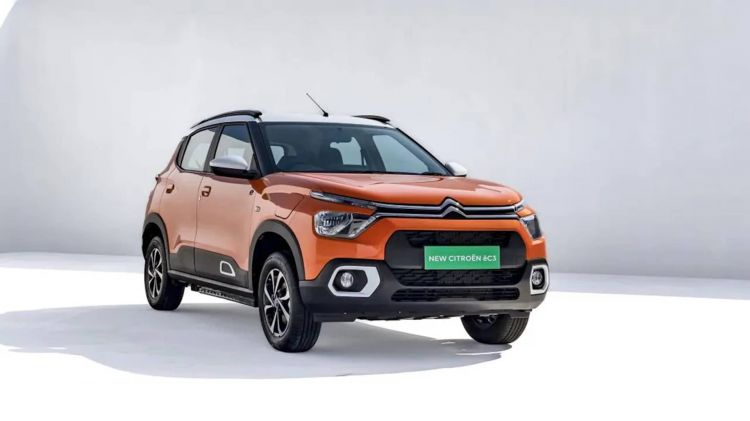
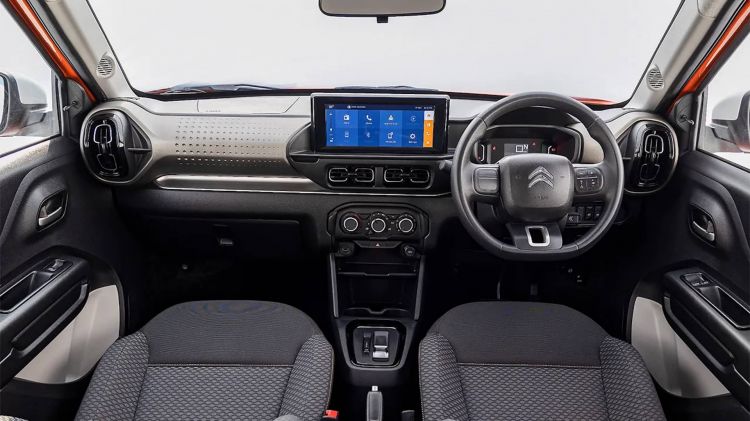
    Thinking about buying an electric car is, for many, synonymous with buying a headache. First for the purchase price, second for autonomy and third for the charging network, for the moment, insufficient for most users. And that is why when a car is capable of crossing off the list two of the three problems, it is angry that it does not arrive in Spain to solve them, which is the case of the new Citroën ë-C3a small electric SUV with more than 300 kilometers of autonomy and affordable destined for India and Brazil, but it is not perfect.

    And although it is true that the French SUV would not be the ideal car to cover long kilometers, yes it can be for daily use in the city. After all, this is a car whose main competitor is the Dacia Spring, a category in which vehicles advocate being more austere than refined electric, although it is somewhat understandable given the price range in which they move.

    The Citroën ë-C3 has a solution to many electric car problems, but we will not see them applied in Spain

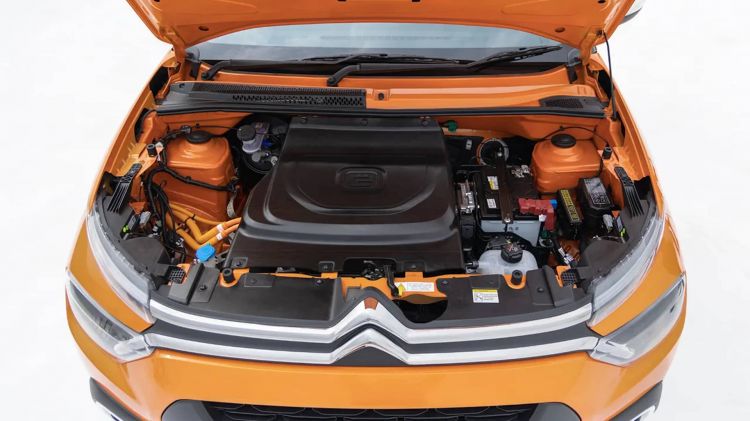
    In design, little or nothing changes with respect to what we already find in a conventional C3, maintaining a language and an interior practically traced. And it is that at the end of the day the novelty of this ë-C3 is found in its technical section, which has as its starting point the e-CMP platform and as the main high point an LFP type battery.

    What main advantage does this have? Much less degradation than we could experience with a conventional battery, as well as greater reliability. This specifically has 29.2 kWh of capacityand is responsible for feeding a motor of 42 kW of power, or what is the same, 58 CV, a figure that allows the ë-C3 to reach a top speed of 107 km/h.

    It is a figure that limits its use to the urban world, but it does not have another objective either. And this is also demonstrated by its autonomy with a total of 315 kilometers under the ARAI cyclea figure with which the SUV of the two chevrons can flirt after 57 minutes of charging, time with which it will have recovered 80% of its battery capacity.

    Logically one expects, after these rather modest features, an affordable price, and despite the fact that Citroën has not yet made any statements about the price of its electric SUV, it can already be reserved for 281 euros. This suggests that the final disbursement will not be high, being able to flirt with 14,000 or even 13,000 euros.

    However, Does a car like the Citroën ë-C3 really make sense in Europe? First we must take into account that it solves the problem of the high price of the electric car as it is a fairly simple and spartan vehicle; second, that it offers autonomy according to its characteristics and use, and third, that it is not necessary to invest a long amount of time to recover its usability.

    No, it is not a perfect car, nor is it a car that allows us to do without a combustion vehicle unless we are going to carry out unique and exclusively urban driving, which is, after all, what the ë- is designed for. C3. Without further pretensions.

    Be that as it may, and although Citroën has not yet confirmed it, most likely, the ë-C3 will end up making an appearance in Europe. It will do so under another name, with some revision of its mechanical and aesthetic section but, fundamentally, with the same essence to try to wrest sales from the Dacia Spring and establish itself as one of the forerunners of the beginning of the end of electric car problems, although that Yes, with the limitations that a car like the French SUV has.

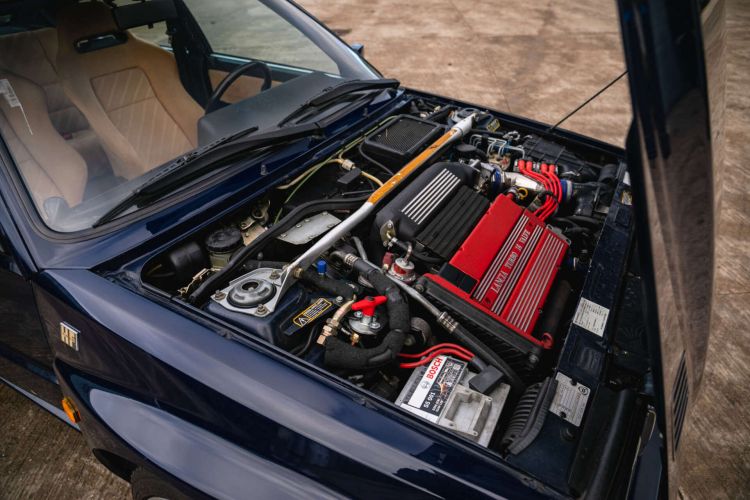
  • This Lancia Delta Integrale Evo II, owned by one of the most ‘petrolhead’ actors, goes up for auction

    He had a teddy bear named Teddy and he drove a yellow Mini MK III: with these two details you will have guessed who we are talking about. Mr. Bean has been the most popular role of Rowan Atkinson, an actor known in the motor world for being a ‘petrolhead’ who competes and collects models, among which are some of the most iconic. Today the protagonist is the Lancia Delta Integrale Evo II, which he bought a couple of years ago.

    Rowan Atkinson not only has a collection that any fan would sigh for, he has also participated in various competitions. we have seen him at the Mille Miglia, at the Goodwood Revival and at some events that have taken place at Brands Hatch: there he has been at the controls of a Renault 5 Turbo and several Aston Martins (DB2, V8 Vantage Zagato…).

    The most popular specimen in his personal collection is the McLaren F1, that he bought in 1997 and with which he had a serious accident in 2011: they say that the invoice paid by his insurance company for the repair (which lasted for 18 months) was 1.07 million euros, the highest in the United Kingdom . Rowan Atkinson sold it in 2015 for about 10 million euros.

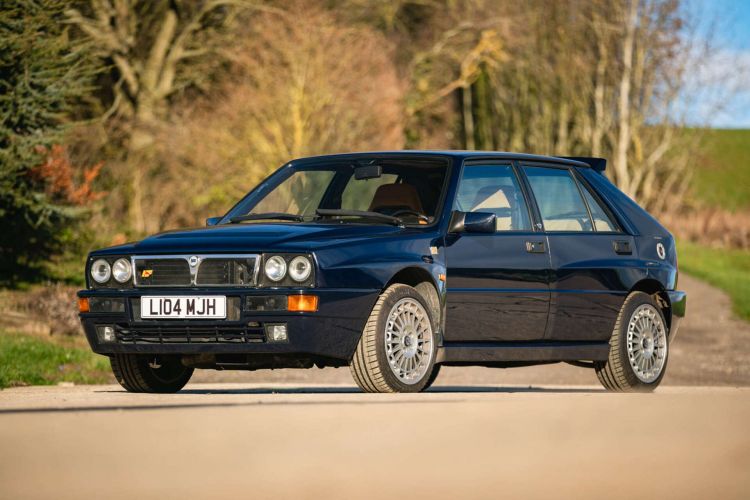
    The British model was not alone in the actor’s garage. He was accompanied, among others, by a Mercedes SLS AMG, a Jaguar Mark VII, a Rolls-Royce Ghost… and a Lancia Delta HF Integrale Evo II, that he bought in May 2021. Yes, it is the model that will go up for auction next month.

    two peculiarities

    The Frankfurt Motor Show was the appointment chosen by Lancia to, in 1979, present the Lancia Delta. A model whose popularity is intrinsically linked to the World Rally: The compact five-door didn’t grab all the spotlights until the late 1980s, when it won six consecutive manufacturer’s titles: from 1987 to 1992. A record that, to this day, is still owned by the Italians.

    The Lancia Delta Evoluzione came to light at the end of 1991 for the reason that you are all imagining: it was the approval model so that the units that were part of the racing team sponsored by Martini would meet the essential requirements to compete in the World Rally Championship.

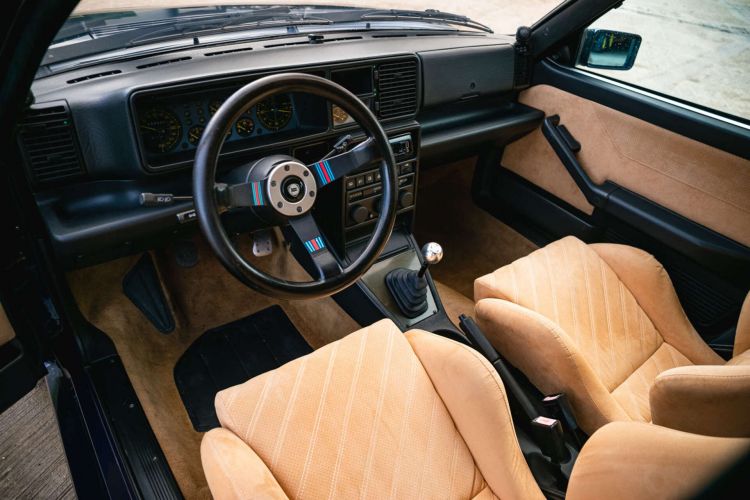
    Rowan Atkinson’s is a Lancia Delta HF Integrale Evoluzione II from 1993: it was registered in June and it sports the Lord Blue finish, an unusual color, combined with the beige of the interior. It is powered by a 2.0-litre turbocharged engine that produces 215PS and has a maximum torque of and 310Nm. It has another peculiarity: although its first destination was Japan (it headed for the United Kingdom in 2011), the steering wheel is located on the left side.

    estimates

    When Rowan Atkinson bought this Lancia Delta HF Integrale Evo II, the car had covered 87,000 kilometers and now he parted with it with just under 90,000: It doesn’t look like it’s been used much.

    According to estimates, the auction price will fluctuate between 65,000 and 75,000 pounds (74,200-85,600 euros). A figure in line with the market value of this type of vehicle: according to Classic Analytics, they move in a range of 50,000 and 80,000 euros. Yes indeed, Silverstone Auctionsthe British house that organizes the bid on February 25, 2023, expects a higher amount thanks to the popularity of its last owner.

  • Why will the DGT fine you: for not wearing snow chains, for not using them… or for both?

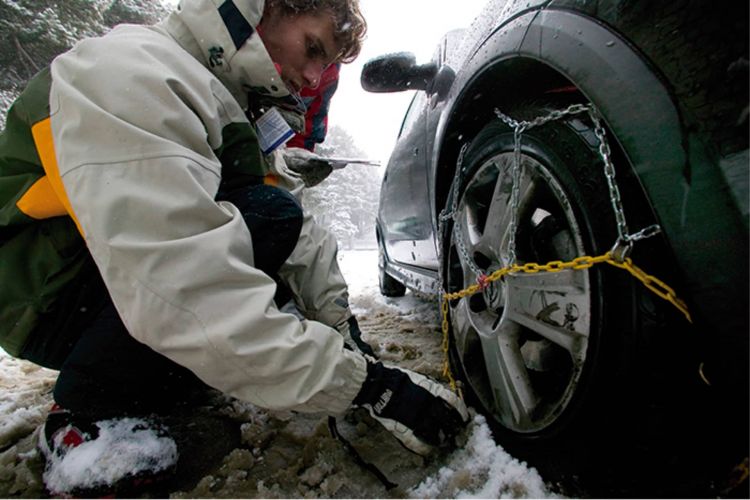
    A study by the Royal Automobile Club of Spain (RACE) revealed, at the time, that 70% of the drivers who participated in their research were unaware or were not sure of knowing how to fit snow chains on their vehicle. Furthermore, 54% revealed that they did not have this complement, although a sanction weighs on its presence: For what reason can the DGT fine you: for not carrying them, for not using them, or for both?

    The rule establishes that the mandatory equipment of a car must include a high visibility reflective vest, a portable and approved danger signaling system (the two warning triangles or the V16 light) as well as a spare wheel or an anti-puncture kit with the necessary tools to make the change . The presence of chains or winter tires will only be imperative in areas where they are necessary to circulate.

    bring snow chains

    If they are not essential, the Traffic agents will not be able to penalize us for not carrying the chains in the trunk of the car. However, the DGT places special emphasis on having them on hand as a preventive measure during the coldest months of the year. The reason? It’s simple: if an agent or the presence of the R-412 sign (the circular one with a blue background that represents a wheel with this non-slip system) requires their use, we will have to put them up. If we do not have it, we will have to stop the mark or turn around.

    use snow chains

    It will not only be the agents or the signs that tell us that the chains are necessary to circulate: the tone of the road will also do so. As we have already explained to you on occasion, the DGT establishes a color code to determine the state of the circulation and its limits depending on the intensity of the snowfall.

    If it is green or yellow, you should be extremely careful at the wheel, adapting your driving to the road conditions: in these two scenarios, chains are not necessary. Yes it’s in red, the use of winter tires or chains will be mandatory and you will not be able to drive above 30 km/h. If it is in black, circulation will be prohibited for all vehicles.

    It should be remembered that, according to the provisions of the General Vehicle Regulations, “when the use of chains or other authorized anti-slip devices is mandatory or recommended said chains or anti-slip devices must be placed, at least, on the axis of the driving wheelsor use special tires”.

    yes, there is a fine

    The sanctions are linked to the use of the chains, not to their presence in the trunk of the car. Ignoring their obligation when they are essential implies a fine of 200 euros (100 with prompt payment) without loss of points; In addition, you will not be able to continue circulating. However, the DGT insists that the most serious thing is not the economic punishment: it is the risk of losing control of the car and having a traffic accident.

    The exception to the rule

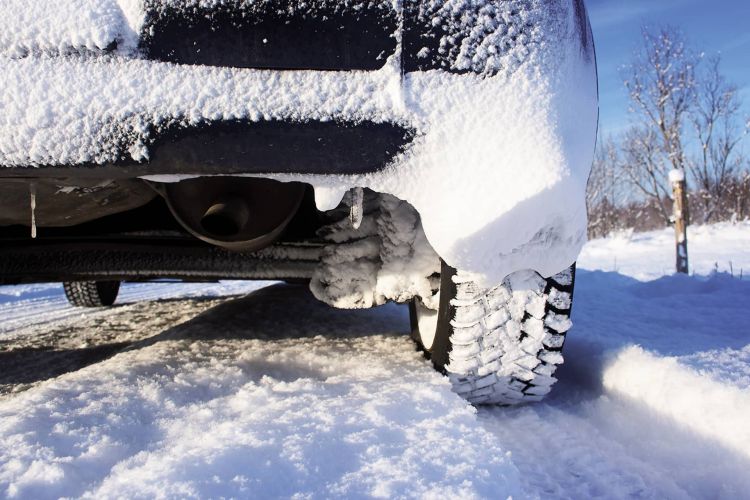
    There is only one case in which you will not be penalized for not using chains, even if they are essential: when your vehicle has winter tires marked M+S (Mud and Snow). You will recognize them because these two letters are accompanied by the alpine symbol: a three-peaked mountain with a snowflake. These compounds provide better grip, traction, braking distance and vehicle control. If the wheels are winter, but do not meet this requirement, you must drive with chains.

  • This car is a real lighter, it has an ECO label and you can buy it for €125/month or €17,131

    Without being too popular a utility vehicle and being far from the sales volume of the most popular cars in its category, this car is undoubtedly one of the most interesting proposals for the buyer who is looking for a new car. A vehicle for everyday use, with an urban cut, with the ECO label to avoid the restrictions of the new Low Emission Zones and, perhaps, the best value for money in its segment.

    €17,131 is the starting price of this car, with the condition of financing the purchase. Although you can also pay cash for €18,131. It is also available with two well-differentiated promotions, one financing with a fee of €125/month and another that, for €199/month, is actually renting to individuals.

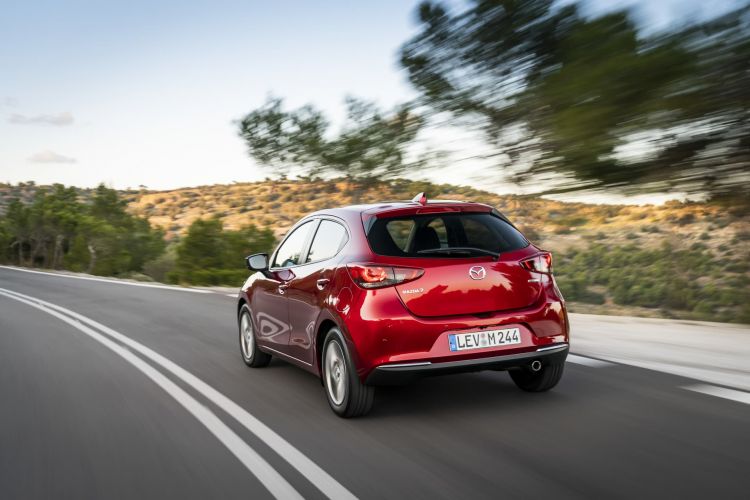
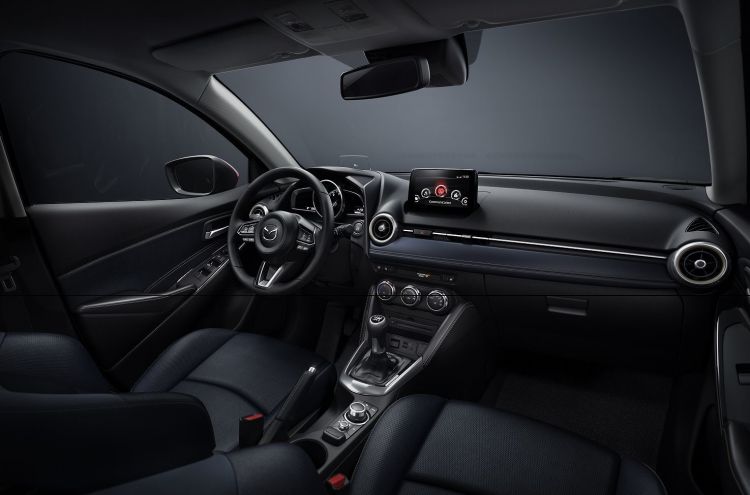
    The car we are talking about in this article is the cheapest in the Mazda range. A Mazda 2 that, as if that were not enough, is marketed in two very different versions, a Mazda 2 that enjoys the ECO label with its micro-hybrid engines and a Mazda 2 Hybrid that is actually a Toyota Yaris with the Mazda emblem.

    An authentic lighter with an ECO label

    The Mazda 2 is only available with a 90 hp gasoline enginewith a 6-speed manual transmission and having a hybrid system with which its consumption is reduced to 4.7 liters/100 kilometers (according to WLTP approval) and get the ECO label.

    Today Mazda has the following offers:

    • A Mazda 2 from €17,131, with the condition of financing the purchase. If we prefer to pay in cash or get a loan with another financial institution and under more favorable conditions, Mazda proposes a price of €18,131.
    • Mazda also proposes financing for €125/month with a FlexiOpción type plan, which guarantees a repurchase price at the end of the credit so that we decide to pay the last installment and keep the car, or replace it with another new car. The conditions proposed by Mazda are a first installment of €116.2, 34 installments of €125 and a final installment of €10,558.51 (with a maximum of 30,000 kilometres). With an opening commission of 3%, TIN 8.15% and APR 9.83%, the total price in installments would be €20,263.05.
    • Mazda also proposes leasing to individuals, with which the Mazda 2 would enjoy a fee of €199/month and would require the payment of an entry fee of €5,025. As it is a lease, it includes all-risk insurance without excess and comprehensive maintenance of the vehicle (without replacing tires). In What car do I buy? we also show different Mazda 2 leasing offersfrom €392/month, but without the need to pay an entry fee.

    What hybrid car do I buy?

    As we said, Mazda also has in its range a Mazda 2 Hybrid from €21,054 (financing) and €21,554 in cash. The Mazda 2 Hybrid is a full hybrid and, essentially, a Mazda-badged Toyota Yaris. Its offer price, as we can see, is very similar to that of the Toyota Yaris Hybrid itself, which can be purchased for €21,325 financing and €21,550 paying cash.

    If what we are looking for is a complete hybrid, another interesting option is the Renault Clio hybrid from €20,629.

    In it Second-hand catalog of What car do I buy? We can also find several offers for Mazda 2, for less than €15,000, but with a C label. And semi-new units with an Eco label from €16,900:

Back to top button