• It won’t last long, but now you can get a 120 CV SUV for less than €20,000

    Just a few days ago we told you about the renewal of the Hyundai Kona, which changes generation to become one of the most interesting SUVs of this 2023 that we have already started. The current generation of the Kona is still for sale, and it is, in fact, one of the most interesting B-SUVs that you can take home If you want to get a new vehicle, with more than complete equipment and, above all, at a price that escapes the current generalized increases in the market. What does the Hyundai Kona offer for less than €20,000?

    It’s true, the Hyundai Kona is a model that can be considered as “veteran”: It hit the market in 2017 and from the first moment it managed to conquer the general public thanks, above all, to its original aesthetics and a very wide range. In 2020 it was updated to try to improve its attractiveness in the face of growing competition that, moreover, was more prepared than ever. The result has also been good since The current Kona has an image that is current enough not to be heavy or outdated to the eye.

    In any case, One of the advantages of the presentation of a new generation, whatever the vehicle, is the possibility of acquiring units of the outgoing generation at a much more interesting sale price than usual., something that is also logical if we take into account that manufacturers are usually interested in getting rid of all possible units as soon as possible. Precisely now you can get a Hyundai Kona of the current generation for less than €20,000. Isn’t it your priority to get the latest on the market? Keep reading: this Kona can be one of the bargains at the beginning of this 2023.
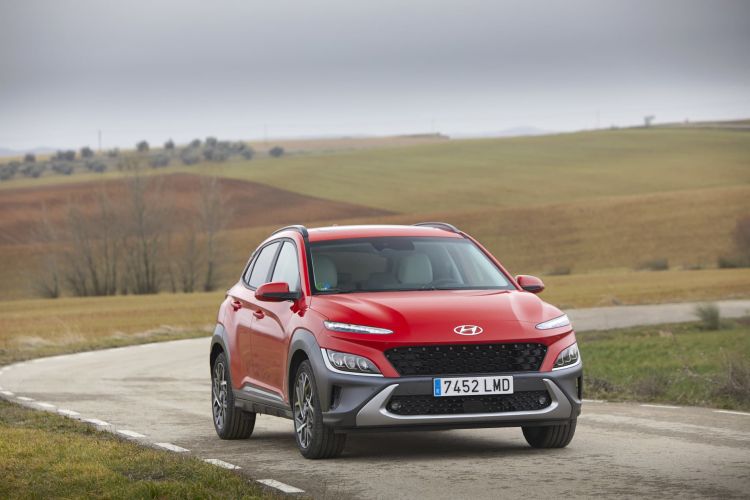
    A Hyundai Kona with everything for less than €20,000

    That’s how it is: It is an offer that is associated with financing, so that if we take advantage of the offer we will enjoy a price of €19,640 as long as we contract financing with Hyundai itself through its subsidiary Hyundai MOVE. With an entry of €1000, we will pay a first installment of €351.34 and 46 installments of €302.81. If we decide to keep the car, we will have to pay a final fee of €10,201.13, so that the total amount owed amounts to €24,481.73, which represents a TIN of 8.5% and an APR of 10.46%.

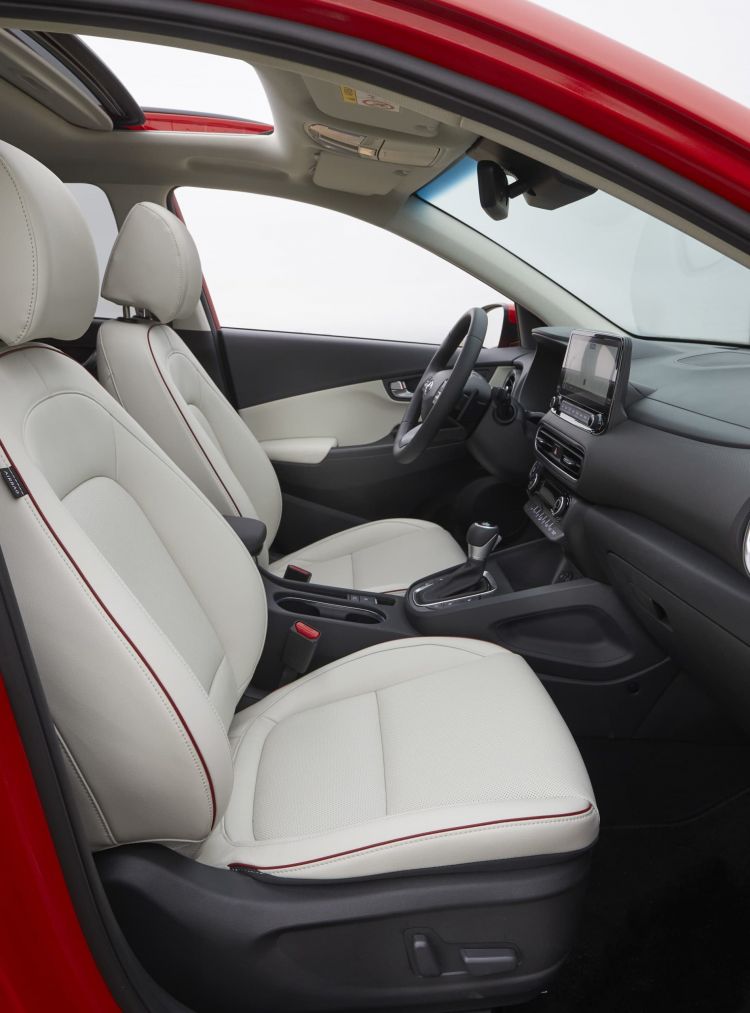
    In exchange we will receive a 120 hp Kona 1.0 T-GDi with a six-speed manual transmission associated with the Klass finish that, Although it is the access termination, it already has all the necessary equipment for day-to-day work by including elements such as the emergency braking system as standard.the lane change assistant, the infotainment system with connectivity with Apple Caplay and Android Auto, the air conditioning or the cruise control.
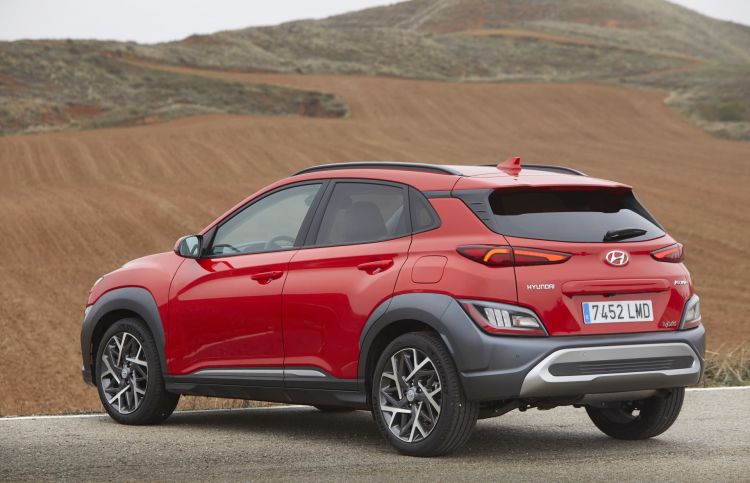
    In addition, by contracting financing with the brand, we will also access 5-year warranty, up to 5 years of maintenance, 5 years of roadside assistance and 5 years of updating the mapping of the navigation system. It should be remembered that with this engine the Kona accelerates from 0 to 100 km/h in 11.5 seconds, reaching a top speed of 185 km/h. Its average consumption is 5.8 liters/100 km, and since it does not have any type of electrification, it receives the distinctive C from the DGT.

    What car I buy: the Hyundai Kona

    If you are interested in the Hyundai Kona or any other model of both the brand and its competition, we have good news: they are available on our comparator portal. What car do I buy?the website where, in addition to finding the best real prices on the entire internet you will be able to know all the details of this South Korean B-SUV.
    As if that were not enough, with its complete buying guides You will be able to access the best content related to this Ignis at any time, quickly and easily, finding the weak and strong points of this model and any of its competitors, comparing them in the most visual way possible. All this, in addition, seasoned with the best reviews by the editorial team of Diariomotor.
  • Spanish drivers are clear: if they put tolls on the highways, they will go to the secondary

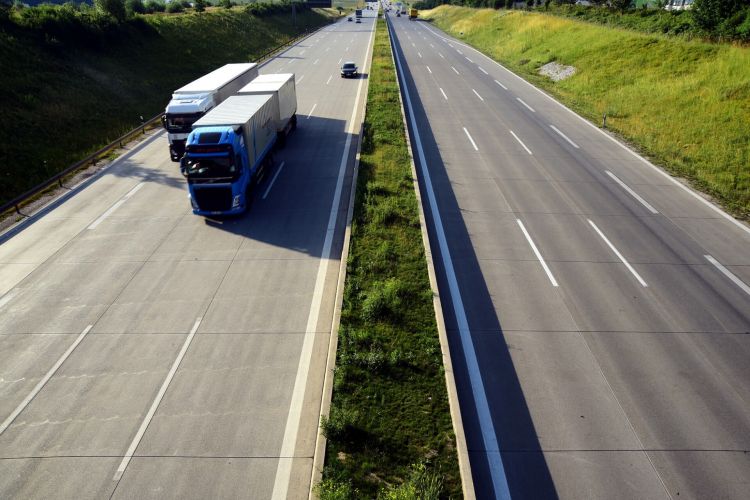
    The toll roads, one of the most controversial projects that the Government has put on the table of the motor world, have ceased to be a priority and urgent issue: the necessary conditions are not met, nor is the economic and social moment right. This does not mean that they are ruled out and, if they come true, Spanish drivers are clear about their reaction: change toll roads for secondary roads.

    This is the main conclusion of the study carried out by Alphabet, the leasing company. It is not the only one: according to the results obtained, 91% of those surveyed do not welcome the arrival of tolls on Spanish highways and 63% of drivers believe that their only purpose is to collect money. The first clue as to how traffic in our country would change is obtained through the opinion of 28%: they point out that one of the consequences will be the diversion of traffic towards secondary roads.

    Nearly seven out of ten drivers

    Toll highways is the formula that the Government has presented to Brussels to equip itself with the rest of the Member States, to be able to continue accessing aid from Europe and to finance its upkeep Given the impossibility of doing so (completely) through the General State Budget. The deficit accumulated by high-capacity roads is several billion euros and this translates into less safe roads for users.

    However, the Alphabet report suggests that highway tolls could become a counterproductive measure. The reason? If the Government makes this payment system a reality, 68% of Spanish drivers would be willing to travel on secondary roads to avoid these barriers… and despite being the roads with the highest accident rate.

    The accident rate of secondary schools

    If the survey data were translated into reality, it would mean that secondary roads would have to assume a large part of the traffic on the dual carriageways. something they would do without being prepared to accommodate such a volume of vehicles: the logical consequence points to an increase in the number of traffic accidents and, therefore, in the accident rate.

    It should be remembered that, in 2022, there were 1,042 fatal accidents on Spanish roads in which 1,145 people died and another 4,008 were seriously injured. This means 44 more deaths (+4%) and 425 fewer serious injuries (-10%) than in 2019, the reference year as it was the year before the pandemic. Conventional roads continue to be the ones that register the most deaths: 833 people lost their lives on these (73% of the total) and 312 on motorways and dual carriageways (27%).

    With these data on the table, the Government would be carrying out a series of internal studies prior to adopting the measure. Its objective is to find the formula that allows raising sufficient funds to maintain safety on the road network, prevent users from moving to secondary roads and improve safety. And everything points to a payment system (for use or through a vignette toll) that does not have a significant impact on the pocket of citizens.

  • Kia EV9 2024 specifications may be revealed, up to 400 HP and 480 LB-FT

    Kia is launching the EV9 Concept in late 2021 to showcase a large electric SUV positioned above the compact EV6 crossover. The next production version using the same E-GMP platform will be launched soon, and in the meantime, key technical specifications along with pricing details may have leaked out. Car and Driver received from a Telluride owner a screenshot of a customer survey the South Korean automaker sent out to potential EV buyers.

    Provided the information is accurate, Kia intends to sell the 2024 EV9 with a choice of five trim levels. The base model will cost $56,000 and offer 220 miles (354 kilometers) of range from an unspecified battery pack. Said to come with a single rear-mounted motor, giving the rear-wheel drive electric SUV a reported 200 horsepower and 250 pound-feet (339 Newton-meters) of torque. That should be enough for a 0 to 60 mph run in 8.5 seconds.

    The next trim level costs $61,000 and may have a bigger battery as the range increases to 290 miles (467 kilometers) while the electric motor remains the same. However, it performed slightly worse as the sprint time increased to 8.9 seconds, likely due to the heavier battery pack. Allegedly it will have 19-inch wheels and a maximum towing capacity of 2,000 pounds (907 kilograms).

    If you need all-wheel drive, the cheapest dual-motor EV9 is listed for $63,000 with a combined output of 400 hp and 380 lb-ft (515 Nm). It can travel 260 miles (418 kilometers) on a single charge, tow 3,500 lbs (1,588 kg), and reach 60 mph from a standstill in six seconds. For an additional $5,000, the next trim level increased the wheel size to 20 inches, which slashed range by a staggering 240 miles (386 kilometers).

    As for the $73,000 flagship, it also has 400 horsepower but an additional 100 lb-ft (136 Nm) of torque for an overall total of 480 lb-ft (653 Nm). The extra oomph increases towing capacity to 4,500 lbs (2,041 kg) and lowers 0-60 mph time to 5.2 seconds. The range-topper features black 21-inch wheels, raised suspension with an additional 0.4 inches (10 millimeters) of ground clearance, and black exterior accents.

    Price Range (miles) Horsepower Torque (lb-ft) Withdrawal (lbs) Tire size 0 to 60 mph (seconds)
    Crop 1 $56,000 220 200 250 0 19″ 8.5
    Crop 2 $61,000 290 200 250 2,000 19″ 8.9
    Crop 3 $63,000 260 400 380 3,500 19″ 6
    Crop 4 $68,000 240 400 380 3,500 20″ 6
    Crop 5 $73,000 240 400 480 4,500 21″ Black 5.2

    It remains to be seen whether Kia will actually offer all five trim levels, or if this customer survey will help the company decide to stick with the most popular. The equivalent Hyundai Ioniq 7 should have the same technical specifications. It’s worth mentioning that the EV9 has been confirmed to receive the Level 3 autonomous driving system, which is apparently listed as a $4,800 option. According to the same document, the two most expensive trim levels get vehicle-to-cargo and vehicle-to-grid capabilities.

    The official debut for the 2024 Kia ​​EV9 will take place in the first half of this year, with Hyundai’s counterpart likely not far behind.

  • The salvation of diesel and gasoline, which could delay its ban

    There is a very traditional saying that says that whoever makes the law, cheats. The European Union has sentenced internal combustion to death. As of 2035, diesel cars and gasoline should not be sold. Although it is true, a small loophole has been left. A clause that, in effect, is nothing other than the trap that would allow the European Union to review its objectivesin pursuit of greater laxity towards manufacturers and to delay the end of internal combustion, but also to impose even more rigid and ambitious objectives.

    We have already told you how throughout 2022 the European Union was leaving some margin for internal combustion. First, admitting the possibility that cars with internal combustion engines will continue to be sold beyond 2035, as long as they are “neutral”. This would imply the guarantee that the internal combustion cars that are sold from then on will work solely and exclusively using neutral synthetic fuels.

    But what is truly relevant for diesel and gasoline cars comes with the 2026 clause.

    The European Union advocates for increasingly ambitious emission reduction targets, but also for leaving some doors open that allow these targets to be reviewed – towards more lax regulations – in the coming years

    Leaving room to review the ban on diesel and gasoline

    In recent years, the decarbonization objectives have been reviewed, and these are still subject to possible future modifications, based on the regulation 2019/631. As we told you, throughout 2022 modifications have been introduced, such as the one that introduces the possibility of using neutral synthetic fuels and which, according to the latest documents drawn up by the European Commission, establishes the following:

    After consultation with stakeholders, the Commission will make a proposal to allow beyond 2035 the registration of vehicles that run exclusively on neutral synthetic fuels in accordance with European Union law, outside the scope of emission reduction targets of fleet and in accordance with the objectives of climate neutrality of the European Union.

    We have already told you why this solution can hardly be a generalized alternative that allows the massive sale of neutral internal combustion cars and, probably, is limited to maintaining a series of special or iconic vehicles that continue to use a combustion engine on the market. internal.

    The sale of “neutral” internal combustion cars will be allowed beyond 2035

    Clause 2026, a breather from diesel and gasoline?

    We have also told you how some voices in the European Union have already expressed concern about an untimely death of diesel and gasoline. Being aware that the die is cast for internal combustion and that by 2035 they will only be able to sell electric cars, many manufacturers have brought forward their electrification goals and will have a fully electric catalog much sooner. Without a domestic market for internal combustion, those manufacturers will also stop producing cars with internal combustion engines before, or well before, 2035.

    The European Union fears that stopping manufacturing cars with internal combustion engines implies the loss of exports and thousands of jobs. And it is precisely there where the 2026 clause comes into play, which not only intends to review compliance with the decarbonisation objectives in that year, but will also take into account its economic viability and its social consequences.

    In 2026, compliance with the decarbonization objectives will be reviewed and a report will also be issued that reflects its economic consequences and its impact on social justice.

    The revision clause in 2026 has been established as an amendment that revises article 15, and that establishes the following:

    The Commission will review, in 2026, the effectiveness and impact of this regulation, on the basis of the biennial reports, and present a report to the European Parliament and the Council with the results of the review. The Commission shall in particular assess the progress made under this Regulation to achieve the emission reduction targets in accordance with Article 1(5a), and taking into account technological developments, including plug-in hybrid technology, and the importance of a transition towards zero emissions economically viable and socially just.

    In an interview with the French media The echoesThierry Breton, European Commissioner for the Internal Market and Services, pointed out that this clause would make it possible to create mechanisms to delay the objective of prohibiting the sale of diesel and gasoline in 2035 (Automotive News).

    And that this option should not be taboo, and should be considered in 2026 if necessary. Especially if it is observed that the objectives established today are having negative consequences on the economy and society of the members of the Union.

    There is no going back, European manufacturers have already started their transition to electric and will stop selling diesel and gasoline, in many cases, before 2035

    There is no going back to the end of diesel and gasoline

    According to the events, it would be somewhat naive to think that the targets for banning diesel and gasoline sales by 2035 are going to be revised. Or at least that important revisions are going to be established, beyond specific moratoriums. But the big problem is that there is no turning back for the end of diesel and gasoline and manufacturers have not only accepted this prohibition, but have already begun a path that will not be reversed, in many cases advancing their objectives.

    Despite the fact that many manufacturers have shown their concern regarding the transition that has already begun, we have already seen how the largest manufacturers on the continent have set a date for the end of diesel and gasoline sales. Volkswagen confirmed a few months ago that in 2033 they will only sell electric cars. And far from demanding moratoriums or a delay in the established deadlines, they are asking the European Union to carry out more forceful and decisive actions that go along the lines of promoting the purchase of electric cars, their production in Europe, and facilitating their use. , for example promoting the creation of cargo networks in the community territory.

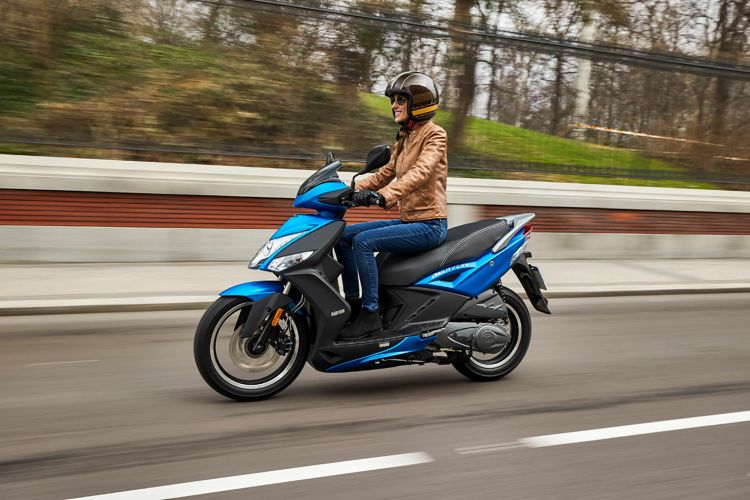
  • One of the cheapest motorcycles is on sale this month, consumes 2.5 l/100 km and costs €2,199

    Urban motorcycles are living their particular golden moment. More and more people are betting on 125 scooters for their urban trips. Inexpensive motorcycles, easy to drive, the car license enables you to drive them and they usually have a very low cost per kilometer.

    Just a few days ago we told you about the market leader, a Honda PCX 125 available from €3,250 and a model that shines for its relationship between quality and price. But even cheaper models are also available on the market, for just over €2,000, which have witnessed a rise in sales, not only because of what they can offer to individuals who want to replace the car with two wheels on their journeys. but also due to the rise of urban delivery services.

    Reduced from the €2,399 it cost until a few days ago, This 125 scooter is available this month from €2,199.

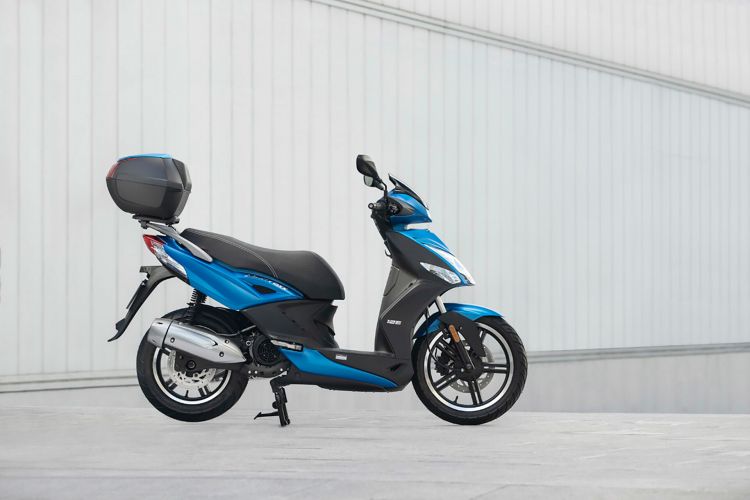
    The KYMCO Agility 125 is on sale and has gone from €2,399 that it cost until December, to €2,199 for which you can buy it this month

    An economical and urban motorcycle on sale this month

    With 9 CV of power, the KYMCO Agility 125 is a scooter designed essentially for urban journeys. It is a manageable and light scooter, weighing 131 kilograms, with a 14″ rear wheel and a 16″ high front wheel. Its seat is located at 820 millimeters and it has space for a jet-type helmet, also having the possibility of configuring it with an original trunk for €109 for a full-face helmet and passenger backrest.

    Its official consumption is 2.5 liters/100 kilometers. And it has a specific version for urban delivery, the Agility Carry 125, which for €2,149 has specific cargo solutions, with two grills, one front and one rear, and 12″ wheels.

    The Kymco Agility 125 available in a cheaper cargo version with 12″ wheels and specific cargo solutions including front and rear racks

    Alternatives: other 125 scooters

    • We already told you that until last month its price started at €2,399 and that this month is on sale from €2,199€1,051 less than the Honda PCX 125.
    • Its most direct rival, in any case, is called the Peugeot Tweet 125, another 125 high-wheel scooter that, at the time of writing this article, starts at €2,320.
    • Another of the most interesting alternatives, which is also on discount these days, is the SYM Symphony SR 125, available for €2,499.
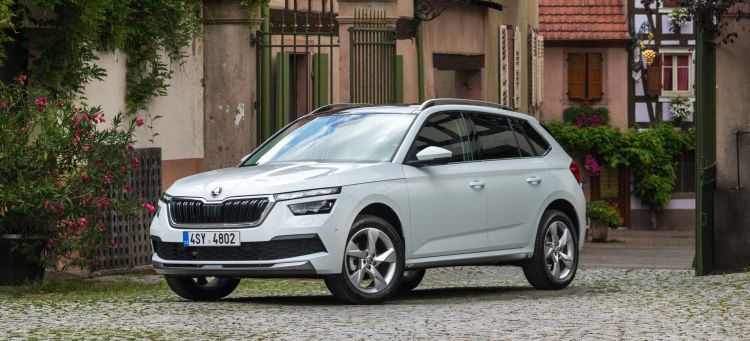
  • With 400 liters of trunk and for 129 euros per month, this SUV wants to have the best space-price ratio

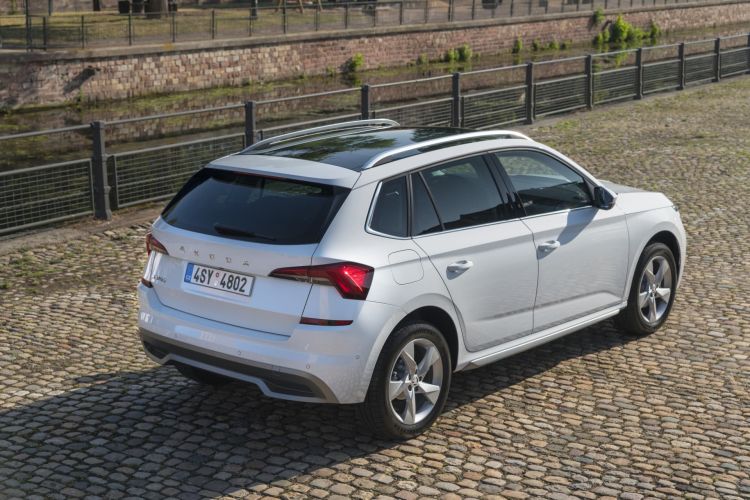
    Today space is paid for, and for many customers it is an essential requirement when buying a car. That is why offers like the one we are dealing with today make sense, which is none other than the Skoda Kamiq, a Czech SUV that declares 400 liters of luggage space and that it can be ours for 19,500 eurosthus allowing the Czech model to establish itself as one of the cars with the best space-price ratio, but with a trick?

    The truth is that yes, that Skoda demands to accept renting to be able to get hold of your access SUV for less than 130. That is why it is necessary to read the fine print and discover if we are really facing a smart purchase or, on the contrary, facing a tremendous bump due to the feared -and many times happy- interests.

    This is the Skoda Kamiq that can be ours for 129 euros per month

    But not only the interests can end what promised to be a good offer, but also the configuration of the car associated with it. And it is that the Skoda Kamiq that can end up in our garage for 19,500 euros has to do it with the 1.0 TSI 95 CV engine and the Ambition finishthat is to say, access engine and intermediate finish, something that can overshadow the purchase as it is a pairing that is not in accordance with the price.

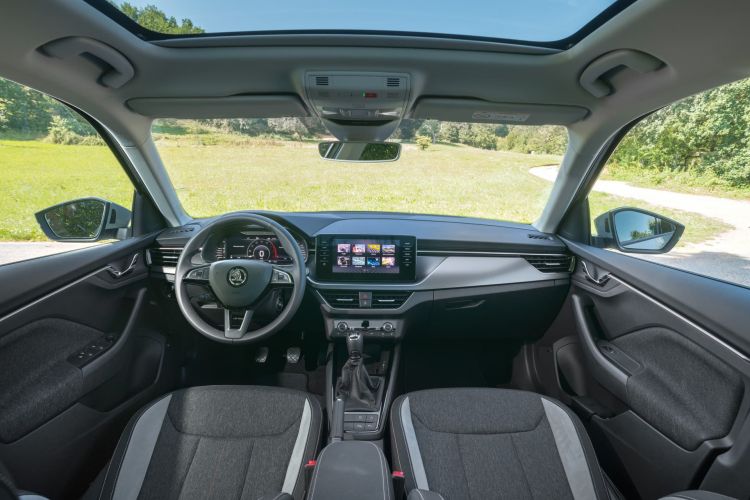
    Be that as it may, the Ambition finish includes standard elements such as 16-inch wheels, LED lights, a multifunction steering wheel trimmed in leather, involuntary lane change assistant and an 8-inch touch screen with connection to Apple CarPlay and Android Auto, bi-directional climate control. -automatic zone and rear parking sensor among others.

    In terms of mechanics, the Czech firm’s SUV boasts a rather modest engine, a 1.0-liter three-cylinder turbocharger that produces 95 hp and 175 Nm of torque. These are figures that are orchestrated by means of a five-speed manual gearbox, thus achieving a 0 to 100 in 11.1 seconds and a top speed of 181 km/h. But the true high point of the Skoda Kamiq is found in its combined consumption, which declares 5.5 liters per 100 under the WLTP cycle.

    Now, what does Skoda require for the Kamiq to be ours for 129 euros per month? The first thing is to face an entry of 4,593.27 euros, payment that will allow us to access 48 installments of 129 euros. To this we must add a TIN of 7.75%, an APR of 8.84%, an opening commission of 479.34 euros and an annual mileage limited to 20,000 kilometers.

    Once the four years of leasing are over, Skoda allows us to return it, exchange it for another model or keep it. In case of opting for this last step, we will have to pay a final installment of 14,531.25 euros, causing that, together with interest of 4,745.15 euros, the total price in installments is 25,795.86 euros, a figure that seems high compared to the 20,571.37 euros that a Skoda Kamiq of the same configuration costs but paid in cash. Although it is true that it can be very attractive if we do not decide to keep it.

    The Skoda Kamiq in What car do I buy?

    However, the Skoda Kamiq It’s not the only attractive B-segment SUV, and that is why we must explore other options. For this we can go to What car do I buy?the Diariomotor comparator where we will find the best offer of new cars and secondhand of the moment.

    Thus, we discovered that we can get hold of a SEAT Arona for 17,600 euros thanks to a discount of more than 4,000 euros. Another interesting alternative is the Renault Captur, model available for 20,792 euros. And finally the Citroën C3 Aircross, model that can end up in our garage for 17,070 euros.

    Now, if the Skoda Kamiq is our favorite option but it is not enough for a new one, we must know that We found the solution in the used market. And it is that there where we will discover an infinite number of options with all kinds of configurations and, above all, prices.

  • With a 500-liter boot and 510 CV, the definitive family car already has a price in Spain, and it is only suitable for a few

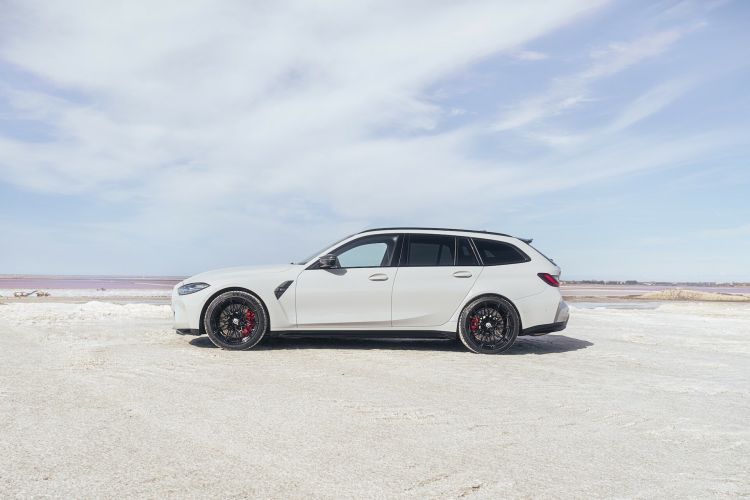
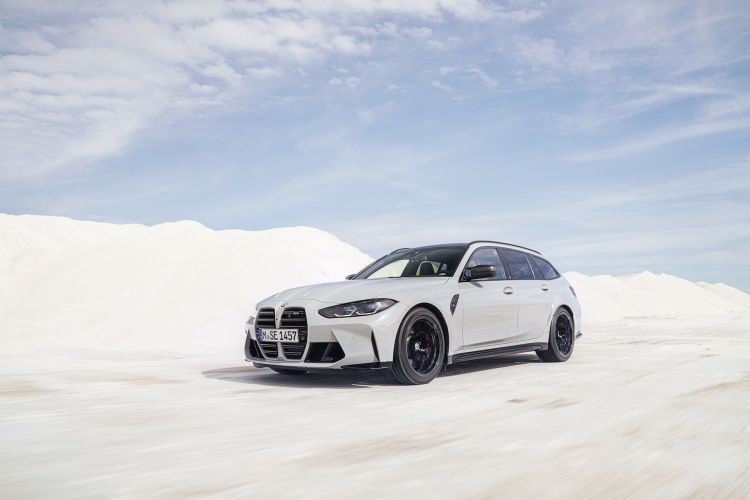
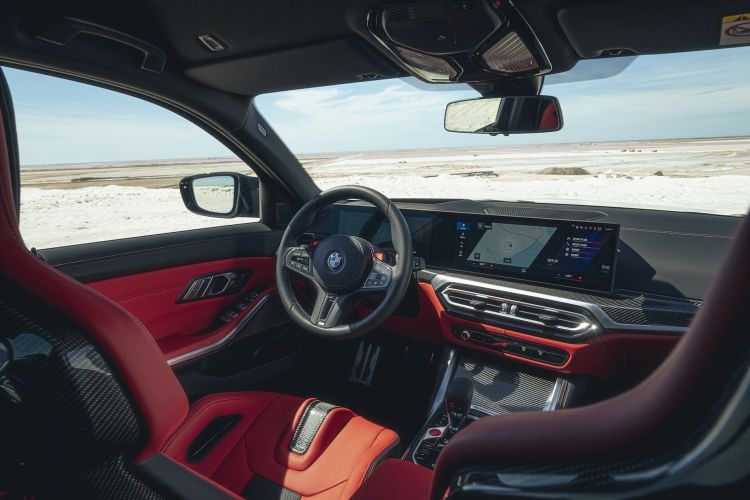
    Call me nostalgic, but I missed those times when sedans and family cars were the kings of the mambo when it came to offering itself as a practical, comfortable car for all kinds of uses. And that today not only the latter continue to exist, but also have sports iterations is, to say the least, exciting. Too bad the new BMW M3 Touring with its 500 liter boot and 510 hp cost in Spain a whopping 122,150 euros.

    Because yes, my dear readers, whoever wants to be the definitive family member will be for a few pockets, and that is what it is about when we are talking of the first family BMW M3 in history. Even so, this variant is not the most expensive in the range, falling behind the M4 Cabrio and Coupé and slightly above the BMW M3.

    BMW asks 122,150 euros for the new M3 Touring

    Specifically, The new BMW M3 Touring is 6,050 euros more expensive than an M3 saloon and 2,200 euros cheaper than the M4 Coupé and 11,400 euros than the M4 Cabrio. Although we are talking about a price range that, once entered, the distances are not as abrupt as in more mundane sectors, although in this specific case we are not talking so much about purchasing power, but about needs.

    And it is that the family member signed by M uses the same mechanical scheme as its other range brothers. That is, a turbocharged 3.0-liter inline-six that declares 510 hp and 650 Nm of torque. These figures allow a 0 to 100 in an impressive 3.6 seconds and a top speed of 250 km/h, all taking into account that the new M3 Touring declares 1,940 kilos on the scale.

    Thus, the M3 wagon is only one tenth slower than the conventional M3, and two tenths slower than the M4. That is to say, derisory differences that will not be noticed in practice, thus making it clear that, in the end, opting for the BMW M3 Touring compared to its other variants will depend, fundamentally, on our taste and what we are looking for. But what about your competition?

    And it is that we must not forget that the arrival of the Bavarian family member has caused two cars that were roaming freely to date to be threatened. These are the Audi RS4 Avant Y Mercedes-AMG C 63 S E-Performance Estate, models that have a price of 105,120 euros and, for the moment, unknown respectively, although everything indicates that, given its benefits and that it is a PHEV car, it will be around 150,000 euros.

    Be that as it may, the RS4 is reaching its end of life cycle, and sits slightly behind the BMW M3 Touring with 450 CV and a 0 to 100 in 4.1 seconds, figures that will vary significantly in its next installment as well as its price. Meanwhile, the current C 63 seeks to play in a new league with its 680 CV and 1,020 Nm of torque, the result of combining a four-cylinder engine with an electric one, although, surprisingly, it “settles” for a 0 to 100 in 3, 4 seconds.

Back to top button