• The indestructible supercar exists and it is this Honda NSX with 28 years and 645,000 km!

    Combining the concept of a sports car and reliability is very rarely possible, however today we bring you one of those few cases that is the exception that proves the rule. Designed and manufactured in Japan with the sole intention of demonstrating that not only Ferrari knew how to make high-performance carsthe Honda NSX has reached our days as a very special supercar due to its atypical recipe, but also because it is a car capable of defying the passage of time as this Honda NSX-T demonstrates, which already has 645,000 km! And it still works like the first day.

    enshrined as one of the best supercars made by the Japanese car industry, the first generation Honda NSX (Acura NSX in the USA) is one of those extremely special cars not so much for its performance, but for its philosophy. encouraged by a 3-liter V6 gasoline engine and 270 hpwe are talking about a car that offered careful driving dynamics, an extremely sophisticated design and something quite unusual among its rivals… reliability.

    For this reason, the protagonist of the video that you have on these lines (PogiCars) did not think twice when he discovered the ad for this Acura NSX-T on Facebook for $35,000. The car was from 1995, it had the occasional bump on its body, some tires that, even though they are BBS, do not hit anything and on its odometer there were more than 645,000 km (400,000 miles)but after negotiating with the seller and lowering the price to $29,000, the purchase was closed.

    Beyond the aesthetic plane and the mileage, the most important thing about this NSX-T was the fact that its maintenance had been carried out meticulously as well demonstrated by the invoices presented by the seller. Yes, it was an old car and quite used, but reliable and well maintained., so everything seems to indicate that this NSX will not give its new owner too many problems. And so much so that the new owner wants to use this NSX as the basis of a project to improve it, modify it to some extent and who knows if even enhance it.

    In Europe, finding a Honda NSX is not easy, not even in a questionable state, which is why the few units for sale are around 80,000 euros and upwards from there.

  • Giving away hot water bottles: Dacia’s fun response to subscription heated seats

    The subscriptions, Little by little, they are becoming commonplace in the motor industry. There are several brands that use this system to offer, upon payment, an improvement in the equipment or performance of your car. Dacia has wanted to show its position on this practice and has done it with humor: it will give away bags of water!

    Dacia is famous for simplicity and the aim of this campaign is to show that comfort should come at no cost. It thus shows its opposition to offering subscriptions to unlock functions that are already integrated into the vehicle. It will offer all drivers, not just its customers, a free hot water bottle: He has named them ‘Heated Seat Savior’. If we translate it from English it would be ‘Savior of the heated seat’.

    A system that will have your own guide: “After picking up their hot water bottle, drivers can safely fill it up by following the instructions provided and, before setting off, place it on the car seat to warm it up.”

    “Not very Dacia”

    The action will take place only in the United Kingdom. It will distribute a total of 75 hot water bags at three dealerships: Brent Cross (London), Trinity Way (Manchester) and Fendrod Way (Swansea). Each one will have 25 units that will be delivered, in order of arrival, between February 1 and 2, from nine in the morning to four in the afternoon. Drivers will not be required to buy anything, but may only take one item per person.

    Luke Broad, director of the brand in the United Kingdom, has explained that the ‘Heated Seat Savior’ “are somewhat fun, but they show the direction that the motor industry is taking in general with regard to the access of different functions to through a subscription. Asking someone to pay more to activate something that is already installed from the factory is not very Dacia. It should be remembered that the manufacturer offers heated seats as part of the optional equipment on models such as the Dacia Duster, Jogger and Sandero Stepway.

    BMW heated seats

    As we pointed out before, Dacia’s action comes after the bmw announced that, in some markets such as Germany, the United Kingdom, South Africa or South Korea, the owners of their models would have to pay to have heated front seats: 17 euros per month, 175 per year, 275 every three years or 390 euros for the unlimited access. If they do not pay the subscription, the vehicle in question will continue to have this equipment, but blocked.

    BMW also offers heated steering wheels for a £10 monthly subscription (11 euros, according to the current exchange rate). Perhaps we will soon see Dacia giving away gloves to drivers.

  • The SUV that is worth waiting for if you are looking for a new car: now it costs €20,000, how much will its generational replacement cost?

    Who has seen and who sees you!

    In 2017, one of the SUVs was uncovered that, even today, continues to be one of the most interesting proposals in its category. An economical product, which in the past we have come to see with offers even below €13,000. A lot has happened since then. The prices of new cars have skyrocketed and their starting price has been located at €19,640.

    Far from losing interest, Hyundai’s small SUV is still an interesting product right now. In its range it has economic gasoline engines with a C label, a 48-volt micro-hybrid mechanics with an ECO label, the same one that receives a third full hybrid mechanics and, finally, a fully electric version.

    Hyundai evolves, the Kona too

    Five years later we can see the evolution carried out by Hyundai, moving away from the economic product, and betting on a significant leap in quality and much more technological and distinguished products. Their products are not so cheap anymore. But it is not for this reason that we are surprised that the Hyundai Tucson has positioned itself this year as the best-selling car in Spain in the past year.

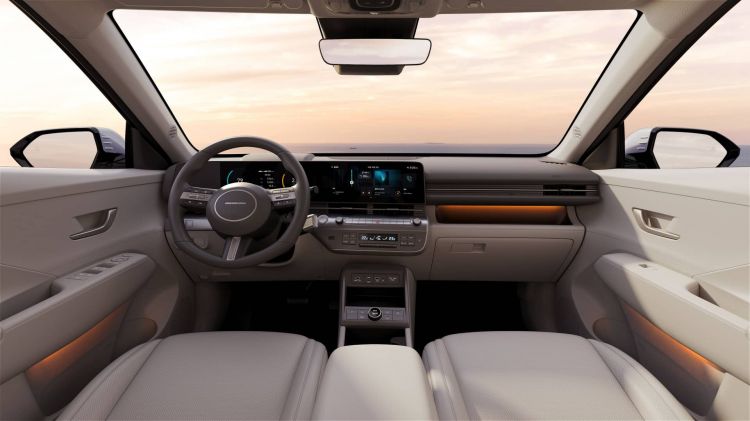
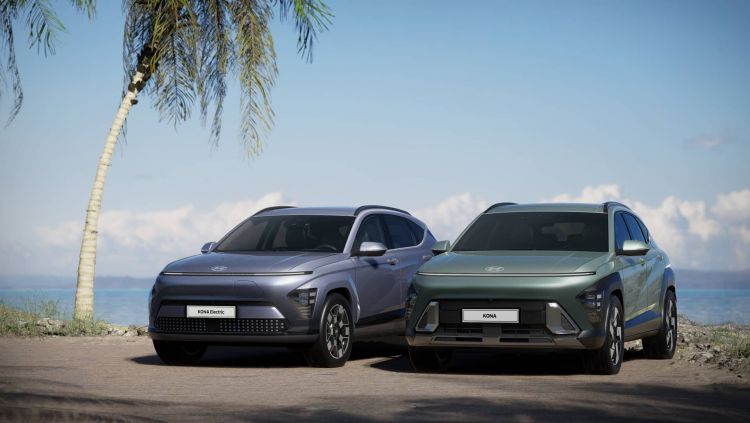
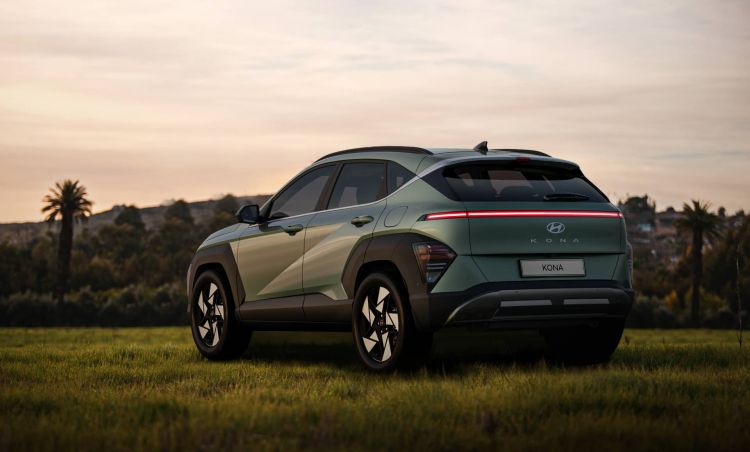
    The new generation of the Hyundai Kona is ready to hit dealerships and has followed, step by step, the evolution of its older brother, the Tucson. Its image has been completely revised and if it gives you the impression that it is now a bigger car, it will be because it certainly is. In practice, its wheelbase has increased by 60 millimeters, and legroom by 77 millimeters. We do not have more information about its trunk, except for the 723-liter capacity that can be reached if we fold down the rear row of seats.

    At 4.35 meters long, the new Hyundai Kona is no longer a natural rival to the SEAT Arona (4.14 meters), to become an alternative to the SEAT Ateca (4.36 meters). A segment jump that, necessarily, should be reflected in its price.

    The Hyundai Kona has gone from being similar in size to a SEAT Arona, to growing to be like an Ateca

    An SUV that could be gasoline, hybrid and electric

    On board the change is already significant. We will have to see the new Hyundai Kona live, touch it and test it to see if there has been a leap in quality in settings and materials. A priori, its 12.3″ double screen design, which unites the digital instrumentation with the central entertainment system, represents a qualitative leap with respect to the interior design of the Hyundai Kona that can still be purchased at dealerships.

    At a time when manufacturers are betting everything on electric, it is interesting to know that, at least in South Korea, it will be marketed with two gasoline engines of 149 and 198 hp, a hybrid with ECO label of 141 hp of power and, of course, an electric with a Zero Emissions label, of which more details will be provided in a few weeks.

    We still do not know how the range will be articulated in Europe and, specifically, in Spain. But the presence of a non-electrified gasoline engine would undoubtedly help to keep its starting price from skyrocketing. We will know in the coming weeks.

    In South Korea, at least, it will be marketed with gasoline engines, hybrids and also in an electric version.

    A bigger, roomier and probably more expensive SUV

    As we told you, the Hyundai Kona can be purchased right now for €19,640. And it is logical that the doubt arises, to wait or not for his successor. My partner Daniel Valdivielso told us these days the details of the current offer of the Hyundai Kona. In recent months we have seen how the prices of new cars evolve upwards, in all cases.

    So we would not dare to predict if Hyundai will have better offers for its small SUV before its generational change, in that period of run out or liquidation of a product that is going to be replaced.

    What we can imagine is that this new Hyundai Kona should see a price increase compared to its successor. And very likely to be located in figures that should no longer start below €20,000 and to be located somewhere in between with the €26,525 from which the Hyundai Tucson starts.

  • The anti-diesel that will sweep this year, good trunk for its size and price of SEAT Ateca and Hyundai Tucson

    The industry is betting heavily on electricity. Europe urges us to buy more electric. But the cars that we Spaniards are buying, and increasingly, do not connect to a plug. While in neighboring countries such as France or Portugal electric batteries and plug-in hybrids are reaching registration quotas of around 20%, in Spain we are still at 9.2% (ANFAC). Non-plug-in hybrids and micro-hybrids, on the other hand, already represent one in four registrations.

    There are many buyers who are finding the alternative to diesel in hybrid carsmotivated by its technology, but above all its ECO label, and by prices that little by little have come closer to those of its rivals with gasoline engines and, above all, diesel.

    And one of the best anti-diesel alternatives, without a doubt, comes from the manufacturer that has promoted the hybrid car the most since the last decade, Toyota.

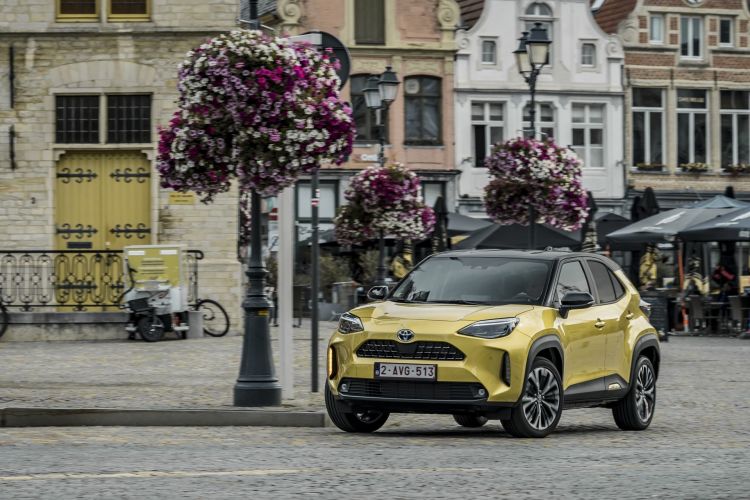
    The Toyota Yaris Cross was one of the great launches of the last year and in 2023 it is expected to be one of the products that ensures the leadership of registrations in Spain achieved by Toyota last year

    The anti-diesel that will sweep this year

    €24,925 is the price of the Toyota Yaris Cross (requires financing, the offer paying in cash is from €25,950). A hybrid car with an acceptable trunk (390 liters capacity), a single mechanical configuration, by the hand of a 116 HP engine and, of course, ECO label.

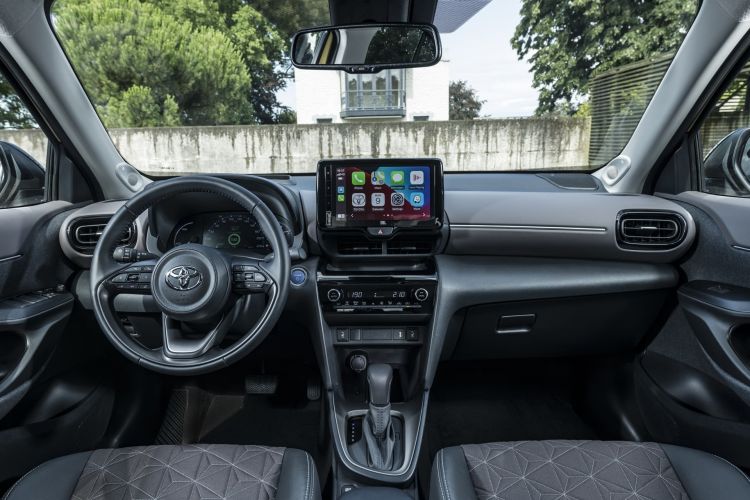
    From its access version, the offer, with Active Tech equipment, already includes 17″ two-tone alloy wheels, LED headlights, Toyota Touch entertainment system with 8″ touch screen and compatibility with Apple CarPlay and Android Auto and remote connectivity services.

    The Toyota Yaris Cross was presented in 2021 and at its launch last year it rose to become one of Toyota’s best-selling models. Thanks to this, the Yaris range (Yaris and Yaris Cross) is positioned as one of the best sellers in Spain. And it will necessarily be one of the products with which Toyota could consolidate its leadership in registration volume in Spain, along with another of the most important launches that will take place this year, that of the new Toyota Corolla Cross.

    Other SUVs, gasoline, diesel, and hybrids, alternatives to the Yaris Cross

    Both the SEAT Ateca and the Hyundai Tucson are two larger cars with a more spacious boot and, therefore, from a higher segment. But so is its price:

  • From a Golf to a supercar with 830 CV and 560,000 euros, Carlos Sainz has made himself the best self-gift

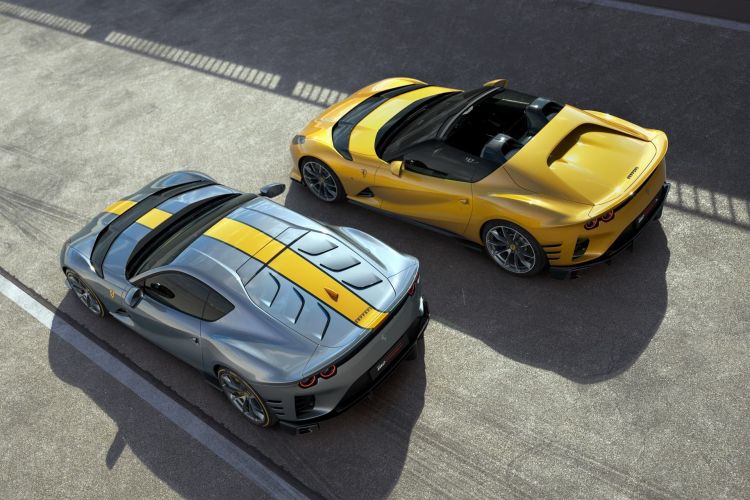
    Some of the best car collections are or have been in the hands of Formula 1 drivers, however this rule is not always followed and the clearest example is Carlos Sainz Jr. The Scuderia Ferrari driver has remained faithful to his first and only car so far, a Volkswagen Golf given to him by his parents.fulfilling a dream by giving himself one of the most powerful and coveted supercars of the moment, and that is that Carlos Sainz’s new car is an 830 CV Ferrari whose price is around 560,000 euros.

    Drivers like Lewis Hamilton, Nico Rosberg or even Fernando Alonso have garages valued at millions of euros, but at the other extreme we find a young Carlos Sainz who, despite his successful sporting career, was still faithful to the Volkswagen Golf that gave him his parents gave him when he turned 18. The driver from Madrid had not bought a car until now, something he was willing to remedy and he has done it in style.

    In 2021 Carlos Sainz placed himself in the hands of Ferrari’s Tailor Made division to make a very special order. to the Maranello factory. Within the exclusivity that a Ferrari 812 Competizione already represents, the sportiest and most radical version of the 812 Superfast, Sainz wanted to personalize this berlinetta down to the last detail to make it a truly unique car.. Throughout this video we can see part of the process, discovering the almost infinite world of possibilities that exists in terms of customization and integration of details, something that results in a model from which no two identical pieces will be manufactured.

    As Sainz explains, the choice of the 812 Competizione is given for two clear reasons, firstly for its characteristic design, and secondly for the use of an atmospheric V12, quite a rare bird on the market and which unfortunately has an expiration date now that the future can only be imagined electric. With 6.5 liters and a turning ceiling of 9,500 rpm, the Ferrari 812 Competizione declares 830 CV of maximum poweris able to do 0-100 km/h in 2.85 seconds and its top speed is 340 km/h.

    Delivered at the Ferrari facilities in Madrid (Santogal), the real price of this Ferrari 812 Competizione in a coupe body has not been revealed and it will really be difficult for us to know the exact amount given the degree of customization it has. However we talk about a car whose price moves around 560,000 euroshaving everything to become a highly valued collector’s item over the years.

  • Gravity batteries: the future of cheap energy storage that does not run out

    The energy transition faces many challenges. One of the most commented, without a doubt, is the seasonality and intermittency of the production of renewables. We agree that the objective happens because the energy we consume comes totally, or to a large extent, from renewable sources. But wind power depends on the wind and solar power on the time of day and, of course, solar radiation.

    On the other hand, another energy that is also being talked about at length, nuclear energy, is characterized by constant production, which implies that energy production will be stable, regardless of whether there is a high demand or a low demand. In the net.

    The energy transition process requires energy storage solutions. “Traditional” batteries, such as those used in our mobile phones or electric cars, are expensive and, to date, unfeasible for a massive accumulation of energy. But why are other energy storage solutions such as gravity batteries gaining momentum?

    Iberdrola. Images of the Tamega hydroelectric “gigabattery”.

    Gravity batteries to accumulate energy

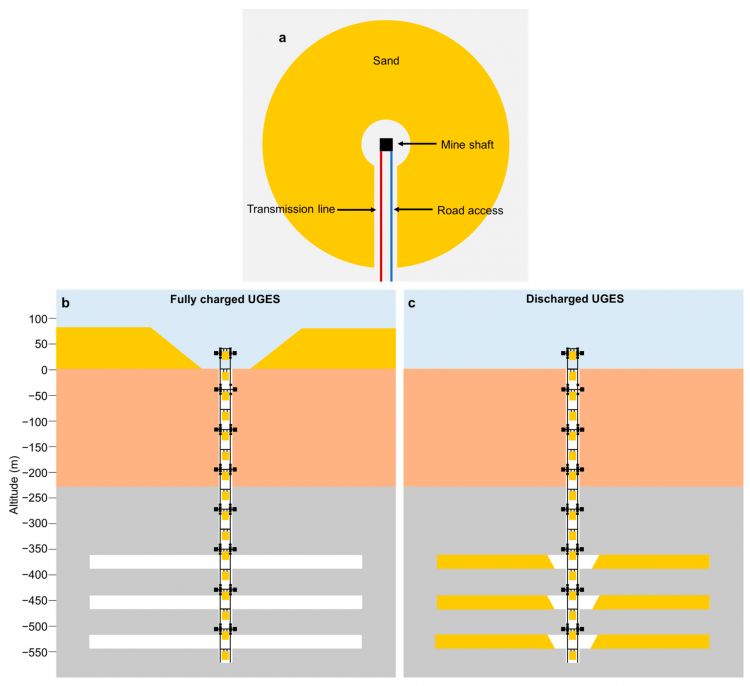
    A gravity battery is, in essence, a system that accumulates potential energy. Let’s imagine a well, with a pulley, and an electric motor that uses energy to raise a certain mass (accumulates energy) overcoming the force of gravity, and when releasing that mass it recovers it by means of an alternator (delivers energy) thanks to the force of the gravity.

    In a way, the essence of gravity batteries is comparable to the use of reversible hydroelectric plants such as gigabatteries, with a waterfall in which electricity is produced, but water can also be pumped to the upper dam taking advantage of surplus electricity production. .

    These days a study was published in the Multidisciplinary Digital Publishing Institute in which the benefits of gravity batteries were highlighted and, above all, their viability as an economical and long-term energy storage system. The essence of the proposed gravity batteries would be that of a well of hundreds of meters, with a motor and alternator system, and a mass that rises, or descends to the bottom of the well, to accumulate or produce electrical energy.

    MDPI: Underground Gravity Energy Storage: A Solution for Long-Term Energy Storage

    These types of batteries require a considerable infrastructure, with the cost that it implies, and also a favorable orography. But the study highlights above all how this could be a solution to take advantage of old mining operations. And not only that. Too It could be a very profitable alternative to provide a way out for the jobs lost with the disappearance of these mining operations in their conversion process.for example, by transforming old coal farms into gravity batteries (habitat).

  • With 550 CV, but being able to carry the whole family, here is the definitive sports saloon

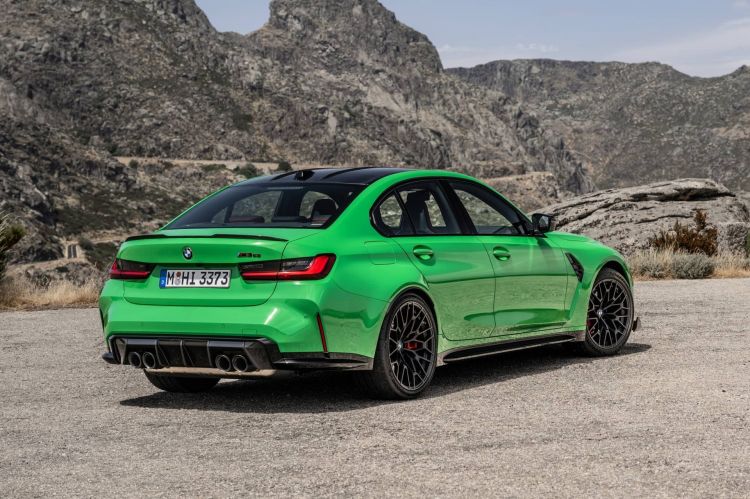
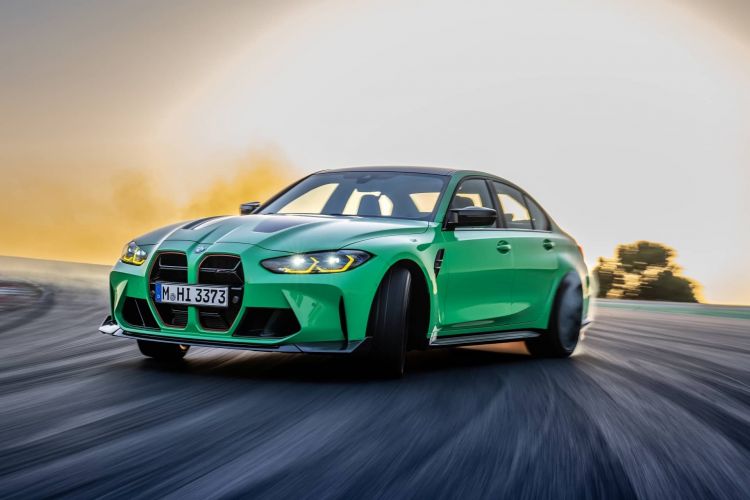
    The BMW Motorsport range continues to discover new features and today is the turn of its sportiest sedan. The new BMW M3 CS is the answer to all those who demanded a plus of claw in the already temperamental sedan, finding an improvement in performance, but also a reduction in weight and a more radical behavior. Designed to be the most versatile sports car, let’s find out what are the ingredients that make this so interesting BMW M3 CS 2023.

    The name Club Sport comes to the BMW M3 with the intention of bringing this sports sedan closer to the circuits. This M3 CS is located one step above the name Competition and at the same time one step below the name CSL that, for now, will only be available in the BMW M4.

    The first point of improvement of the M3 CS is found in its 3.0 Twin-Turbo engine with 6 cylinders in line, because now power reaches 550 hp, maintaining the maximum torque of 650 Nm. The transmission falls on a 8-speed automatic gearbox by torque converter, being connected to a M xDrive all-wheel drive system capable of offering different work profiles, including a 100% propulsion mode.

    Thanks to this set, the BMW M3 CS makes the 0-100 km/h in 3.4 seconds0-200 km/h in 11.1 seconds and reaches 305 km/h top speed, because it includes the M Driver package as standard that allows you to raise the maximum speed limitation. To manage these benefits it is possible to install a carbon ceramic brake system and a set of semislick tires mounted on 19″ wheels on the front axle and 20″ on the rear axle.

    The name CS also means finding a weight reduction of 20 kg compared to the M3 Competition. This is achieved through the use of a system of titanium exhaust, front bucket seats with a carbon fiber structure and different body parts made of CFRP such as the front hood, the front splitter, the air intakes, the roof, the mirrors or the rear diffuser.

    This new CS variant of the BMW M3 will be available from March with a price starting at 177,650 euros, although it already appears in the official configurator. To get an idea of ​​its positioning in terms of price, a BMW M3 Competition starts at 116,100 euros, 120,650 euros if we buy it in xDrive version.

Back to top button