• Conversion of the MGB Roadster to an electric car

    The MGB It is one of the most popular classic roadsters of all time. Launched in the late 1950s and sold for over two decades, it soon became the gold standard of classic british sports car. It is the concept car that the Mazda MX-5 reinterpreted with obvious success at the end of the eighties. Today it is a nice classic, with the easements of any classic, and the particularities of cars of British origin – especially electrically. And what a coincidence, this article is electric.

    I apologize for the small offense in the previous paragraph, regarding the reliability of the British classics. But somehow, I had to mention Lucas, “the lord of darkness”, a common joke regarding the electrical components of these vehicles. It is no less ironic that in the interest of greater reliability and performance, these MGBs are becoming 100% electric vehicles. The electric MGB is the star project of RBW Electric Classic Carsa British specialist in converting classic electric cars.

    Originally, the MGB equipped a simple carburetted engine of four cylinders, 1.8 liters and 95 CV of power.
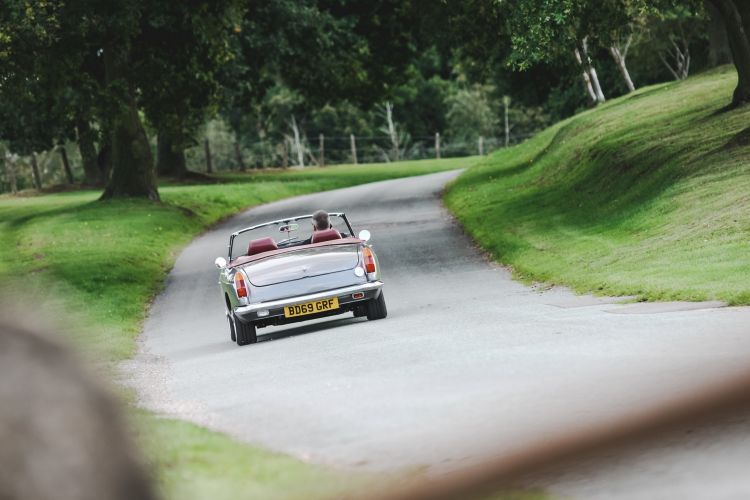
    In short, the MGB that is on your screens in a electric restomod of a classic roadster. Building on the still-plentiful base of an MGB, RBW removes the car’s heat engine and installs six lithium-ion batteries, of undisclosed capacity, under the hood. We know, yes, that the car has a range of 260 km, expandable to 320 km with a seventh battery. These batteries send “electron juice” to a motor located in the rear. A 95 hp electric drive – identical power to the original car – transmits power to the ground.

    It is not a high performance car. The 0 to 96 km/h does it in 9.0 seconds and its top speed is 129 km/h. They are not great features, but they are in line with those offered by the classic. Its driving feel retains the original charm of the car, but all its undercarriage has been reinforced and refurbished – Its independent suspension scheme is new, as are its subframes – for the sake of greater safety. Being an electric car, it has regenerative braking, reinforced bearings and ad-hoc electronic management.
    Some of the charm of a classic is lost, but it’s still just as beautiful and it’s a much more reliable car.

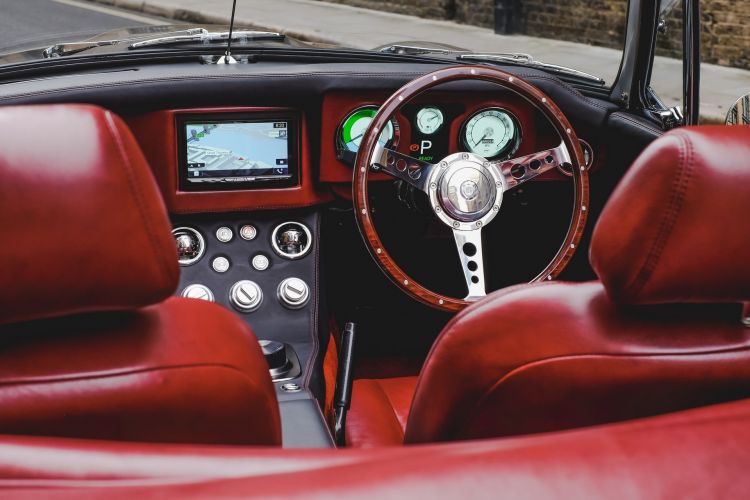
    Inside the car has been installed a digital instrumentation in the gap of analog clocks and the center console has been modified to install a 7″ touch screen signed by Pioneer for the infotainment system. The gear lever has been replaced by a gear wheel. The entire car is fully customizable, to suit the client. For At the moment RBW plans to build only 30 units, at a price – 90,000 pounds sterling – which at the current exchange rate is close to 100,000 euros.
  • Maserati puts a price on the new GranTurismo and points directly to the 911 Turbo

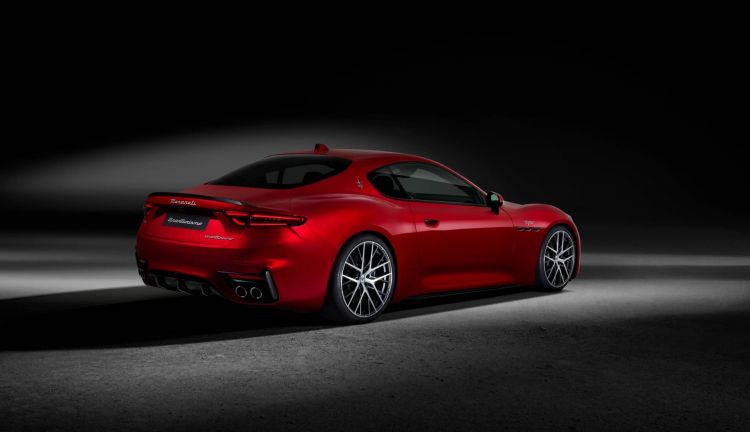
    The return of the Maserati GranTurismo The market is official and it is now possible to order a unit of this coupe from the Italian firm. But before doing so, after knowing all the details of this new generation, an important question still remained to be uncovered, which is none other than the price. For this reason today we are going to discover the Prices of the new Maserati GranTurismo 2023 and how it is compared to its most direct competition.

    The commercialization of the GranTurismo starts for the moment only in its two gasoline variants, leaving for a second phase the sale of the 761 CV Folgore electric version. Thus, the Maserati GranTurismo can be purchased in the Modena version, which is focused on a more luxurious and comfortable vision, more GT so that we understand each other, or in the Trophy version; where the focus is placed on sportsmanship to achieve a more radical behavior and maximum performance.

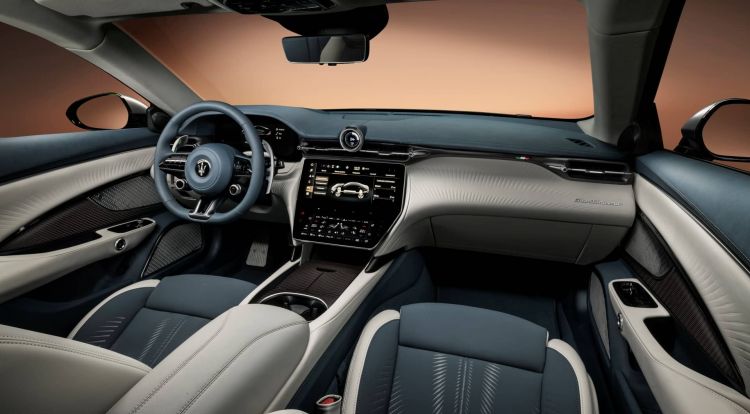
    These versions differ in exterior and interior design, albeit slightly, finding the greatest difference in the engine. despite sharing the same 3.0 V6 Twin-Turbo mechanics. In the case of the GranTurismo Modena the maximum power is 490 CV and the maximum torque of 600 Nm, achieving a 0-100 km/h of 3.9 seconds and a top speed of 302 km/h. In the case of the GranTurismo Trofeo, the power rises to 550 CV and the maximum torque up to 650 Nm, doing 0-100 km/h in 3.5 seconds and reaching 320 km/h. In both versions the transmission is through an automatic transmission of 8 relationships by torque converter, sending all the power through an all-wheel drive system.

    Price and alternatives of the Maserati GranTurismo 2023

    Once we look at the price, The Maserati GranTurismo Modena is for sale from 202,900 euroswhile The Maserati GranTurismo Trofeo is priced from 253,000 euros. With these prices, the Maserati sports coupe is one step below the brand’s supercar, the Maserati MC20 whose price starts at 281,678 euros.

    But in the segment where it works, the Maserati GranTurismo will have to deal with very heavyweights such as the Porsche 911 Turbo, with a price from 228,718 euros; the Mercedes-AMG SL V8, with a price from 190,471 euros or the Aston Martin DB11 V8, with a price from 214,120 euros.

  • What does the best-selling car in Europe look like compared to the US in a size comparator?

    We can have the measurements of all the cars on the market and compare them with each other, but nothing will make the differences as clear as placing one next to the other. In real life it is difficult to materialize these confrontations, especially when it comes to models that belong to different segments. Carsized solves this problem: a size comparator that allows you to compare, by size, vehicles sold around the world. And this is how the best seller in Europe looks like compared to the United States.

    Play with carsized It’s as fun as it is instructive. It is true that its operation is not the most intuitive and that its database is not completely updated because there are models that still do not have their latest versions. Despite this, it is a very useful tool for viewing and comparing various vehicles by size: it also allows customize metric units.

    How does this car comparator work? Just choose the brand and the vehicle in question: depending on each model you can specify the generation, the type of bodywork… It is even possible to compare copies from different eras and see how much one has grown, specifically, over the years. years. The comparison can be made up of one or more cars and You will be able to see their size differences from various angles: front, side (the most visual) and rear. Carsized completes this visual information with the measurements and the differences between them.

    USA vs Europe

    It is inevitable to compare our favorite models, but it is also inevitable to put, face to face, the largest ones against the smallest ones. It is here that a fun battle arises: the United States vs. Europe. Or what is the same: the Ford F-150 (the best-selling model on the other side of the Atlantic for years) before the Peugeot 208, the most popular on the Old Continent in 2022.

    Obviously, you don’t need a comparator to know that the former is much larger than the latter, but the image is still striking. Even though Carsize’s Ford F-150 is the earlier model, the dimensions are similar and serve to give us an idea of ​​the difference between the American pick-up and the French utility.

    The Ford F-150 measures 5.89 meters long compared to the 4.05 of the Peugeot 208: It almost fits within the wheelbase of the North American model, which is 12,000 feet. Regarding the difference in height (1,961 meters vs. 1.43 meters, 53.1 centimeters difference), it is striking that the roof of the French car coincides, more or less, with the hood and waist of its rival.

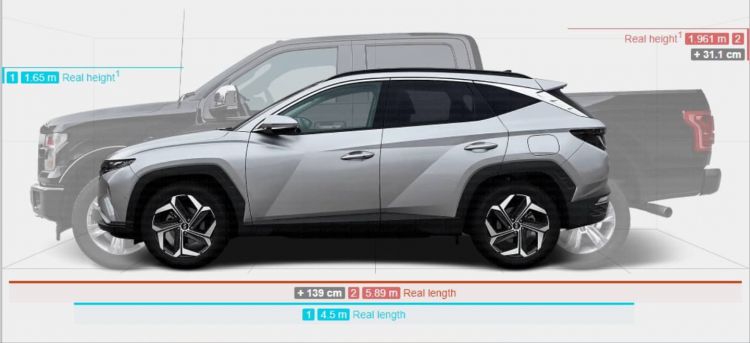
    And if we compare the United States with Spain? The best-selling car in our country, in 2022, has been the Hyundai Tucson. The South Korean SUV is 1.39 meters shorter (5.89 meters vs. 4.5 meters) and 31.1 centimeters shorter (1.961 meters vs. 1.65 meters). The comparison, in this case, is not so impressive because the roof line remains in the middle of the pick-up windows.

  • This is the new engine with which Peugeot wants you to forget about Toyota hybrids

    The success of non-plug-in hybrid motors Toyota at a commercial level is not unknown to other manufacturers, which is why more and more brands are encouraged by this technology before making the definitive leap to electric cars. Peugeot will be the next in the hands of its first microhybrid enginea system simpler and more affordable than the system used by Toyotabut which aims to be available in its entire range in order to multiply its sales.

    Hybridization is not a technology alien to Peugeot, in fact the French brand has opted for this type of engine for years, testing different formulas such as the diesel hybrid in the past or now the plug-in hybrid. However, now it wants to expand and reduce the price of its range, creating a new gasoline microhybrid engine that, according to Peugeot, promises a consumption reduction of up to 15% in mixed cycle and power move in electric mode during more than 50% of urban journeys.

    This hybrid drive is actually a evolution of the 1.2 PureTech gasoline engine which has been on the market for years in different models of the Stellantis group. Thus, the redesign of this mechanism includes a new 6-speed dual-clutch automatic gearbox (referred to as E-DCS6), a 28.6 hp electric motor and one lithium ion battery that works at 48 volts and that allows to travel up to 1 kilometer in 100% electric mode. We are therefore talking about a type of engine that is halfway between microhybrids and full hybrids, because although its structure and features are simple, it makes it possible to move in electric mode most of the time that we circulate at low speed.

    Available in a 100 or 136 hp version, this new 1.2 hybrid engine will reach all Peugeot models

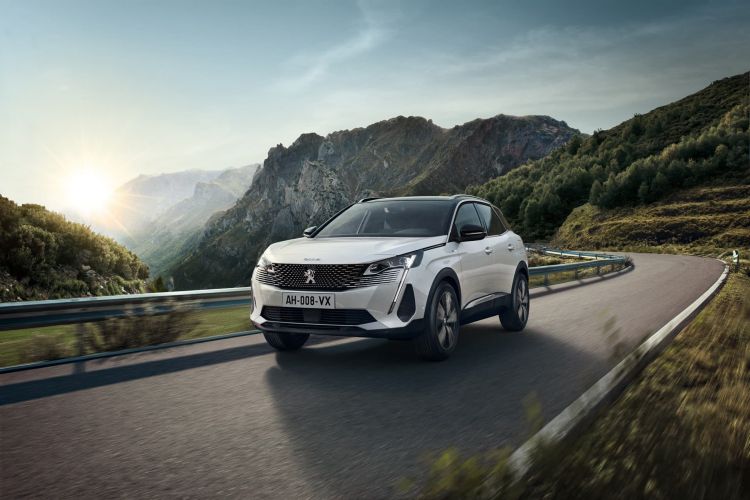
    In Spain this engine will receive the ECO emissions labelwhich is an important incentive now that ZBEs are coming into force for towns with more than 50,000 inhabitants. Peugeot’s new 1.2 hybrid engine will be available in 100 and 136 hp versionsbeginning its commercial journey in the 3008 and 5008 models, but expanding its offer to the rest of the range, as Peugeot has just confirmed that it will also be available in 208, 2008, 308 and 408, although for these models we will have to wait a little more than time, end of 2023 or beginning of 2024.

  • Opel Manta A 50th anniversary

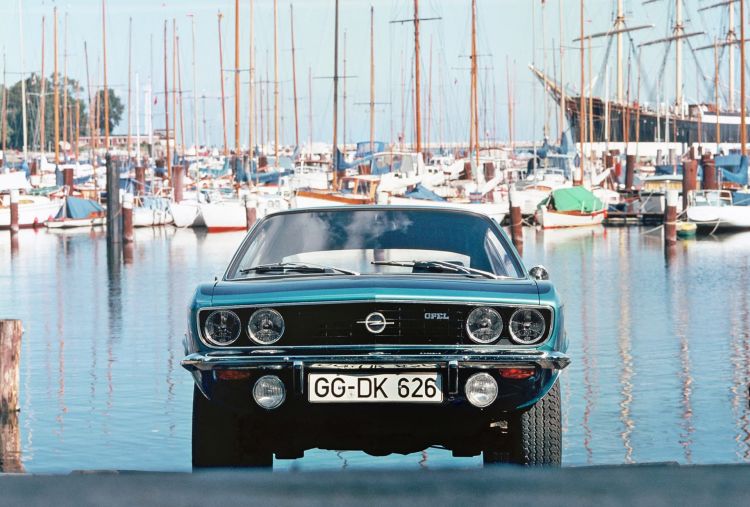
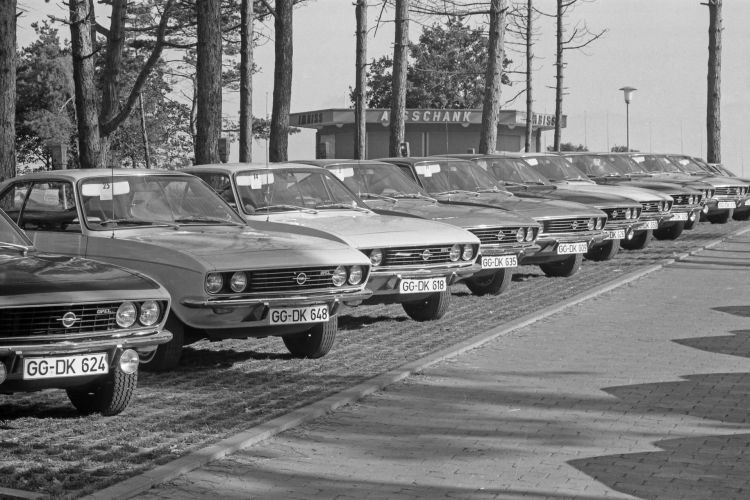
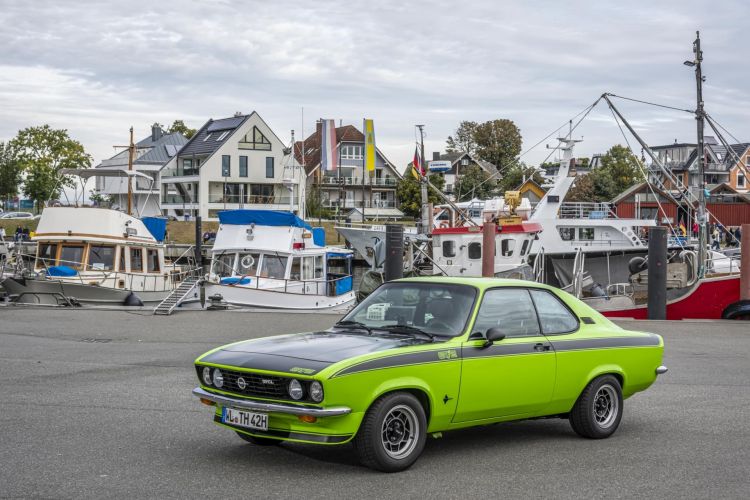
    This 2020 is fulfilled 50 years of the presentation of the first generation Opel Manta Aa model that debuted before 400 journalists on the shores of the German Baltic Sea and that was positioned as a serious alternative to the Ford Capri, with a mini aesthetic muscle car and with its 2+2 coupé body so fashionable and in demand at the time. Since then, and largely due to his good performances in different rallies, he has earned a large legion of followers, some of whom have gathered in that same place to celebrate his half century of life.

    The Manta A, a European Opel for the entire globe

    The Opel Manta began to take shape in 1969, taking an animal name, as was customary at the time with the Ford Mustang or Corvette Stingray. Thus, the Manta A it would be a coupé derivative of the Opel Ascona Awith a design clearly inspired by the muscle cars Americans, just as it happened with the Ford Capri, but with dimensions and engines more adapted to the old continent, offering double circular optics on the back as a clear reference to the Opel GT of the time.

    Thus, the Manta, which was for sale between 1970 and 1975was a relatively great sales success for the Rüsselsheim firm, and that is in its first year it managed to sell 56,200 units in Germany (in Spain, last year the best-selling model was the SEAT León with almost 36 thousand units), having produced a total of almost half a million units during those five years. In fact, this small sports car of 4.34 meters has been one of the few models that have been sold in the United Kingdom under the Opel brand, and not wearing the Vauxhall emblem, in addition to having been imported to the USA. where they were distributed using the Buick dealer network.

    The Manta did not stand out for very powerful engines

    As we have said, the Manta It was not characterized by having powerful mechanicsoffering engines ranging from 60 CV of the 1.2-liter access up to 1.9 liters with 105 hp and Bosch L Jetronic injection of the Manta GT/E, although as it is a vehicle of rear-wheel drive that did not reach 1,000 kg along with a 4-speed manual transmission (3-speed automatic as an option), offered ample doses of fun and sensations.

    However, the potential was there, and that led to preparations such as the 33 manufactured units of the Turbo blanket by Dealer Opel Team, Tony Fall and Broadspeed, who based on the 90 CV 1.9-liter Berlinetta, added a turbocharger, a modified carburettor and other small mechanical (and aesthetic) tweaks to extract 156 hp and sign a 0 to 100 km/h in a not inconsiderable 7.6 seconds.

    Thus, the most extreme version called TE2800 It came from the hand of Transeurop Engineering and Steinmetz with the approval of Opel, and that housed in its engine compartment a 2.8 liter inline six of the Opel Commodore GS taken from 142 CV to 230 hp to stand up to the more performance versions of the Capri, also having ventilated brakes, a 5-speed gearbox and a specific sports suspension. However, the TE2800 they occurred almost anecdotally as special preparations given its high cost and technical complexity, which required a new cooling system, redesigned axles and transmission system as well as a fiberglass hood and specific fins.

  • The most effective security system in history, the solution for the autonomy of electric vehicles in winter

    Winter is not the best season for electric cars because low temperatures become a double enemy: they not only play against their autonomy, they also force the air conditioning systems to start up, giving the batteries more work. The solution to this problem would be in the vehicle itself and, more specifically, in its most effective safety system: seat belts.

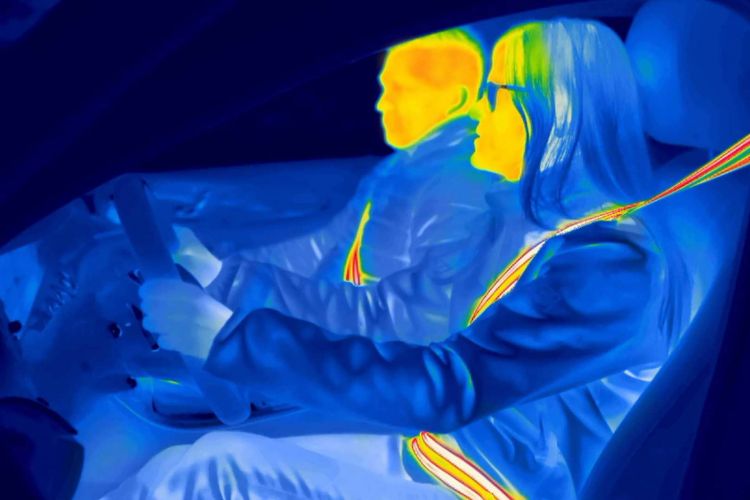
    This is the formula proposed by ZF, the German company known for automatic gearboxes and also for shaping many other components for vehicle manufacturers. Based on the concept that we have already seen in seats and steering wheels, he proposes adding heated seat belts to the equipment of electric cars to minimize the impact that the air conditioning system has on the battery.

    autonomy, safe

    ZF’s idea is to give the driver and his passengers a source of heat close to their body because they understand that it is the most efficient way to heat a human being: more, at least, than keeping an entire cabin at a specific temperature by distributing air hot through the vents.

    ZF suggests use heated belts together with seats of this type: with this system, the heating will not have to generate as much heat and this is particularly important in an electric car. Unlike a thermal one, it cannot take advantage of the thermal energy that emerges from the start-up of the car’s engine: it extracts it from the battery. With this technology, according to ZF, autonomy could be increased by 15%.

    The truth is that it is not the first time that they have created a concept of this type: Ford filed a patent for a similar product in 2018 and Mercedes installed heated seat belts in the Mercedes ESF, that experimental vehicle that was a safety laboratory on wheels.

    Safer, even

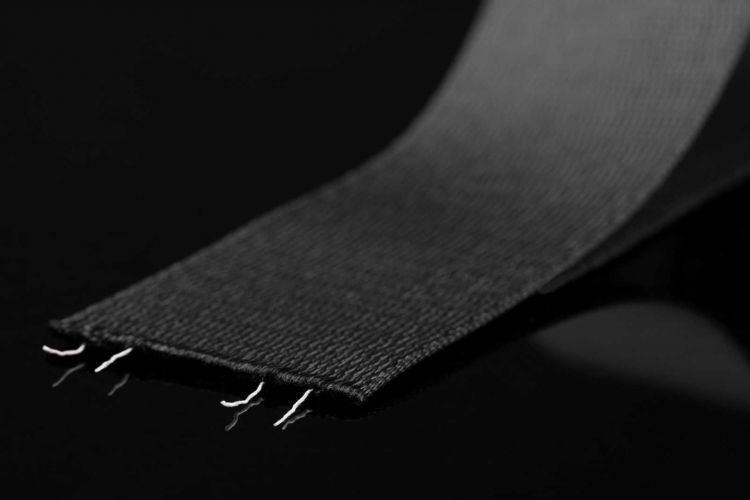
    ZF’s heated belts are as simple as they are interesting: they consist of small heat conductors integrated into the fabric structure like threads. This allows the thickness of the security system is the same and gives the possibility of heating the body of the driver and his companions evenly. They can be activated when the car starts to move and do not compromise the safety of the passengers. What’s more, ZF recognizes that its belts have an advantage: with them no one will want to get into the car wearing the coat.

    The heated belts are ready to be integrated into series production of a vehicle and its technology is ready to go: whether or not any manufacturer is interested in adopting it remains to be seen.

  • Ice on the windshield: everything you are doing right… to run out of front window

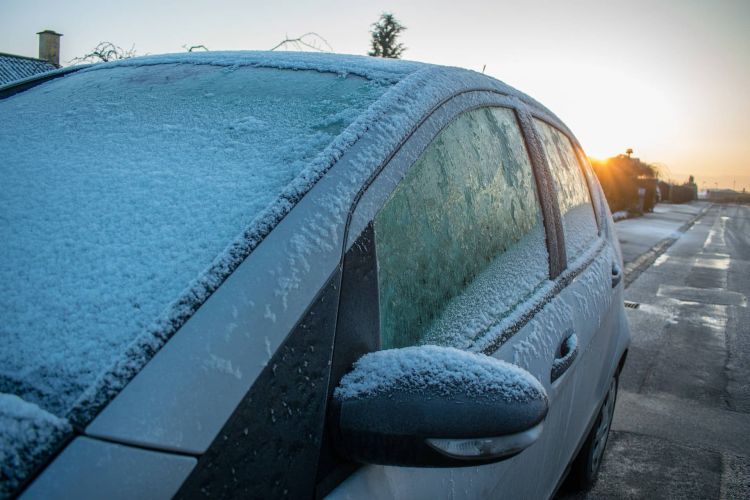
    The low temperatures that have come hand in hand with the latest storms are a double-edged sword for drivers: they not only affect driving, but also the condition of the car. If you are one of those who park on the street, you already know that ice on the windshield is a constant in winter: reason why we want remember everything you should not do to eliminate it… unless you want to change the front window of your vehicle.

    1. Hot water

    Some people may think that with hot water the ice will disappear from the windshield: it is not so. I may delete a part and It may also be that with the sudden change in temperature the glass of the moon breaks: especially if it already has some impact. If Goddess Luck is on your side and this does not happen, after a few minutes the water will cool down… and you will continue to have the same problem.

    In return, you can use alcohol 90 degrees (yes, the one we use to disinfect wounds) because the freezing point is different from that of water. Another option is to buy a specific liquid to defrost the windshield.

    2. Wipers

    Running the windshield wipers and pouring water is not a good idea. First of all, if there is ice or frost, it is most likely that the rubbers are glued to the glass: by activating them you will only be able to break them and scratch the glass. And in second place, water will make things worse because it can also be frozen.

    At this point it is advisable to keep in mind that Windshield wipers must be changed at least once a year: It is one of the components that suffers the most (especially with extreme temperatures) and if they are not in good condition, they will not fulfill their mission correctly.

    On the other hand, in winter it is recommended Pour a specific product that contains antifreeze into the windshield wiper reservoir: Water or soap and water can freeze, as can hoses, system electric pump, and sprayers.

    3. Salt

    You may come to think that if the maintenance services put salt on the asphalt to prevent ice sheets from forming, this solution can also be used for the windows of your car. It is not like that: the compound they use has a specific composition and, in addition, the salt prevents freezing, although it does not defrost. What it does do is scratch the glass and corrode the sheet metal of the body.

    4. Scratch

    Scraping the ice off the windshield is a good idea. as long as you don’t do it with a metallic instrument because you will scratch the moon. Use a plastic squeegee: it works effectively, does not damage the glass, can be kept in the glove box and is cheap. If you don’t have one on hand, you can use a plastic card, but not the bank card because it will surely be damaged.

    5. Heating

    Be careful if you are going to turn on the car heater to help defrost the windshield. The DGT recalls that, according to the tests that have been carried out, With an outside temperature of -10 degrees, in more than 80% of cases setting the heating too high can cause the glass to break after five minutes. With -5 degrees, it happens 70% of the time and at 0 degrees, it reaches almost 60%.

    one of homemade tricks

    To avoid finding ice on the windshield during the coldest months of the year, there are some homemade tricks that you can apply: rub the glass with a peeled potato or spray it with a mixture of water and vinegar, are two of them.

    If you prefer something more practical, simple and, above all, cleaner, you can always cover the car with a tarpaulin or cover the window with cardboard (held with wiper arms) or with a blanket (fastened with the front doors). In this way, the ice will fall on these surfaces, thus avoiding its formation on the car window.

Back to top button