• The best-selling car in Spain is once again a Dacia and for €13,640 you get it with an ECO label

    Dacia starts the year in style, positioning its reference product as the best-selling car in Spain in January. A milestone that does not surprise us. If we take into account that the Dacia Sandero has been among the best sellers in Spain for years, that it was the second best-selling car last year, only surpassed by the Hyundai Tucson and that it chains its second consecutive month as leader.

    But today is also the time to look at the other facet of the Dacia Sandero which, despite being one of the cheapest cars on the market, is also one of the best-selling ECO labeled cars in Spain.

    A rising value, that of the ECO label, at a time when new Low Emission Zones are beginning to be announced and, with them, new restrictions that will mainly affect C-labels and older cars. And one of Dacia’s most interesting commercial arguments, which has provided a range of products with an ECO label with which the Dacia-Renault duo dominates the bifuel market.
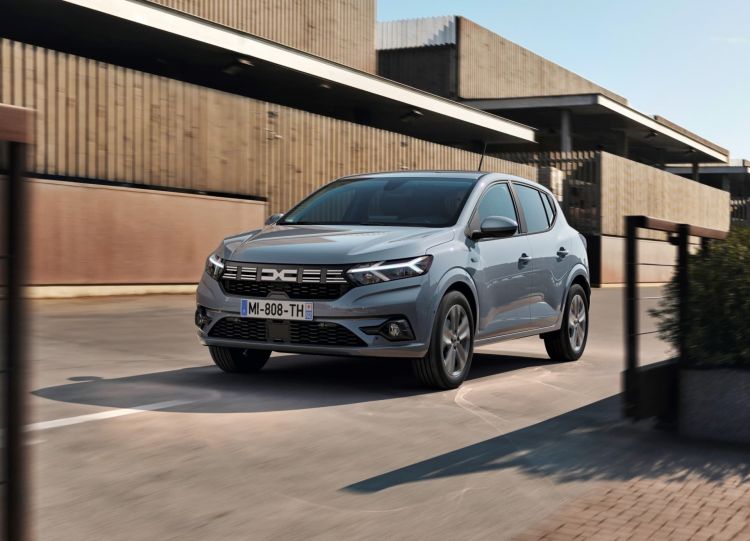
    A Dacia for €13,640 with an ECO label

    To this day the Price of the cheapest Dacia Sandero is €13,040 Y €14,170 if we want the Stepway version. In any case, the cheapest Dacia Sandero is not the one we would recommend, with its 90 hp TCe gasoline engine, but its alternative with an ECO label, a 100 hp Dacia Sandero ECO-G that can run on either LPG or gasoline.

    For a difference of €600, with respect to the 90 CV power access engine, we can access a car that, in addition to having an ECO label, offers a lower cost per kilometer, due to the lower prices of refueling LPG compared to the gas.

    To this day, half of the Dacia Sanderos sold in Spain are bifuel and therefore have the ECO label. The Dacia Sandero is, in fact, the best-selling LPG car in Spain in January (and it was also last year). If we continue with the registration figures in Spain in January, the Dacia Sandero was also one of the best-selling ECO labels in Spain, only surpassed by two hybrids and one micro-hybrid, the Toyota C-HR, the Toyota Corolla and the Fiat. 500, respectively.
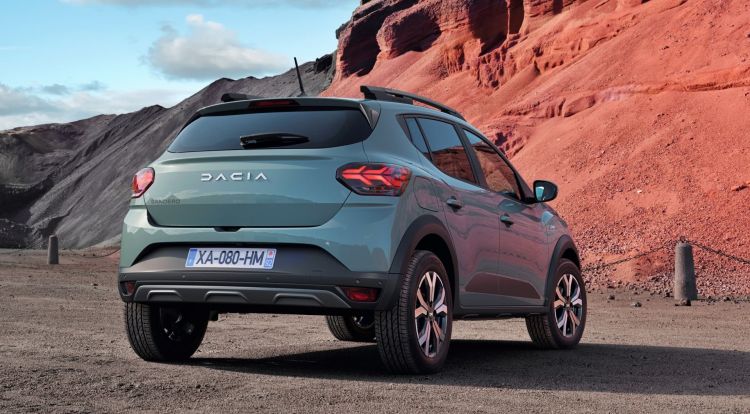
    As we told you, Dacia has a range of cars that get the ECO label thanks to their LPG mechanics. Last year, Dacia and Renault – which share technology – led the LPG car market with the following figures (ANFAC data):

    1. Dacia Sandero: 7,037 registrations
    2. Dacia Jogger: 2,845
    3. Dacia Dusters: 2,133
    4. Renault Clio: 1,142
    5. Renault Capture: 977

    As if that were not enough, Dacia is in the process of launching its first hybridof which today We also knew its price with promotions and discounts from €23,350. A Dacia Jogger Hybrid 140 that, in addition to having the ECO label, uses full hybrid mechanics and offers unprecedented space possibilities for any other hybrid in its price range, with a boot capacity of around 700 liters and up to 7 seats. .
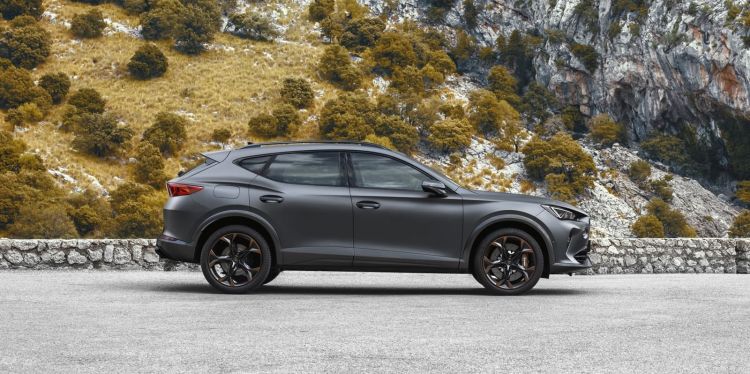
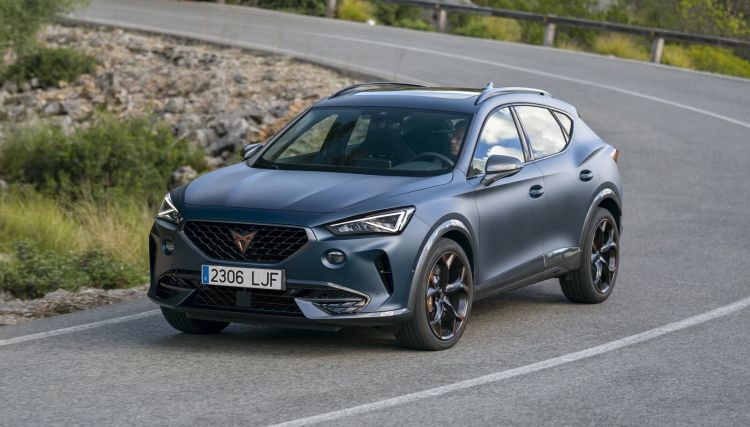
  • The unrivaled anti-SUV has 450 liters of trunk space, 150 CV and an exciting behavior that you did not expect

    In 2022, according to the Spanish Association of Automobile and Truck Manufacturers (ANFAC), 58% of the cars sold in Spain belonged to the same segment: 471,505 SUVs were registered between small, medium, large and premium models. Yes, it seems difficult to escape the fashion that has been setting trends in the market for years because one thing is what we would like and another what we really need… or can afford. If you are going to enter the SUV club, do not lose sight of this anti-SUV with tourism behavior.

    This offer features a car straddling two worlds: that of SUVs and that of passenger cars with remarkable driving dynamics. If you do not want to lose the latter, the purchase of a CUPRA Formentor is one of the most recommended in the segment because It has a behavior very similar to that of a tourism. Not surprisingly, in 2022 it was the king of CUPRA with 11,621 sales compared to the 324 of the CUPRA Ateca… and, by the way, it also surpassed the SEAT Ateca (10,437 registrations).

    The most agile SUV in its segment

    One of the great strengths of CUPRA Formentor is its behavior on the asphalt: from the driving position (a little higher than that of a conventional car with all the advantages that this entails), you will see that it is one of the most agile SUVs of the segment.

    In this case, the offer focuses on the access version: it is equipped with a 1.5 TSI gasoline engine and 150 CV, which is associated with a six-speed manual transmission. With these features, it goes from 0 to 100 km/h in less than nine seconds and its top speed is over 200 km/h. The consumption figures are as correct as they are reasonable: the average, according to the WLTP Cycle, remains at 6.4 l/100 km.

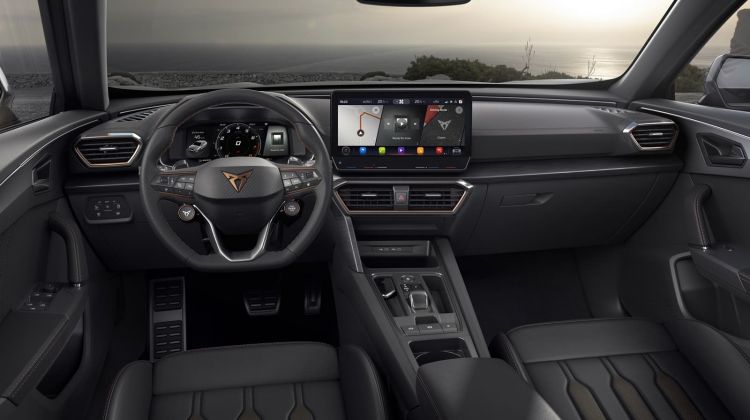
    This approach is complemented by a striking design and a cabin almost as spacious as that of a SEAT Ateca, but much more technological. The standard equipment includes 18-inch wheels, digital instrumentation, an infotainment system compatible with Apple CarPlay and Android Auto and integrated into a ten-inch screen, three-zone climate control, adaptive cruise control, and parking sensors. Nor does it lose cargo capacity, since its trunk offers 450 liters, although, yes, the mouth is somewhat raised.

    The offer of the CUPRA Formentor

    It is Volkswagen Renting who gives the access key to the CUPRA Formentor 1.5 TSI 110kW (150CV) with an offer aimed at individuals and valid until February 28, 2023, except for changes in the conditions of the price of the vehicle.

    The CUPRA Formentor leasing contract has a duration of 36 months (three years) with a limit of 10,000 kilometers per year. The monthly payments are 280 euros per month (including VAT) and you must provide an entry of 7,122 euros. The full final price, including taxes, is 16,922 euros.

    As it is a lease, the offer of the CUPRA Formentor includes all services in the CUPRA Official Network for maintenance and wear, insurance and complementary service for repairs and travel assistance during the contracted period. The change of tires is left out. It is, therefore, an option to take into account.

    Other alternatives

    If the 150 CV CUPRA Formentor 1.5 TSI doesn’t quite fit your bill, CUPRA has other options. It puts at your disposal the same model, but with DSG automatic transmission: In this case, the conditions are the same (36 months and 10,000 kilometers per year), although the entry (7,875.19 euros) and the fee (290 euros per month) change. And if you prefer a CUPRA Formentor with the DGT Zero label, keep an eye out the CUPRA Formentor 1.4 e-HYBRID with 204 hp: It has an entry of 8,826 euros and a monthly payment of 300 euros per month.

    Don’t forget that in What car do I buy? you can find our shopping guide with the best SUVs for rent of the market and, also, with premium compact SUVs.

  • It is called MS11, it is totally electric and it is established as the maximum evolution (so far) of a mobile company

    To think of Xiaomi is to think of latest-generation mobile phones or electronic devices of all sizes, but not cars. Well, dear readers, the perception of the Chinese manufacturer is about to change, because it already has everything ready to present its first car, the baptized as MS11. And although it is true that at the moment has leakedNow we can put a “face” on this 100% electric sedan that aims to mark a before and after in the sector with, surely, a very affordable price.

    A) Yes, Xiaomi steps on the accelerator against companies like Apple, which has been testing -and working- on the creation of a car for a long time. However, firms like Sony, which has joined forces with Honda, are already posing a challenge to the mobile phone manufacturer in what has become a premature war for both.

    The MS11, Xiaomi’s first car, is filtered

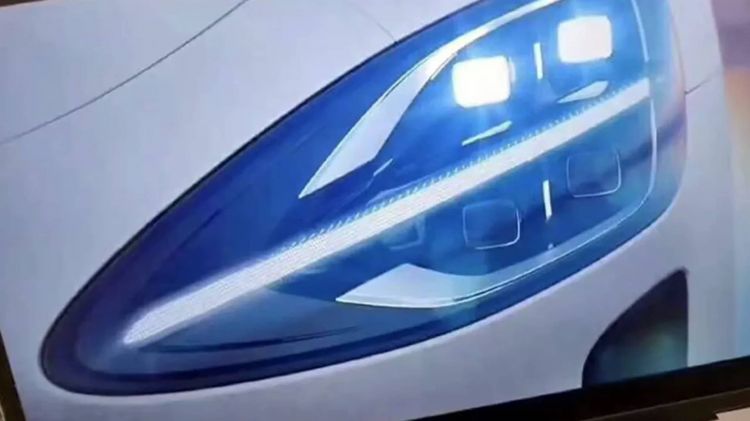
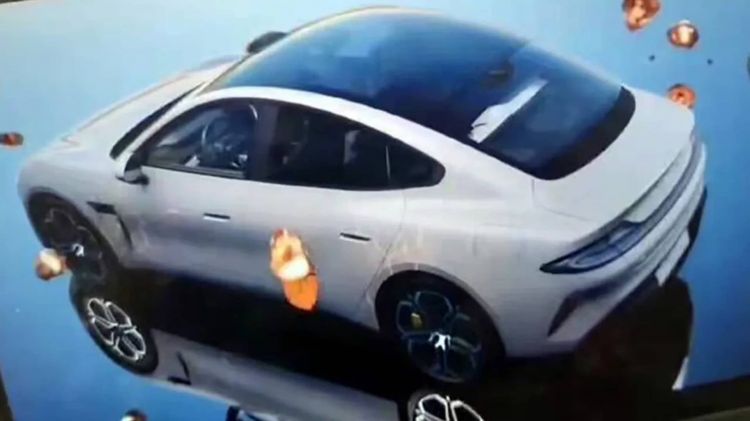
    Be that as it may, and focusing on the Xiaomi product, we find ourselves, to the surprise and delight of many, with a saloon and not an SUV. And although the images are not as sharp as we would like, we can distinguish a rather modern, clean and cutting-edge overall design, offering soft lines that are broken by more abrupt elements.

    The front features wedge-shaped headlights and integrated LED technology, being complemented by a very marked defense in which two air inlets stand out. The winger continues with a clean hand of a flat surface and without abrupt shapes to lead to a defense in which we find a lighting signature linked together and a defense with a differentiated aggressiveness necessary to achieve good aerodynamicsa fundamental aspect in any self-respecting electric car.

    The cabin, for its part, has not been leaked at the moment, but we can intuit a cabin in which minimalism and technology predominate. In this way, a digital control panel and a large central screen will be absolute protagonists inside the MS11, relegating, surely, to this almost any function commanded by means of physical controls in the past.

    And it has not echoed the most important section of an electric, its mechanics. Thus, we do not know the power, autonomy and charging capacity of the Xiaomi MS11, although different variants are expected in which these data will change for the better or for the worse, but without leaving behind at any time. his affordable electric car philosophy.

    Now, will we see the MS11 in Europe? It is too soon to confirm it, but it may be that, in the first instance, the Xiaomi car is marketed solely and exclusively in China. However, and taking into account the environmental requirements of the old continent, the manufacturer may end up opening the doors of its production and we will see the Xiaomi MS11 swarming around these parts.

    Images: Car News China

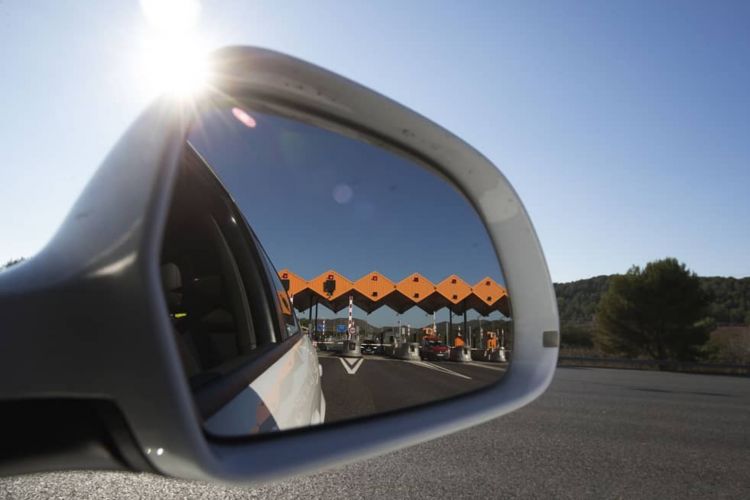
  • The R-5 and AP-41 highways will also be free, but not always and not for all drivers

    For the last four years, there have been several highways that, coinciding with the end of their concessions, have raised their barriers allowing vehicles to circulate free of charge on them. Since last Monday there are three more: the R-2, as we told you a few days ago, the R-5 and the AP-41. Of course, it will not always be possible to circulate freely and the measure will not affect all drivers.

    The R-5 (Madrid-Navalcarnero) and the AP-41 (Madrid-Toledo) will not be completely free: they will offer bonuses that will be temporary, they will only be applied in some of their sections and you will benefit from them certain drivers, specifically those who use the electronic toll system.

    When, how and for whom will it be free?

    The gratuity of the R-5 and the AP-41 will be temporary because it will be in force from January 30, 2023 to December 31, 2024. The resolution that includes the decisions made was published on January 27, 2023 in the Official State Gazette (BOE). As we said, the bonus will not be universal, since it will be applied as follows:

    • From Monday to Friday, the return trip on the R-5 and the AP-41 will be free as long as the outbound journey took place between 6:00 and 11:00 in the morning. This measure affects all vehicles, except buses and minibuses.
    • Drive along the R-5 and the AP-41 as well it will be free from the tenth trip made in the same month and always following the same route.
    • minibuses and coaches they will have to pay a toll of one euro: without any requirement of time, day of the week or recurrence.

    The R-5 and the AP-41

    These highways are underused: which is why the State Land Transport Infrastructure Society (SEITT), which is in charge of their management, wants to promote their use. In this way, they seek ease the traffic of some nearby roads, whose occupation has grown significantly in recent years. To this we must add that these roads, in many cases, are not high-capacity and the increase in the number of vehicles that circulate on them translates into an increase in the accident rate.

    It was in 2019 when SEITT took over the management of the AP-41, a broken highway that, in 2021 and according to data from the Ministry of Transport, Mobility and Urban Agenda, had an Average Daily Intensity (IMD) of 1,500 vehicles per day: fifty of them were heavy.

    This motorway ends at the R-5, one of the Madrid radials that were built to alleviate the traffic that was generated at the entrance and exit to the capital: it also went bankrupt and did not achieve the expected decongestion either, since its IMD was 12,500 vehicles in 2021. However, the A-42 (Toledo-Madrid) had an IMD of 88,585 vehicles in Illescas and 141,948 between the M-40 and M-50.

    The R-2, also free

    A few days ago we told you that the R-2 will also be free, but not in its entirety. Until now, it was possible to circulate through it without paying between 0:00 and 6:00: now this condition is extended to 24 hours a day, but only in a certain section. It is the one that joins kilometer 54, located at the height of the Henares Industrial Estate (Marchamalo), to kilometer 60.5: a point located after the municipality of Taracena and before Valdenoches.

    These 6.5 kilometers correspond to the last section of the R-2 before the connection of this highway with the A2 highway in the province of Guadalajara. The decision has been made to reduce traffic from the CM-10 and CM-101, which are roads with only one lane in each direction with shoulders of less than one meter and with an IMD of 14,084 and 11,257 vehicles, respectively. The R-2, in 2021, welcomed an average of 2,607 users per day: a figure far removed from its total capacity.

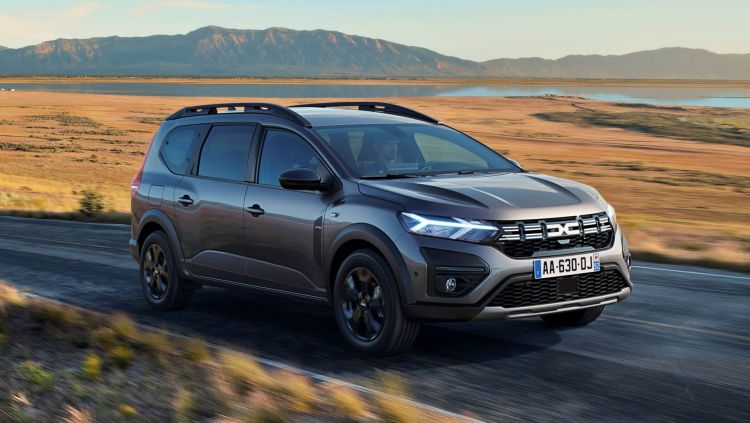
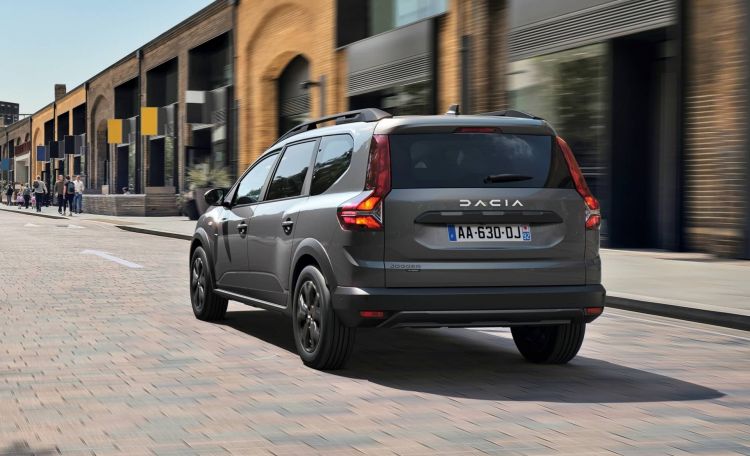
  • The cheap Dacia hybrid, for which it was worth waiting for, is here, reduced by €1,100, with up to 7 seats, and 708 liters of luggage space

    For months we have been anticipating the arrival of a hybrid that, to this day, has no rival in the market. It is not an SUV, but it is a minivan with some characteristics of a crossover. It can be configured with 5 and 7 seats and in its arrangement of two rows of seats offer a huge trunk, with a capacity of 708 liters.

    Dacia has started the launch of its first cheap hybrid, a Dacia Jogger Hybrid 140 which, as we said, aims to position itself as the hybrid that can offer more cargo space in the trunk and 7 seats, with a lower price.

    And this month it launches its first promotions, with a discount of €1,100.

    The cheap Dacia hybrid reduced €1,100

    The Dacia Jogger Hybrid 140 has an offer price of €23,350 during the month of February, as long as we finance the purchase. Let’s remember that the Jogger Hybrid 140 had been announced with a list price of €24,450, which is what we will pay for it if we decide to buy it in cash. It is a price far removed from the €16,939 from which the Dacia Jogger starts “non-hybrid”, which is important to remember that it also has an ECO label for having a bifuel LPG engine in its most economical version.

    In the financing conditions proposed by Dacia (with the hook of a fee of €8/day or €240/month) the offer price is €23,349.76, with an entry of €5,051.39, an amount to be financed of €19,382. €72, 36 installments of €240 per month and a final installment of €14,841.15. An opening commission of €600.86 (3.1%), TIN of 7.75%, APR of 11.06% is added. At the end of the credit we will have paid €29,133.40 for it (€5,783.64 plus commissions and interest).

    The most economical version of this hybrid already includes quite complete equipmenthaving a rear parking sensor as standard, Media Display entertainment system with 8″ screen, electric rear windows and modular roof bars. For €900 more we can have the configuration of three rows of seats and 7 seats, so that the tariff prices (spot) of the Jogger range are as follows:

    5 seats 7 seats
    Hybrid 140 Expression €24,450 €25,350
    ECO-G 100 Expression €19,550 €20,450
    TCe 110 Expression €19,550 €20,450

    Looking for a cheap hybrid

    With promotions and discounts, the Dacia Jogger Hybrid 140 is €6,911 more expensive than the cheapest Jogger and €4,900 more expensive than a Jogger with an ECO-G engine and ECO label with the same equipment. So, in our opinion, the Jogger ECO-G is still the best option if we are looking for a roomy and economical ECO label.

    In any case, worth comparing to some hybrid cars:

  • The second approved V16 light arrives in Spain from Telefónica… and it won’t be cheap either

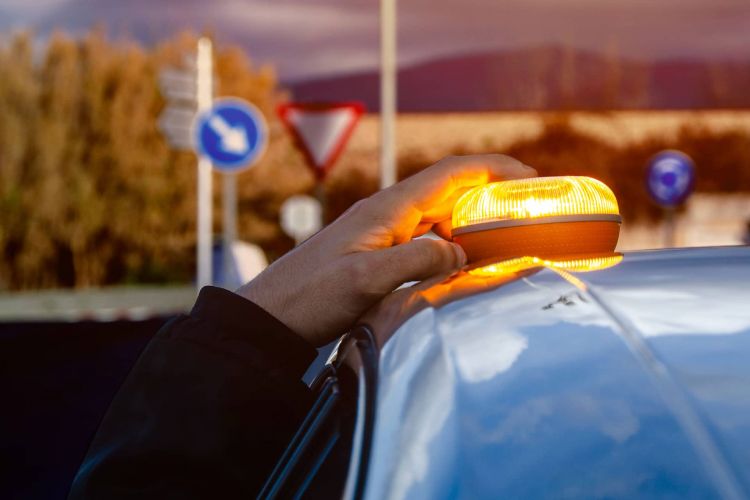
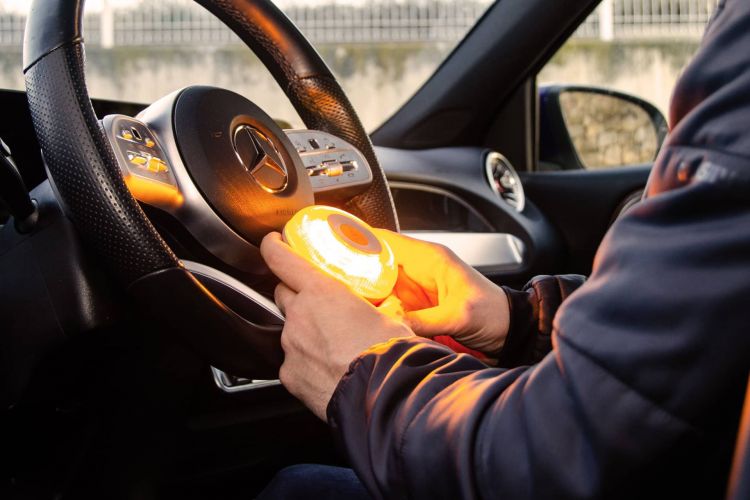
    If you have bought or have been given one emergency light V16, probably, three years from now, it won’t serve you. The reason? From 2026 only those connected to the DGT will be valid and, for now, there are only two approved for this in Spain: first came the one from Vodafone and now the one from Vodafone has done the same. telephone. Supply increases, but prices do not decrease.

    Royal Decree 1030/2022 that regulates the new emergency beacons not only establishes that it will be the only valid system as of January 1, 2026 when they definitively replace the emergency triangles. Rule that these lights must be connected to DGT 3.0: In this way, in addition to signaling the incident without leaving the vehicle, it will anonymously communicate its location so that Traffic can notify other drivers and manage traffic.

    In order to establish this connection with the DGT 3.0 servers, the V16 lights have to be equipped with a SIM card that has a data connection: just like in your phone. The key is that most of those on the market lack this essential requirement, although recently there have been two approved devices that do meet it. The first to go on sale was Vodafone’s Help Flash IoT and Now comes the FlashLED SOS V16 from KPS Group, which has Telefónica technology.

    Telefonica light V6

    Telefónica has explained that Narrow Band-IoT (NB-IoT) connectivity from Telefónica Tech It will reach more manufacturers in the coming years, but the first brand has been FlashLED from KPS Group which has launched the FlashLED SOS V16 connected beacon.

    It sits on a magnetic support and at a technical level guarantees 360 degree visibility from a kilometer away. It is resistant to water and dust, supports air currents of up to 180 Pa, has an IP54 degree of protection and can work even when the thermometer shows temperatures between negative ten and fifty degrees.

    The price of Telefónica’s connectivity

    Of course, its fundamental characteristic is the connectivity with the DGT 3.0 and its geolocation system. Telefónica Tech provides the NB-IoT technology with which this V16 light will have a reduced consumption (it has a 9 V battery) to extend its useful life, Coverage throughout the national territory, as well as more efficient and secure information management, when sending data to the DGT, thanks to the Kite platform.

    FlashLED SOS V16 beacon it is for sale since february 2023 and it is possible to find it in the main stores of the motor world: its price is €59.95 and, for the moment, there is no introductory offer as was the case with the Vodafone one that came to the market at a discount (49.99 euros instead of the 59.99 that it will cost a posteriori).

  • Tesla unleashes the war and causes a significant price drop for the Mustang Mach-E, will we see it in Europe?

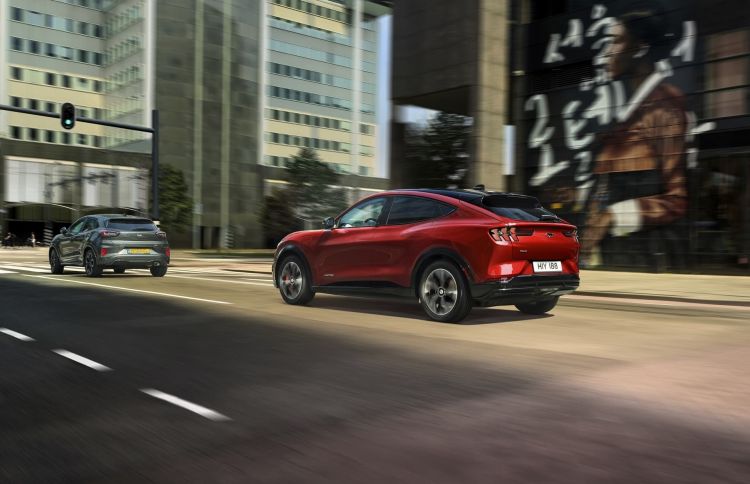
    The electric car market is tighter than ever. “It is a competitive market and it will get even more competitive because of what Tesla has done. We are not going to give ground to anyone,” said Marin Gjaja, Director of Customer Service for Ford’s electric section, explaining why they have decided to apply a significant price drop to its most desired electric, the Ford Mustang Mach-E.

    Ford’s goals couldn’t be more ambitious. This year they expect to produce 130,000 units of the Ford Mustang Mach-E for the whole world, a significant increase compared to the 77,959 produced last year.

    Ford has announced a price cuts in the United States which range, according to versions, between $600 applicable to an entry-level Mach-E, with a standard battery (called standard range), up to $5,900 for the version that benefits the most from this reduction, the GT with a larger battery. autonomy (called extended range).

    Ford has made the decision to lower the prices of the Mustang Mach-E in the United States to keep it competitive against Tesla, which has dropped as much as $13,000 on its Tesla Model Y.

    Will there be a price war in Europe?

    These days we were already commenting on you, precisely, how the movement of Tesla, or the arrival of new brands and new products that, like the MG 4 Electric with a price from €20,480, are “busting” the market, the price war could spread to other manufacturers. And that is a possibility that the Diariomotor team continues to value. With the arrival of new products and the increase in the supply of electric vehicles, we should expect that in the coming years the price of the electric vehicle will moderate and, above all, reduce its difference with the prices of vehicles equipped with an internal combustion engine.

    But for now there will be no price drop for the Ford Mustang Mach-E in Europe. According to Automotive News, a person in charge of Ford in France would have ruled out this possibility. Meanwhile, Oliver Blume, CEO of Volkswagen, also ruled out entering this price war in an interview with Frankfurter Allgemeine Sonntagszeitungpointing out that its pricing strategy at the moment is focused on profitability and a consistent strategy.

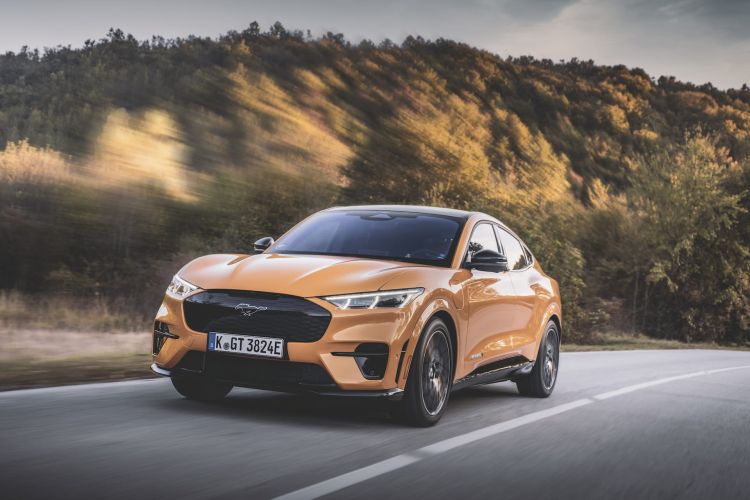
    Ford Mustang Mach-E GT.

    The Starting price of the Ford Mustang Mach-E in Spain is €63,477 At the moment, with a discount of €1,210, and starting from the most basic Ford Mustang Mach-E, with a battery with 440 kilometers of autonomy (76 kWh), 18″ aluminum wheels, 269 CV of maximum power and a 0 to 100 km/h in 6.9 seconds.

    Let’s remember that Ford Mustang Mach-E prices have skyrocketed in the past year. Exactly one year ago it could be purchased for €42,078, including aid from the MOVES III Plan.

Back to top button