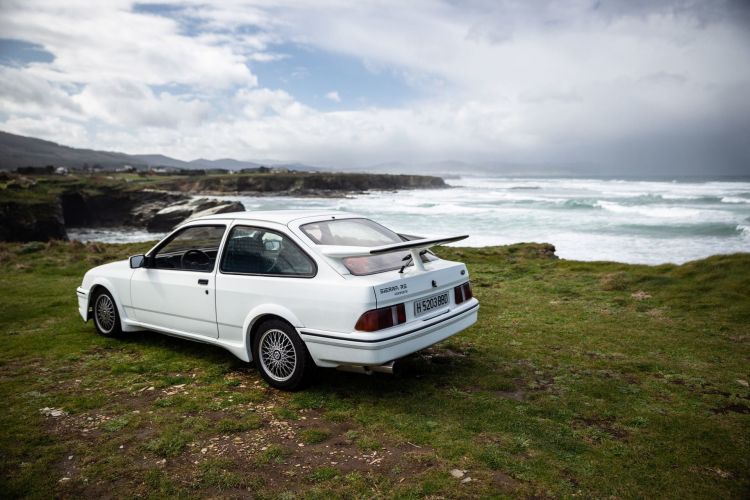
Today we bring you a very special video. Before the quarantine and confinement we moved to Asturias, where we were able to try a spectacular Ford Sierra RS Cosworth of the year 1986. A true icon of sports cars from the eighties, which we will show you in great detail in our latest production on our YouTube channel. After watching the video, it will be clear to you why it is such a special car, and why it is a car whose format was never repeated beyond those late eighties.
The Ford Sierra Cosworth born in the mid eighties. Ford wanted an affordable sports car, a car that could be competitive in competition, with an attractive street version. They called Cosworth, with whom they had been working on their competition programs for years, and proposed to raise a Ford Sierra to the nth power. Cosworth developed a new 2.0 turbo four-cylinder engine, with multi-valve cylinder head, electronic injectionand supercharged up to 204 CV by a turbo of enormous dimensions.
The spoiler on the Sierra RS Cosworth, imitated over and over again, was a true statement of intent.
Installed in a three-door Ford Sierra and weighing just 1,200 kilos, they made the RS Cosworth one of the fastest cars on sale. A car whose performance exceeded that of a BMW M3, for a fraction of its cost. In 1986, it was clearly the cheapest “200 CV” on the market, and it was an overwhelming commercial success in markets such as the British. Not only did a 0 to 100 km/h time of less than 7 seconds contribute to this, but also a very aggressive image and a spoiler that has already become an icon by itself.
The interior of the Ford Sierra RS Cosworth was perhaps its most discreet point. Only a specific steering wheel and some Recaro seats gave clues as to what was under the hood., evident at a glance when viewing the exterior of the car. And it is that the Sierra RS Cosworth is one of those classics brimming with character, with an absolute role of mechanics. It is a turbo of the oldest school, with a lot of lag and a violent appearance on the scene of power. It is a nervous car to the limit, with a rear that will like to overtake you if you overdo it with the right pedal.
A mechanical self-locking differential is fitted as standard. But there are no more driving aids. Stability control is how cool our heads are.
It has that analogue feel that we miss in modern cars and is thrilling to drive. I will let my colleague David G. Artés tell you about it in more detail in the video that illustrates this article. It is a real pity that that segment of radical and relatively affordable sedans died at that time, mainly devastated by “marquitis”. From Diariomotor, we thank Miguel Jal, its ownerthe transfer of this unit to carry out this test.
The concept of restomod It’s fascinating for a car lover. From the purest point of view, it consists of updating a classic car with modern components, respecting its original essence and spirit, but improving its performance, reliability and safety. Restomods like Singer’s Porsche 911 transform a solid foundation into a work of art on wheels, with an attention to detail that’s almost sickening. But even in the first division of restomods there are classes. And it is that after meeting the Eagle Lightweight GT, you will hardly think of Singer’s nine-eleven again. I promise you.
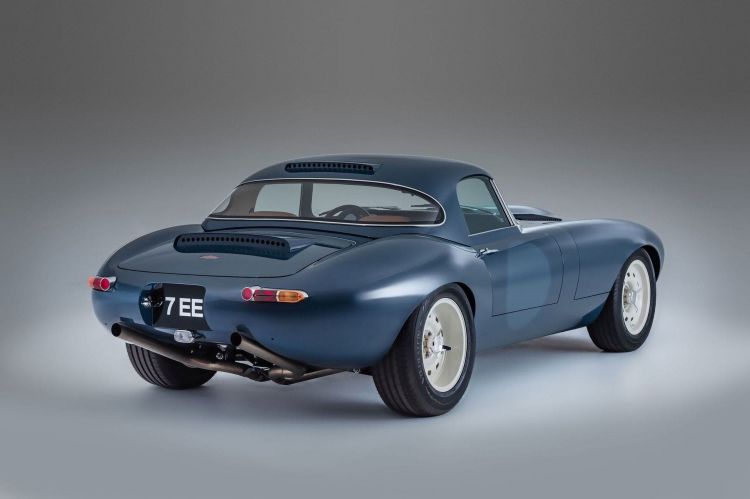
The starting point of this restomod is similar to the one used by Singer. Instead of starting with a Porsche 964 from the nineties, the base is a Jaguar E-Type, a much more classic car, temporarily placed almost three decades behind. There would be those who would be tempted to mount some sports suspensions, the supercharged V8 of a modern Jaguar and modify the interior slightly. For Eagle – who before manufacturing restomod, was a specialist in the Coventry sports car – that does not count, even under the law of least effort: not a single panel, pillar or glazing surface of the vehicle is common to the original Jaguar E-Type .
Creating an Eagle Lightweight GT consumes about 8,000 man hours. The bodywork alone consumes 2,500 hours of work.
Although they have been operating for years, they have only transformed 14 units of the Jaguar E-Type. And so far, they have only created one Eagle Lightweight GT, inspired by the iconic Jaguar E-Type Lightweight racing cars, of which only 12 units were created in the early 1960s. The Eagle Lightweight GT concept is similar to that of a Porsche 911 GT3 RS, is a car with a racing soul, but capable of being used on the streets. After being completely disassembled, Eagle builds on the original chassis an aluminum body, hand-adjusted using traditional bodybuilding techniques.
The body of the car is unmistakable, but its panels are different from those of a Jaguar. The fairing of the optics is somewhat more aerodynamic, the indicators are more flush with the body, the central nerve of the hood is more bulky. The windshield is more inclined, and the hardtop leaves more glass area. The rear is more aerodynamic, and the exit of the exhaust pipes goes higher. The rims look like painted sheet metal, but they are ultralight magnesium 16-inch wheelsdesigned to mount modern tires, unlike the original, diagonal type.
An air conditioning system has been integrated and the thermal insulation of atmospheric mechanics has been improved.
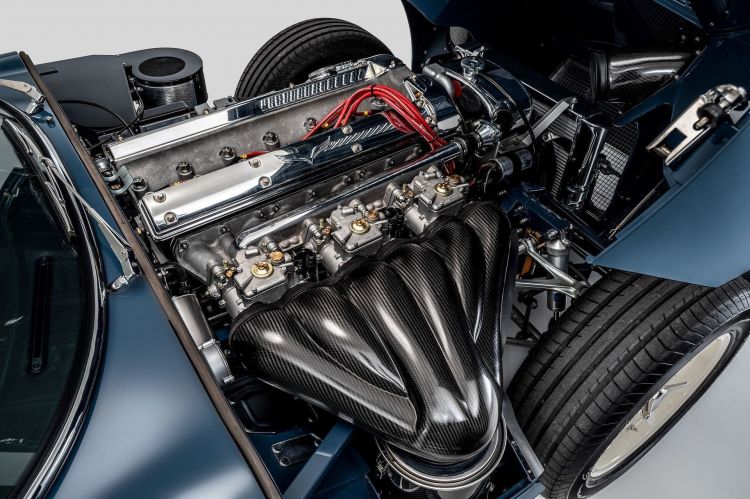
The same goes for the interior, where the changes are very subtle, but comprehensive. The seats are new, all the controls are new. High quality leather, suede, aluminum, wood… noble materials, without fanfare or artifice. But without a doubt, the most important thing about the Eagle Lightweight GT is under its skin. His 4.7-liter inline six-cylinder engine it is built from the ground up by Eagle, based on the original Jaguar design. The block is made of aluminum, its crankshaft is made to measure and its cylinder head is wide, with the aim of accommodating larger valves.
With four valves per cylinder, one carbon fiber intake and three double-body Weber carburettors, it is capable of developing 380 HP of power, and a torrent of torque: 509 Nm at just 4,000 rpm. Its power figure may not seem very high to us, but we must bear in mind that this is a car that only weighs 1,017 kilos. And that delivers its power in a visceral way, without aids, without electronics, and without filters. His driving experience, as shown by the great Henry Catchpole, is purist, invaded by the overwhelming character of his motor-motor whose sound makes our hair stand on end, in the best sense of the expression.
Eagle never publishes prices. If you have to ask, get into seven-figure territory.
The entire undercarriage has been redesigned, with lightweight metals, state-of-the-art materials, adjustable Öhlins suspension with ad-hoc geometries, suspension arms worthy of a Formula 1 or servo-assisted brake discs. That being said, all you have to do is enjoy the high-resolution photo gallery that we have prepared for you below.
Many Formula One teams and many other motorsport categories use some of these simulators that we are going to present to you Not all of them have the same strengths or weaknesses, each one is good, or better, in some detail that makes it special, be it the quality of the simulation, the quality of the graphics or sound, or its online gameplay.
If you have seen any video of Formula One drivers testing in their simulators, you will see that there are hardly any details of the environment, except for the basic references of the circuit. That’s because they dedicate all available technology to things like asphalt details, weather, tire behavior, brakes and engine.
In a real simulator everything is measured. Temperatures, wear and consumption are recreated as they would be in the real world. We can even extract telemetry from our driving and compare it with that of other pilots, even with those of professional pilots.
You will see that in this list there are no very popular games, especially in the world of consoles. In my opinion, and I would also say that of the most expert simracing community, they are not really simulators. Its main attraction is having some impressive graphics, almost realistic, but they are not one hundred percent a simulator.
You will be able to enjoy a spectacular sunrise, with a car detailed to the millimeter, but once on the asphalt you can do crazy things driving that would not be normal in the real world. In a simulator you can not have the slightest error. It’s all about driving and just concentrating on driving.
iRacing
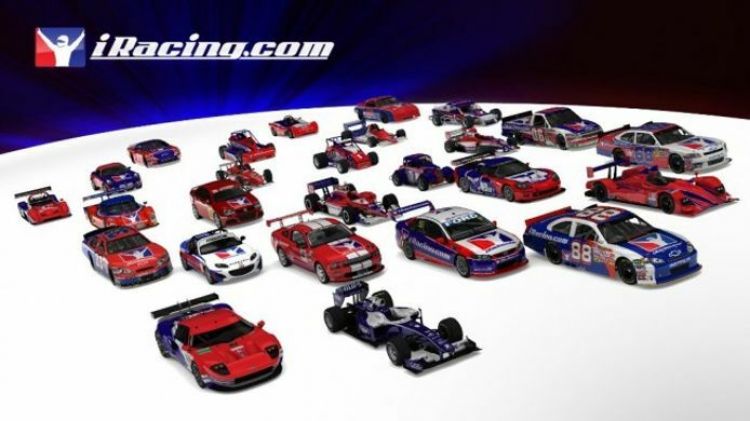
We could say that today iRacing It is one of the most professional simulators in the simracing world.. It began its journey in 2008, but since then it has been modernizing and updating the software, being today one of the most used simulators in online competitions, even by professional teams.
Despite the fact that its creators are American and at the beginning almost half of the content consisted of oval-type circuits and Nascar cars, its “non-oval” content is spectacular, covering a good part of the most famous circuits in the world, created from laser mapping that capture and recreate any detail of the track almost to the millimeter.
All available cars are licensed and it is the brands themselves that validate their digital version. The only difference with respect to the rest of the simulators on the market is that works by subscriptionso every 3 months or every year you have to go through the box.
That’s for the basic and free content, which includes a few tracks and cars. The extra content must be downloaded separately, and you also have to go through the box. To sum it up, it’s not a cheap simulator.
It is designed for online competitions, so that the driving quality is controlled. Using the outside of the track or collisions, even slight ones, with other users will be penalized. All based on a points license, which is what allows you to participate in the championships divided into categories from Rookie to Pro.
It is a simulator to train, a lot, and compete for real. In fact, many professional pilots use this simulator In his spare time, as is the case with Max Verstappen, Carlos Sainz, Charles Lecrerc and other Formula One drivers.
Assetto Corsa
This platform developed by Kunos Simulazioni, an Italian programmer based at the Vallelunga circuit, it is a very complete simulatorwith many cars and circuits. It has the great advantage of being able to add and modify community-developed contentin some cases with amazing quality.
Assetto Corsa It was created in 2013, and over time, despite the updates, it has lost some quality in its FFB (Force Feedback) compared to more current simulators. Still, it’s still one of the top sims in any simracing library.
The basic version has an affordable price (even on sale it can cost as little as €5), it is ideal to start, and it will allow you to download a lot of extra content over the network. There are also versions for a slightly higher price that already include all the official downloadable content. Furthermore, it does not require an exceptionally powerful computer to function.
Asset Corsa Competition
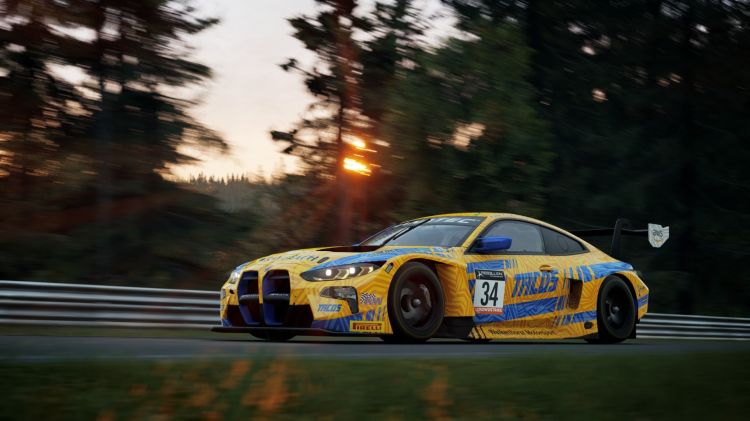
The older brother of Assetto Corsa. A simulator specialized in GT3 and GT4, in fact it is an official license. maybe one of the best simulators today in terms of Force Feedback sensation. The sensations provided by the steering wheel convey all the details of how the tire is performing, its grip and its wear.
It is one of the few simulators that has a graphics engine that adds rain to the simulation, a fact that dynamically influences grip, creating more humid areas, even flooded ones, which can cause aquaplaning.
Its basic version also has an affordable price, and to it you can add packs from different seasons and categories, always with GT vehicles. In this case, the simulator does not allow you to modify or add new content.
driver 2
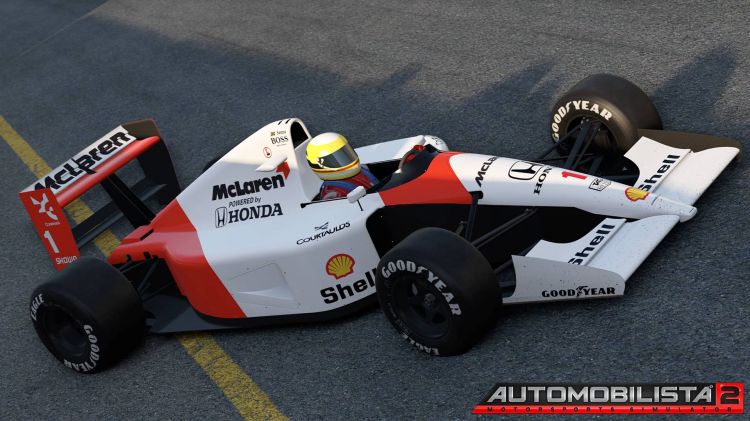
Automobilista 2 is a Brazilian creation. Their predecessors in the Game Stock Car saga already promised a lot, but in Automobilista 2 the Force Feedback is one of the best you can find in simracingapart from some very good graphics, which allow the transition between night and day and weather in real time.
In its most basic version it incorporates a good part of the best-known Brazilian circuits, but additional packs with European circuits and other car categories can be purchased.
The amount of sensations behind the wheel is superior. Dry and wet track at different points, humidity, puddles. Wear and flats on the tire.
RaceRoom Racing Experience
A simulator used officially in the WTCR (World Touring Car Championship). Nails on very good physics, more than acceptable graphics and spectacular sound. The basic package is somewhat fair, but then there is a store included in the game itself where you can add tracks and other categories of cars at very affordable prices.
It can also be purchased directly by packs: Initial, Pro and Premium, apart from other packs grouped by type of circuit or car.
rFactor2
A piece of simulator that has taken years to find its way due to various setbacks. has always been the best in terms of physics, but some graphical problems and some online gameplay problems they involuntarily separate it from the simracing community, since it is not one of the most used currently.
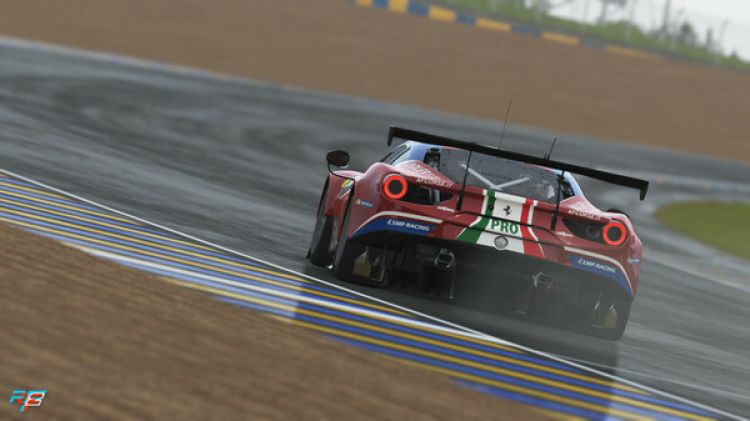
However, its development is constant. An example, which you can see in the image, is its latest technology called Real Road 2.0, which makes the asphalt have real grip behavior depending on weather conditions such as temperature, humidity, sun or shade, etc.
Today, there are many cars and brands that owe everything or almost everything to the great successes of their past. A classic past, which went down in the annals of history for its disruptive and innovative nature. we are thinking about great classics of all time like the MINI, the Jeep or the Citroën 2CV. There are many cars that honor their past and honor it, but in today’s video, we are going to talk about five cars that are a true affront to its classic past. In Diariomotor we do not bite our tongues and we are going to get wet. Will you join us to meet these five cars?
Our review of cars that we believe detract from their past begins with the FIAT 500 family, specifically with the FIAT 500X and FIAT 500L. The FIAT 500 may be a reasonable successor to the 1957 Cinquecento, but the minivans and SUVs launched in honor of its name are not, and that is why they do not honor its past. The second case talks about the Chevrolet Corvette C8, to which we have already dedicated a video. The eighth generation of the Chevrolet Corvette is an affront to its past as it abandons its traditional mechanical scheme in favor of a mid-engine and a design inspired by Italian supercars.
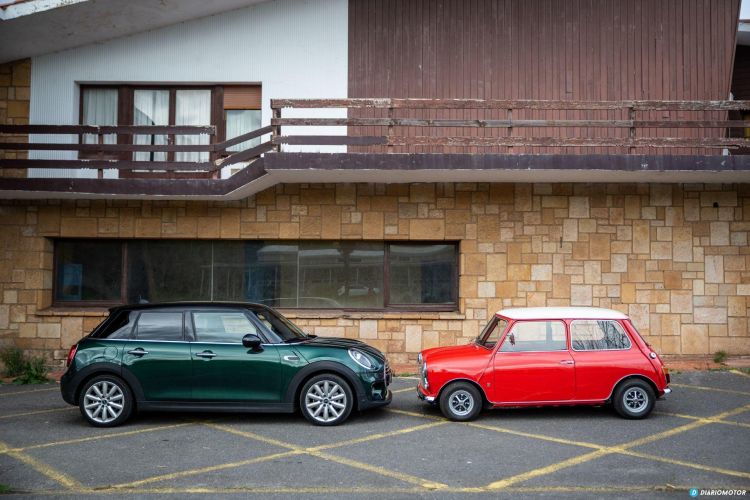
The next car to go through the “court” is the Mercedes SL. What started out as a purist, lightweight, and beautifully aesthetic sports car has become over the years a bland, Americanized, and overweight version of the car it used to be. The last Mercedes SL to date is a terribly ponderous and lacking in the personality or charisma of his great-great-grandfather. Next, we have to analyze the current range of MINIa case similar to that of the FIAT 500 range. As in FIAT, they take advantage of the name and aesthetic features of the original, but pervert its execution.
When it comes to building the entire range, from the MINI to the Countryman, we find cars increasingly bigger, heavier and further away from the original concept of minimalismlightness, low cost and simplicity that were the maxims of the original MINI of 1959. Our latest classic is not a classic, but the most innovative brand in automotive history: Citroën. Its endless legacy of classics is simply second to none, but Citroën’s current range simply does not represent this glorious and disruptive past: rather, it seems to mock it.
Diesel has been with us for decades, as an economical solution for transport – and not just on the road. Diesel in our cars, with low consumption and ideal for traveling long distances. Diesel in the transport of goods and passengers by road. But the die is cast for fossil fuels and thus for internal combustion engines. 2035 is the year in which Europe will stop selling cars with diesel and gasoline engines, including hybrids. And many manufacturers are even further ahead of their goals for completing the transition to electric vehicles.
When we talk about electric vehicles, we generally do so by referring to the battery electric car. But hydrogen also proposes an electric vehicle alternative, also known as a fuel cell car. A solution that also uses electric motors, but replaces the battery to accumulate energy, which will be supplied to the electric motor, by a pressurized tank of hydrogen and a system – the fuel cell – that transforms hydrogen into electricity to drive the electric motor .
Is hydrogen the diesel of the future?
The hydrogen fuel cell car is the best alternative to the battery electric vehicle and it will be necessary for both technologies to coexist
The diesel of the future is hydrogen
If we think about it carefully a hydrogen fuel cell car is much more like a diesel than a battery electric car. The greatest potential of the fuel cell, compared to battery electric, lies in long-distance travel. The refueling process, saving the distances, is not so different from filling a tank with diesel.
And hydrogen also seems to be one of the most appropriate solutions for the transport of passengers and goods by road. And a much more appropriate solution than having to equip a vehicle, already large and heavy, with batteries that occupy a large volume, that require a high mass to accumulate an acceptable amount of energy and that, ultimately, they require travel planning and stops en route, on long-distance journeys, to recharge the batteries.
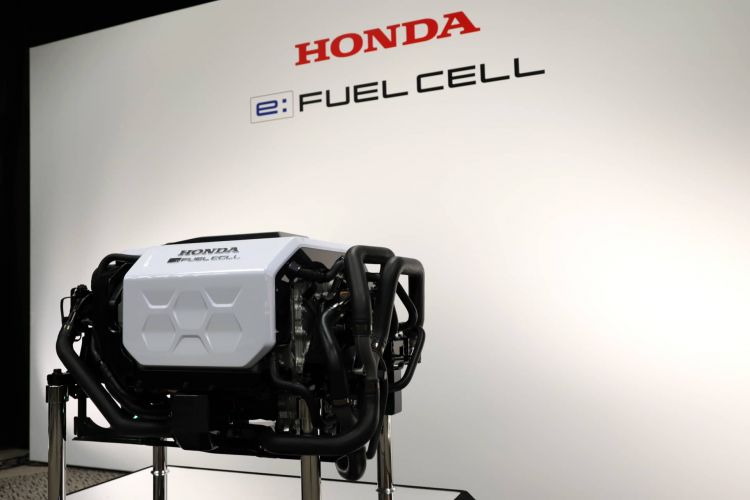
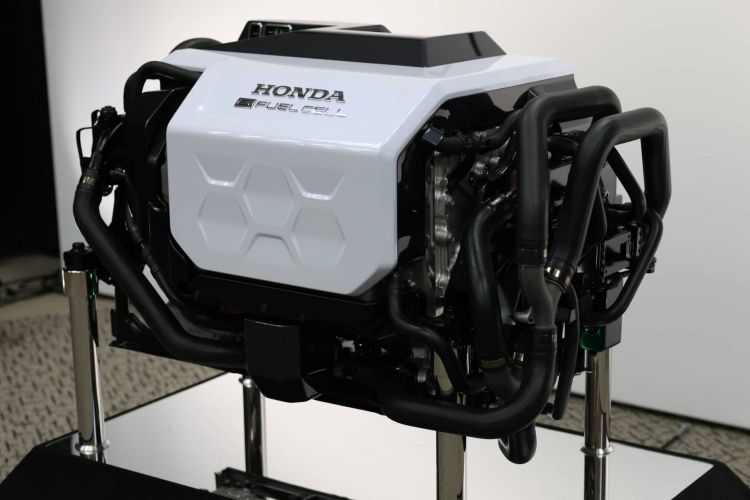
One of the great surprises was revealed these days. Honda has a plan to launch a hydrogen car, which goes far beyond a mere car, and has been developed jointly with General Motors. And that plan goes through selling 2,000 hydrogen cars a year in the middle of this decade, 60,000 cars a year in 2030 and “several hundred thousand” hydrogen cars by the second half of 2030.
A hydrogen car is much more like a diesel than a battery electric car
The diesel of the future, not only for cars
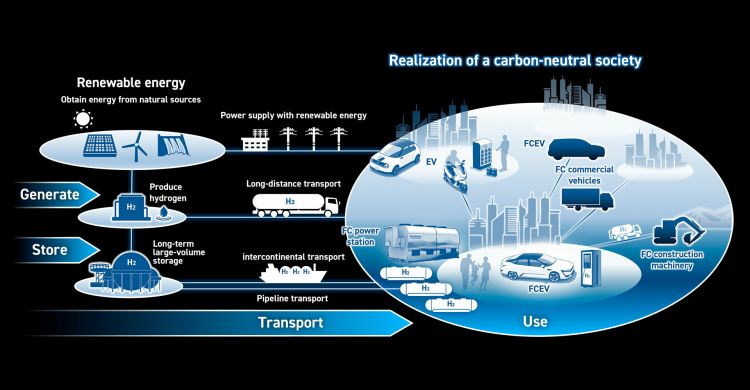
Hydrogen seems like the energy of the future. And although it is true that expectations have been set very high, especially with regard to the transport of hydrogen by pipeline – such as the interconnection project of the Iberian Peninsula with France and Germany – which is not so technically simple and much more expensive than According to some sources, hydrogen could become a highly available, viable and profitable energy source, with endless applications that go beyond transportation.
If we go back to the joint project between Honda and General Motors, we see how their strategy involves going beyond the launch of hydrogen cars and they hope that their fuel cell technology is applied in many other solutions that, to date, used diesel and diesel engines: heavy transport vehicles, stationary systems, electric generators, renewable production plants, to accumulate energy in green hydrogen, or even heavy machinery.
Honda has proposed, for example, a stationary fuel cell system, intended as an emergency power generator for data centers, which could provide 500 kW and which, as if that were not enough, gives a second life to fuel cells in his latest hydrogen car, the Honda Clarity Fuel Cell.
The fuel cell and hydrogen will be used in many solutions that, until now, used diesel and diesel engines
Hydrogen yes, with a pinch of salt
Despite the fact that everything indicates that hydrogen will be key in the energy transition process in which we are immersed, many of these hydrogen predictions should be taken with a pinch of salt at the very least. As we told you, the transport of hydrogen over long distances, through pipelines, involves great technological challenges, and is expensive. Something similar happens with the transport that will probably be imposed, in boats, or in tanks, which, even though it is similar to the transport of hydrocarbons, requires pressurized systems and thermal management that complicates and makes transport more expensive.
In any case, hydrogen continues to have everything on its side to be the energy and, in some way, the diesel of the future. Especially in a country like Spain, which enjoys privileged conditions to achieve an energy surplus with the production of renewables, which in turn can be transformed into hydrogen and, ultimately, facilitate the development of all industries that can use hydrogen. as an energy solution, with hydrogen ecosystems, and local hydrogen, including of course road transport.
when we think of inline eight-cylinder engines, we almost inevitably think of pre-World War II cars. We think of brands like Studebaker or Packard, we think of racing cars like the Mercedes W125 or those cars designed to break speed records on land. Of course, we do not think of conventional cars from the nineties. But in a parallel universe, Ford would have rescued these engines, built completely modular, and would have used them in front-wheel drive cars. As you hear it.
Before getting into flour, a bit of history. Inline eight-cylinder engines were born in the aeronautical world, during the First World War, and it was not until the twenties when they landed in the automotive world, partly because of the experience developed by the manufacturers during the conflict. They were complex engines and very expensive to produce, for this reason, They were mainly used in luxury cars.. Among its advantages, extremely smooth and balanced operation, and great torque at a low rpm.
In prewar cars, straight eights were a sign of prestige and luxury.
An eight-cylinder in-line engine is a very long engine, something that forced car manufacturers to install very long hoods. The balancing of its crankshaft and its camshafts was vital for its proper functioning. After the conflict, the availability of higher octane gasolines exposed some weaknesses of these engines in terms of reliability with high compression ratios. But that was not the cause of his “death”, it was the unstoppable rise of the V8, much more compact, much simpler and above all, much cheaper to produce.
The last eight in the production line left the automotive world in the 50s of the last century. Since then, only inline configuration engines with a maximum of six cylinders have been produced. In the early 1990s, no one thought that producing an affordable and mass car with eight-cylinder in-line engines it was a good idea. Nobody except Ford. Interestingly, Ford never embraced the design in the prewar era, as Ford democratized the V8 by launching its fireproof Model A in 1927. But that’s another story, let’s go back to the ’90s.
Technology advanced over the decades, leaving eight in a row aside.
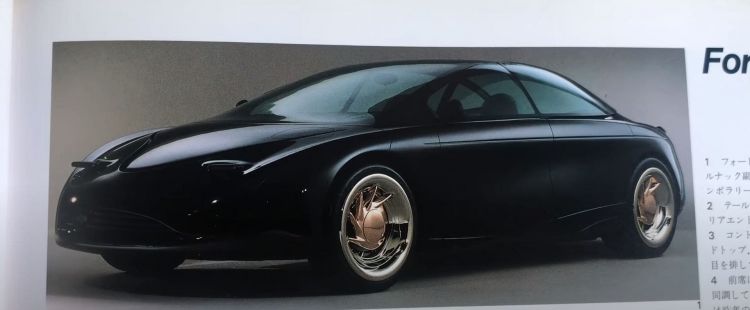
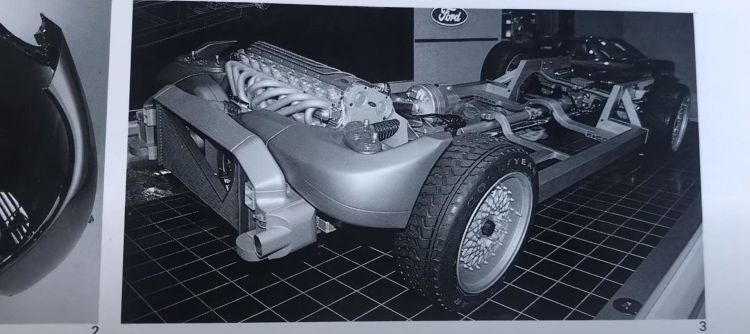
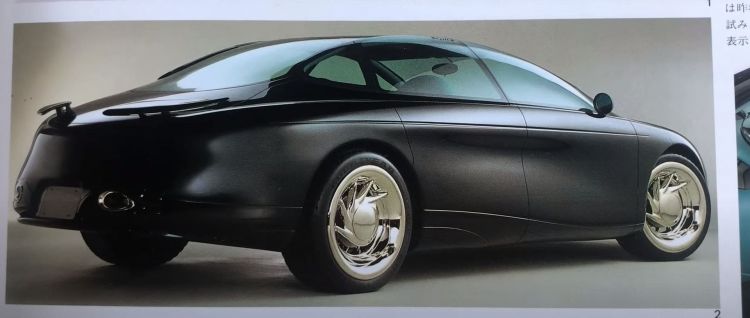
At the Detroit Motor Show in 1991, the Ford Contour Concept. A conceptual preview of a four-door sedan that would go unnoticed through the Ford range. However, the prototype was statuesque, and boasted of a revolutionary mechanic, called “T-Drive” by Ford. It was an eight-cylinder in-line engine with a four-liter displacement, mounted in a transverse front position, just ahead of the front axle.
It was a modular design mechanics, created from two inline four-cylinder engines. curiously, and for packaging reasons, the crankshaft outlet was located in the central part of the engine. At the output of the crankshaft and in a longitudinal position, the gearbox was located, which sent its power to the rear axle. This configuration in “T” was what gave the name “T-Drive” to the mechanical assembly. Ford intended architecture to be also compatible with front-wheel drive cars and also with all-wheel drive cars.
Cars with T-Drive could have been available with four, six and eight cylinder engines.
The Contour also featured an aluminum chassis, the parts of which were held together by state-of-the-art industrial adhesive – this is how cars like Lotus are built today. Ultimately, Ford dropped the “T-Drive” idea. Although technically it was plausible and would have given Ford a reference technology – like Subaru with the boxers – its production would have required many significant changes to the brand’s model range. A huge investment that the economic situation of the nineties did not allow to assume.
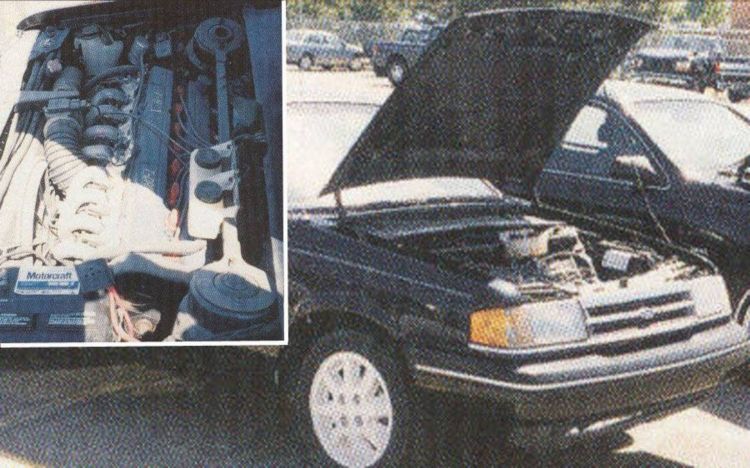
There were also doubts about the vibrations caused by the engine, the weight on the front axle and the damage to dynamic behavior that this could cause. Although it didn’t make it past the prototype stage, working versions of the engine were built and tested, oddly enough mounted in a bland Ford Tempo. Although the “T-Drives” never arrived, Ford applied the idea of modularity to its family of V-shaped engines., launching six-, eight-, and twelve-cylinder engines from the same basic design. Nothing is usually left on deaf ears in this industry.
Although it was a shame that these eight online hit the streets, it has allowed us to tell you this curious story.
Let’s admit it: at some point, more or less frequently, we have thought that the worst drivers in the world are in our city. In the case of the Spanish, we have been wrong because a study reveals that our country is among the ten best in the world in terms of driving: which countries are above and which are below?
With 1,450 million vehicles in the world, the price comparator ‘Compare The Market’, author of the report, has wanted to know in which countries are the best and worst drivers. For this they have taken into account factors such as the level of traffic, the quality of the roads, the maximum speed limits, the number of deaths per 100,000 inhabitants or the maximum permitted level of alcohol in blood, among others. As you can see, they don’t pay much attention to the real skills of the drivers.
top three countries
Eight of the ten countries with the best drivers are in Europe, although the ranking is headed by Japan: Its low blood alcohol limit (0.03 g) stands out, which is similar to that of Chile or the Czech Republic, and the quality of its roads is among the four best. This means that it is not only a safe country to drive in, but also for pedestrians.
The Netherlands ranks second because it has one of the lowest levels of deaths (4) on the road per 100,000 inhabitants, equaling Japan, Denmark and Germany. The level of its roads also stands out: they are the second best with a 6.4.
Norway is the third country with the best drivers and it has several noteworthy aspects: number of deaths (2: only Singapore and Switzerland have such a low level), the maximum allowed level of alcohol in blood is 0.02 g and its traffic level (92.6) is among the better: this is a point in favor for emissions and for the time they have to invest in making a journey.
The post of Spain
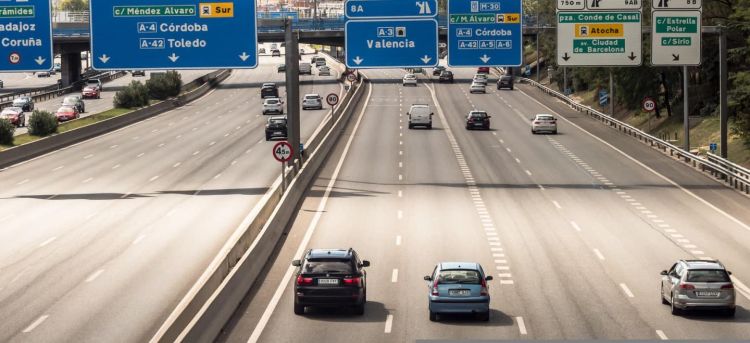
The list of the ten countries with the best drivers is completed by Estonia, Sweden, Austria, Switzerland, Spain, Singapore and Portugal. Our country ranks eighth with a traffic index of 105.2; a road quality of 5.7 and one of the lowest levels of deaths on the road per 100,000 inhabitants: 4. To this must be added the maximum speed (120 km/h) and the level of alcohol allowed: 0.05 . The global note is 3.72, while that of Japan, for example, is 4.57.
worst drivers
On the opposite side is Thailand, which, according to this study, is the country with the worst drivers in the world: his global grade is 2.17. The number of deaths in a traffic accident stands out: 32 per 100,000 inhabitants. Peru it is the penultimate one with the worst traffic index (220.4) and the fourth lowest level of road quality (3.2). Lebanon, India and Malaysia round out the top five.
Below are Argentina (where its speed limit stands out, 130 km/h, and the high traffic index: 175), United States, Turkey (with a maximum speed of 140 km/h, the same as in Poland and Bulgaria, and only surpassed by the United Arab Emirates: 160 km/h), Canada (with a permitted alcohol level of 0.08g, same as Singapore and UK) and Brazil, where they emphasize the high number of deaths (16) and the low quality of their roads: 3.