• The perfect anti-SUV for those who need an SUV, but don’t want an SUV

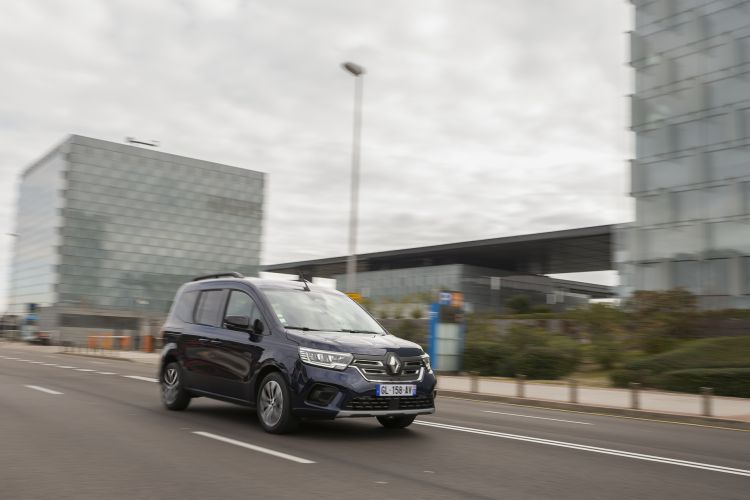
    Allow the pun in the headline to give you the first definition of the Renault Kangoo E-Tech that we have just tested in Diariomotor: a van with a spacious interior, many holes, a remarkable trunk… and no limit to driving because it is electric. In 2022, Renault electrified the van body and now it is the turn of the passenger variant: This is the Renault Kangoo E-Tech, a van (with German and French DNA) perfect for those who need an SUV, but do not want an SUV.

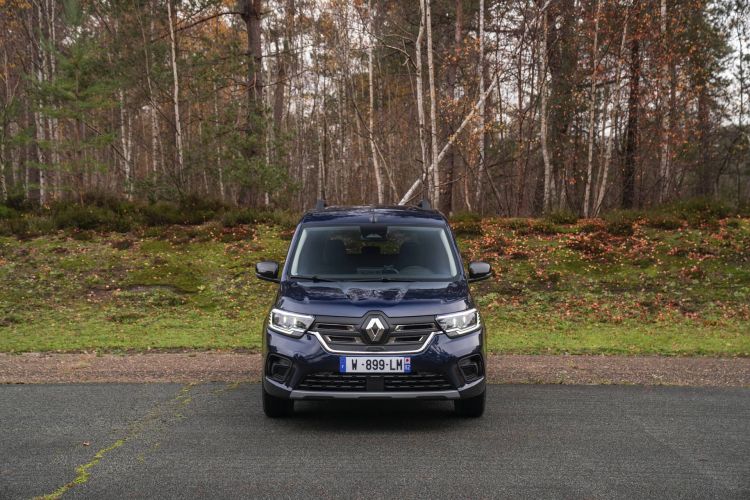
    This test is divided into three parts: the pertinent presentation, the practical part and the six reasons why we believe that the Renault Kangoo E-Tech is the perfect anti-SUV. Let’s start at the beginning: the Renault Kangoo E-Tech, which shares DNA with the Mercedes EQT, sports (almost) the same design as the standard combustion model. The differences lie in the specific elements of an electric car such as the charging port that is hidden behind the front emblem of the brand, the name itself or the distribution of the interior.
    Renault Kangoo E-Tech: the presentation

    The Renault Kangoo E-Tech retains the medium size of the commercial version and this makes it the right vehicle for a very specific audience professionals, families and drivers with hobbies who need equipment of considerable dimensions.

    Available in two finishes (Equilibre and Techno), both are equipped with the same electric motor (120 CV) and the same battery, that with 45 kWh of capacity promises an official autonomy of 285 kilometers: Depending on the brand, it can reach 430 in the urban cycle. That first range is five kilometers higher than that of the Citroën ë-Berlingo, its main rival: yes, the French van is 16 CV less powerful.

    The battery, by the way, has an eight-year or 100,000-mile warranty: in this time slot, he will be replaced for free if his ability degrades below 70% of his SoH. The driver can choose several charging systems: a three-phase 11 kW alternating current, a 22 kW AC fast charger and an 80 kW DC one. The last two are designed for professionals, since the 22 kW one allows you to go from 5 to 80% in 2 and a half hours and the 80 kW one allows you to recover 170 kilometers in about 30 minutes.
    Renault Kangoo E-Tech: the practice

    Renault has proposed a one-hour route that is eminently urban and runs through Madrid: the objective is none other than test both the behavior of the Renault Kangoo E-Tech and its consumption in the city.

    Comfortable: this is the first feeling you get when you get into this electric van. You also realize that its technological level is not as up-to-date as that of other Renault models. We started and began touring Madrid: at a normal (and legal) speed it is quiet, a quality that it loses when you leave the city and begin to travel the ring roads at a more cheerful pace.
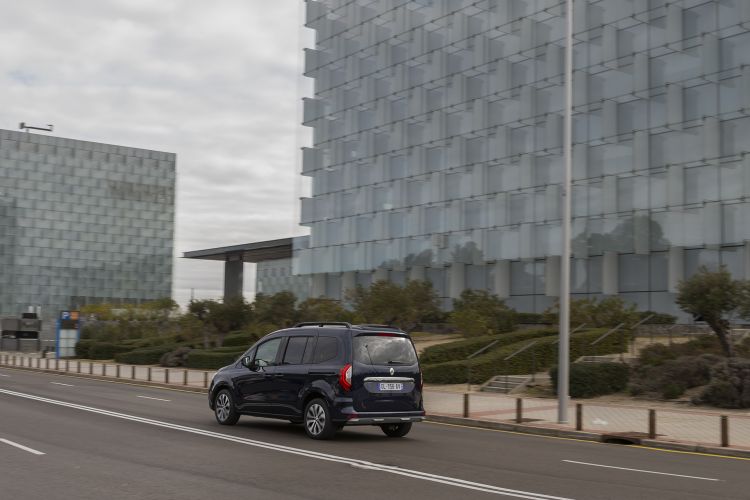
    In this scenario, inertia makes an appearance, although the irregularities are well filtered: the suspensions are not dry and the brakes (which we will talk about now) work well. The engine never ceases to be smooth and If we had to choose an adjective to define it, it would be correct: It does not stand out for better or for worse because it simply meets what is expected of its 120 CV.

    During the hour we spent on board the Renault Kangoo E-Tech we verified that there are two driving modes: Normal and Eco. With the second activated, consumption is reduced because both power and maximum speed are limited to 76 CV and 110 km/h. And speaking of consumption, this is where we identify a point for improvement: the official figure is 15.9 kWh/100 km, but it is easy to overcome the 20 kWh barrier reaching somewhat high figures… and that our unit was not loaded as a professional can.
    Renault Kangoo E-Tech: 6 reasons to be the anti-SUV

    We have already advanced some of the reasons why the Renault Kangoo E-Tech is the perfect anti-SUV: its habitability, its ergonomics, its load capacity and, also, its electrical condition. With the Zero label you not only have economic advantages in terms of taxes, you can also access the cities without any problem because the restrictions do not affect you. The practicality of the Renault Kangoo E-Tech is its great virtue.

    1. Access

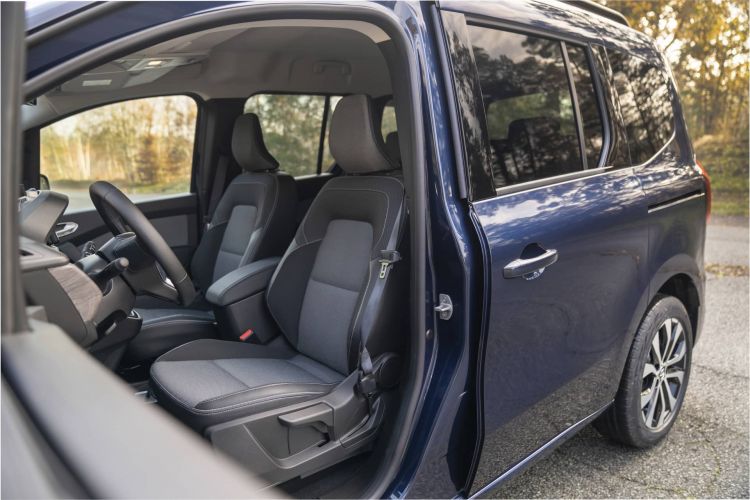
    Access to the Renault Kangoo E-Tech stands out for its comfort and speed: the front doors open 90 degrees. The same thing happens in the back row: sliding doors travel 61.5 centimeters, giving rise to a generous space for passengers.
    2. The seats

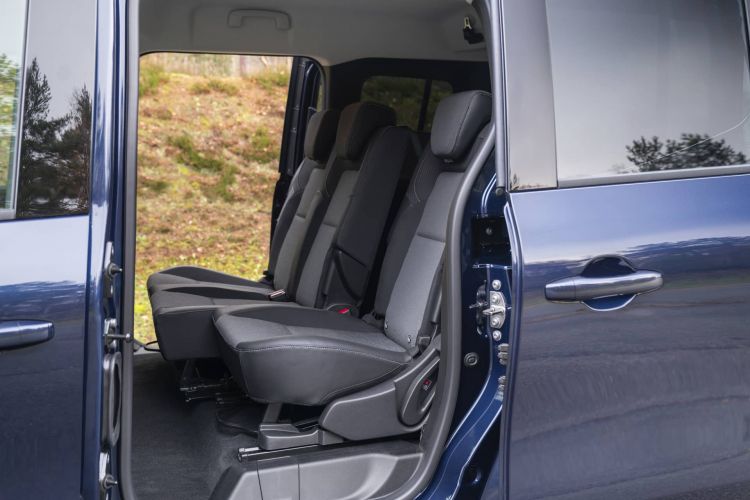
    Let’s go by parts: in the Renault Kangoo E-Tech, the driving position stands out for its good visibility and, in addition, the interior has materials and adjustments typical of a car, such as brushed wood. The space with respect to the passenger seat is remarkable, as is the space that is free for the head.

    It is in the back where we find more practical solutions: the location of the batteries under the seats hardly affects the available space and, furthermore, raise the back row (divided into three seats of equal size, suitable for adults and with Isofix) a couple of centimeters In addition, they can slide up to fourteen centimeters to save space in the trunk.
    3. The braking

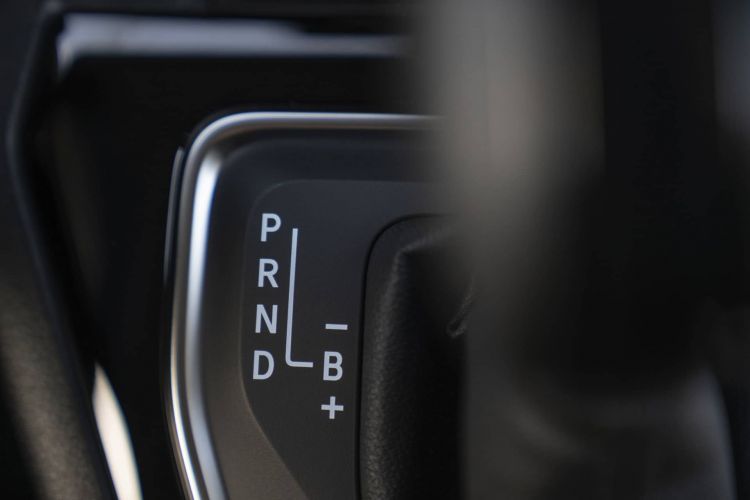
    In the lever of the Renault Kangoo E-Tech we find function B (Brake, brake in Spanish): with it we access regenerative braking, which has three levels.

    The first of them, B1 or Sailing, is perfect for driving on the dual carriageway and motorways. It is limited because in this scenario the brake is barely touched. The second, B2 or Drive, is intermediate, that is, the default regenerative mode for multipurpose use, which provides a sensation of deceleration similar to that of a vehicle with a thermal engine. And the third, B3 or Brake, is essential for driving in the city because it allows you to move using only the accelerator.
    4. The trunk

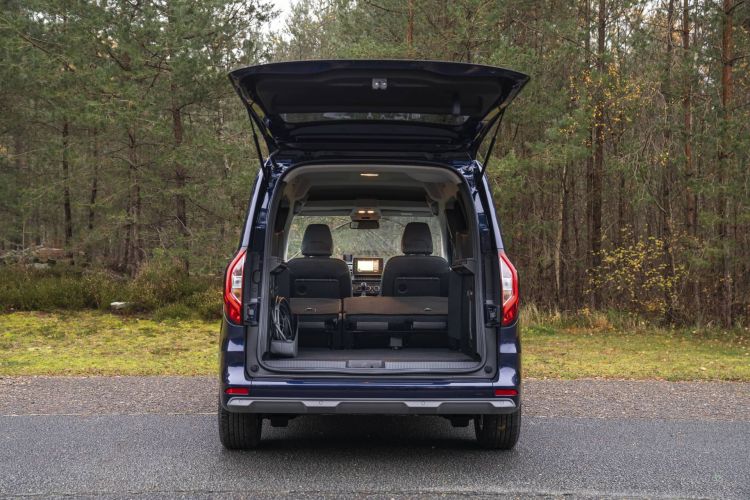
    The trunk of the Renault Kangoo E-Tech offers a load capacity of 850 liters with the tray: without it it is possible to earn something more. A figure that improves by 75 liters on that of the combustion Renault Kangoo and that allows, for example, to comfortably carry a bicycle, a surfboard or a children’s stroller without having to fold it. It can be expanded to 2,500 liters with the seats folded down (something that can be done totally or partially in 60:40), although it forms a somewhat uncomfortable step.

    5. Additional capacity

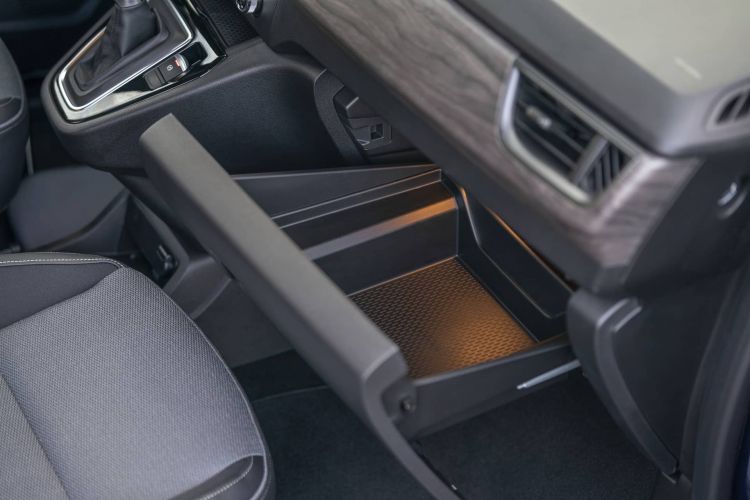
    The Renault Kangoo E-Tech offers 49 liters of extra capacity, distributed in the different compartments of the passenger compartment. The Easy Life sliding drawer that replaces the classic glove box or the enclosed space that the driver has behind the wheel are particularly striking. By the way, next to it there is a support for the mobile phone that can be changed to the side depending on the needs of each person.
    6. The hidden roof rack

    Another of the most practical solutions that the Renault Kangoo E-Tech incorporates is a hidden roof rack in plain sight. And it is that the longitudinal bars of your roof can also be transversal without having to use any tools: we only have to press a couple of buttons to have more cargo space.

    When will the Renault Kangoo E-Tech arrive in Spain?

    The order book for the Renault Kangoo E-Tech is already open in Spain and to get behind the wheel of this electric passenger van, Renault tells us that You have to wait between two and three months. It also has prices for our market:

    • Renault Kangoo E-Tech Equilibre – 39,200 euros: This version is designed for professionals of all kinds (including those dedicated to transporting passengers) and for security forces. With the 22 kW charger, its price is 40,535 euros.
    • Renault Kangoo E-Tech Techno – 41,700 euros: This variant is more oriented towards families, people with hobbies who need certain equipment, taxis and VTC. With the 22 kW charger it goes up to 43,076 euros.
  • video proof of modern car germ

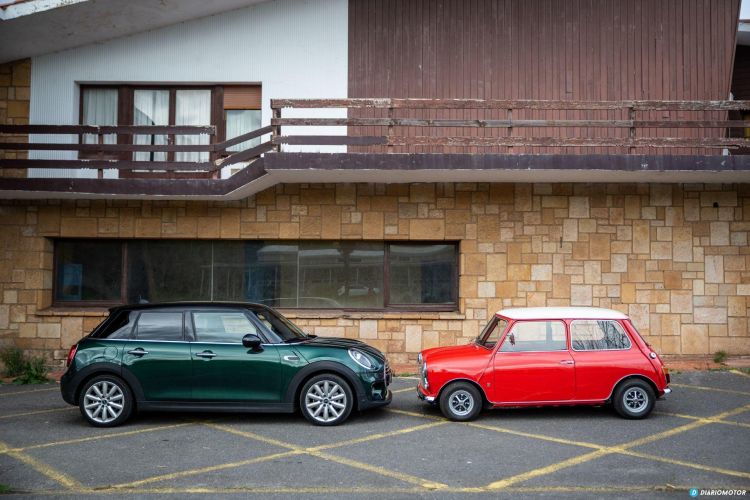
    In Diariomotor we return to the charge with more classic car tests. After testing the Renault 4 and the Renault 5 Turbo 2, we return to a popular classic. Specifically the classic Mini. The classic Mini is much more than a nice car, it is one of the most revolutionary cars of all time. It is a car that Every modern car owes its transverse front-engine, front-wheel drive architecture to it.. In this video we are not only going to explain its historical importance, we are going to drive it and we are going to show it to you in great detail. Fasten seat belts.

    Until the end of the 50s, urban cars were practically microcars, with very low-power engines, located in the rear and in many cases derived from the world of two wheels. Cars like the Citroën 2CV or the Volkswagen Beetle already existed, but they were “giants” compared to the smaller cars that the market demanded. In the 1950s, Europe was still recovering from World War II, and the Suez Crisis threatened to choke off oil supplies to this recovering Europe. These were not times for waste, and less in the automobile sector.

    The Mini not only had to be a great little car, it also had to be the cheapest car on sale in the UK.

    In 1957, Sir Alec Issigonis began to lead an ambitious project of the British Motor Corporation – resulting from the merger of Morris and Austin – to develop a city car. Issigonis wanted to develop a large scale car, with a size of barely three meters, but enough space for four people and their luggage. Issigonis’ genius was the way he arranged the mechanics of it. Most of the rivals had the engine in the rear position, something that was not efficient: in front there was little space for cargo since it was still necessary to leave room for the steering system and other auxiliary mechanisms.

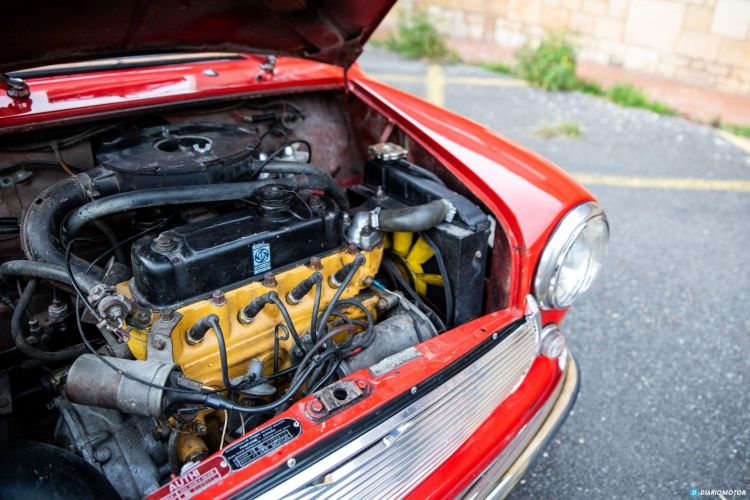
    Issigonis decided to break the mold and mount your inline four-cylinder engine in transverse front position. Under the mechanics, and sharing oil with the engine, the gearbox was mounted. Since the car was very small, the radiator had to be mounted on the side, not on the front of the engine. Only 20% of the volume of the car was occupied by mechanics, with 80% of the remaining volume destined for passengers and cargo. Achieving this not only required a revolutionary mechanical scheme, it was also necessary to completely rethink the position of the wheels or their suspension scheme.

    The Mini is the first transverse front-engine front-wheel drive car in history. Today the vast majority of cars have the same architecture.

    The Mini boasted some 10 inch wheels only – Dunlop had to develop specific tires for the Mini – located at the ends of the body, with hardly any overhangs. Today they look like wheelbarrow wheels, but they were necessary to maximize the interior space of the car. Another genius of its design was its suspension scheme. This suspension employed compact independent wishbones at each wheel, and instead of shock absorbers, he used conical rubber bumpersSimple as can be – but effective in such a small car.

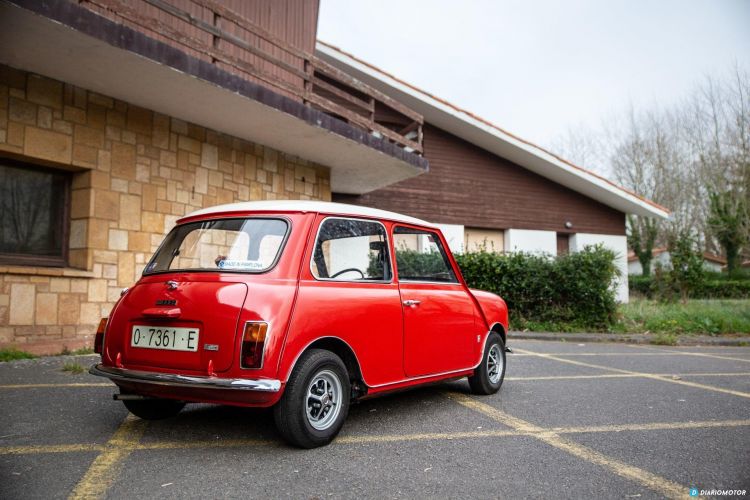
    And there is something to be said for the Mini: although its design was the result of the maximum “function dictates form”, the car was beautiful. Its round headlights and large grille have become universal design icons., and the two-tone color scheme of the body and roof of the unit that we have tested is a cool one. The unit tested, by the way, is a Mini 850 Deluxe from 1974, manufactured in Pamplona by Authi. Authi manufactured the Mini under license in Spain since 1968and years later, its facilities would end up being acquired by Volkswagen for the manufacture of the Polo.

    The tested car is a Mark III and presents some differences with respect to a Mark I, but its essence and its technical solutions do not change.

    A surprisingly spacious interior

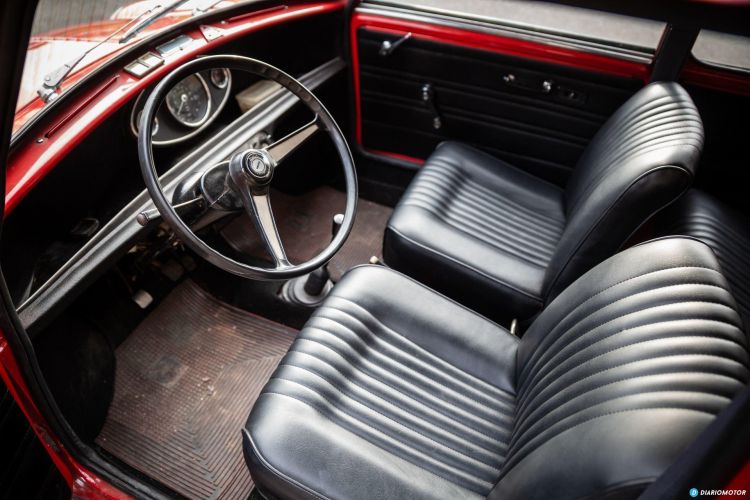
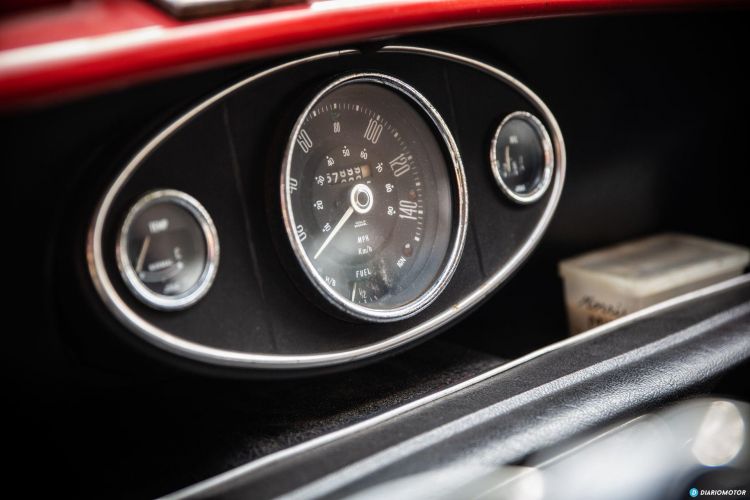
    The Mini is a very small car – measures only 3.05 meters long – but its interior is designed to accommodate four adults. I settle in the front seat and do not feel a feeling of lack of space. The pillars are very narrow and the windows are large, and thanks to this I not only have great visibility, but also a “diaphanous” feeling. The dashboard is in one piece and the instrumentation is in a central position so that it would not be expensive to produce export versions with the steering wheel on the other side. The size of the steering wheel and the thinness of its rim are surprising, lacking any position regulation.

    There are hardly any controls for the lights, the wipers and the ventilation. It does not even have a sound system, and the left mirror was not standard. One of the keys to the Mini was the huge number of storage spaces on board. On the dashboard itself there was space for objects and on the sides of the passenger compartment there were large storage drawers, in which the purchase could even fit. In the Mark III the front windows are conventional instead of being slidingand therefore, it does not have the lower drawer that the Mark I did have. The additional ventilation was worth the sacrifice, especially in Spain.

    Alec Issigonis said that the interior had to fit 27 bottles of gin, and one of dry vermouth. His favorite cocktail was the Dry Martini.

    To enter the rear seats, the seat is folded down, which only has a front hinge, without an anchoring mechanism. Surprisingly, At 6’2″, I don’t brush my head against the ceiling., but my legs are pinned against the front seat. A slightly shorter person would have no problem. Finally, we have to talk about the detail of the trunk. The Mini is a two-door, not a three-door. The trunk is not connected to the interior and the rear glass is fixed. It’s a small boot, but I’d say even more usable than a modern Mini.

    A really fun car to drive

    The mechanics of the Mini 850 that we have tested is not that of a Mini Cooper. Its 848 cubic centimeter engine, fed by a simple carburetor, It only develops 34 CV and its top speed is 116 km/h. Accelerating up to 100 km/h takes half a minute with ease. Its four-speed gearbox is synchronized, so there is no need to double-clutch when driving the car. However, the driving experience is radically different from that of any modern car. As with any classic, it is necessary to readjust our expectations when we drive it.

    He walks very little. But the sensation of speed has nothing to do with actual speed. It is far superior.

    The sound of the engine fills the cabin. It is very noisy and the car pushes very little. Its cruising speed is about 70 km/h, it is very difficult for him to overcome that speed and he gains speed with difficulty. On steep slopes it is necessary to play with the change and even the trucks will overtake us. Also, the car It lacks a servo brake and its brakes are drum. You have to press the center pedal very hard to bring the car to a stop, which luckily it does well as it only weighs 600 kilos. What is truly magical about this Mini is that it is a tremendously fun car to drive.

    It has no filters of any kind: no power steering, no driving aids, and no safety systems beyond a seatbelt. It is a pure driving experience. And although it may not seem like it, it is a very agile car with surprising cornering. Its driving position especially contributes to this: we are sitting very close to the ground. But the factor that influences the most is its suspension with conical stops, which guarantees a absolutely flat cornering. Yes, it is very bouncy and even uncomfortable at times, but that is what gives it such a kart-like behaviour.

    The go-kart feeling MINI is so proud of was born in this first Mini.

    Conclusion: a true revolution

    The Mini was a true revolution in the automobile sector. It was a car that proved that it was possible for four people and their luggage to travel in a car only three meters long. This was possible thanks to innovative packaging of its mechanics, leaving 80% of the volume of the car to the passengers. Plus, he proved that a cheap little car didn’t have to be unexciting to drive. A very special dynamic was evident in the victories of the Cooper versions in world-class rallies, beating much more powerful and faster cars. David’s triumph over Goliath.

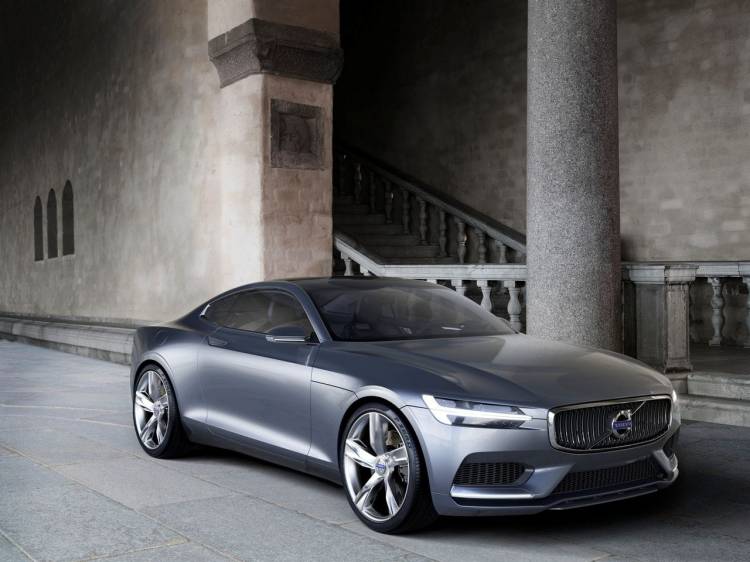
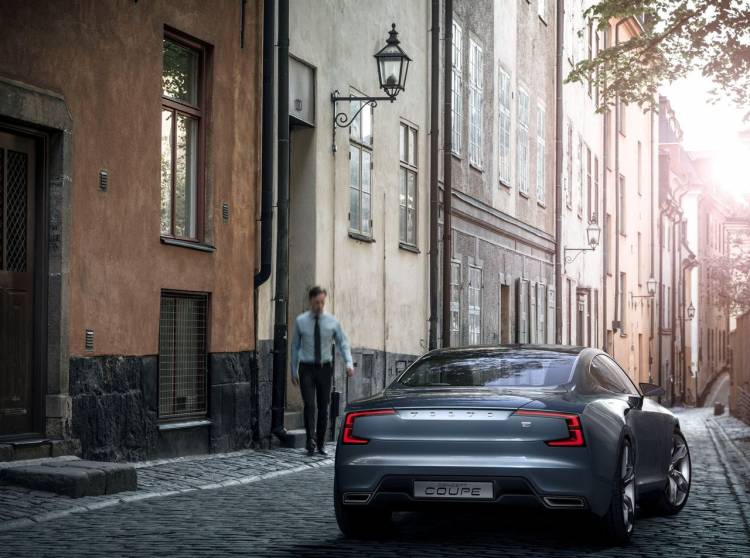
  • Volvo confesses that all brands need “a bit of flavor”: are you planning a sports car?

    Volvo is still immersed in the development of its SUV family. This is nothing new, but it could be your future plans: when you launch the Volvo EX30 and company, the Swedish spotlights could focus on a much more performance model. The brand wants to add some spark to its range: are you considering giving life to a sports car?

    Bjorn Annwall, Volvo’s chief operating officer, spoke with car sales. What have you told this Australian medium? From his point of view, it is important that each brand has a flagship model and has opened the door to the possible arrival of a sports model. Of course: if this suggestion comes true, they will take their time.

    “Pay attention”

    For Volvo’s COO, “every make of car needs a bit of flavor that helps push the boundaries of what a car really is and I think Volvo should have one of those products too.” Bjorn Annwall acknowledged the appeal of two-door models, but did not confirm whether that would be the path the Swedish brand would follow.

    What he did point out is that, to be real, must make business sense “As a car designer we always like to make fun things like a coupe or a sports car, but as a company we must make products that people want and have a commercial future. Anything is possible, I would say. It depends on where the market is going and what the customer wants.”

    Nevertheless, SUVs are still the brand’s current priority: “That’s where our design efforts are focused.” Although he refused to rule out a high-performance vehicle in the future, it stands to reason that if it does arrive, he would do so late this decade or early next: “Stay tuned.”

    That Volvo C70

    The truth is Volvo isn’t as closely associated with top-of-the-line models as some of its rivals are. The last two-door sports car to bear the Volvo emblem was the Volvo C70, which was available as a coupe or convertible. Manufactured between 1996 and 2013, the brand claimed that, at the time, it was one of the safest high-performance cars on the market.

    Cyan Racing recently decided to convert the Volvo P1800 in an exclusive limited edition restomod: it is powered by a turbocharged 2.0-litre four-cylinder engine developing 413PS and 455Nm as it is based on the mechanical setup of the Volvo S60 TC1.

  • सुपर बाउल कमर्शियल में किआ टेलुराइड स्टार्स जब पापा बेटे बिंकी को ले जाते हैं

    [ad_1]

    खेल में अग्रणी, 2023 सुपर बाउल में वाहन निर्माताओं से बहुत कम विज्ञापन आया है। जीएम और नेटफ्लिक्स ने ईवी का विज्ञापन करने के लिए टीम बनाई, और अब हम जानते हैं कि किआ 2023 टेलुराइड एक्स-प्रो का प्रचार कर रही है। इसमें एक पिता अपने बेटे के पेसिफायर या बिंकी को पुनः प्राप्त करने के लिए एक ऑटोमोटिव ओडिसी पर जा रहा है।

    कमर्शियल की शुरुआत एक परिवार द्वारा होटल में चेक-इन करने से होती है। पता चला कि पिताजी अपनी बेटी के पसंदीदा चुसनी को इस निहितार्थ के साथ पैक करना भूल गए कि वह अपनी बिंकी के बिना रोएगी।

    फिर, साहसिक कार्य शुरू होता है। पिताजी अपने टेलुराइड एक्स-प्रो में चढ़ते हैं और चले जाते हैं। साथ ही, यात्रा हैशटैग #binkydad के साथ एक सोशल मीडिया घटना बन गई। जैसे ही एक पेड़ आगे का रास्ता रोकता है, वह बर्फ में छिप जाता है। फिर, रुका हुआ ट्रैफ़िक उसे एक निर्माण क्षेत्र में ड्राइव करने और कंक्रीट ट्यूब से एक एसयूवी कूदने के लिए मजबूर करता है। पुलिस ने लॉस एंजिल्स नदी में उसका पीछा किया, और यहां तक ​​कि वह एक फुटबॉल मैदान पर पहुंच गया।

    जब 60 सेकंड का विज्ञापन चलता है, तो किआ टिकटॉक पर विज्ञापन के लिए तीन वैकल्पिक अंत साझा करेगी। इस विज्ञापन के अभियानों में इस साइट के 30-, 15- और 6-सेकंड संस्करण भी शामिल होंगे।

    किआ कमर्शियल उन कार विज्ञापनों से अलग है, जिनका हम सुपर बाउल के दौरान प्रीमियर देखने के आदी हैं। कंपनी किसी भी मशहूर हस्ती को नियुक्त नहीं करती है, और कोई पॉप संस्कृति संदर्भ नहीं है, जैसे कि फिल्में या टीवी शो।

    एक्स-प्रो टेलुराइड के लिए उपलब्ध सबसे मजबूत पैकेज है। यह सवारी की ऊंचाई में 0.4 इंच (10 मिलीमीटर) की वृद्धि और सभी इलाकों के टायरों के साथ 18 इंच के पहियों से लाभान्वित होता है। रस्सा क्षमता बढ़कर 5,500 पाउंड (2,495 किलोग्राम) हो गई।

    सभी टेलराइड्स 3.8-लीटर V6 इंजन के साथ आते हैं जो 291 हॉर्सपावर (217 किलोवाट) और 262 पाउंड-फीट (355 न्यूटन-मीटर) टार्क पैदा करता है। केवल उपलब्ध गियरबॉक्स एक आठ-स्पीड ऑटोमैटिक है। एक्स-प्रो विशेष रूप से ऑल-व्हील ड्राइव के साथ आता है, लेकिन कुछ एसयूवी ट्रिम्स में फ्रंट-व्हील ड्राइव है।

    2023 मॉडल वर्ष के लिए, $ 1,335 गंतव्य लागत के बाद टेलराइड एसएक्स एक्स-प्रो $ 51,220 है। अच्छे एसएक्स-प्रेस्टीज एक्स-प्रो की कीमत 54,120 डॉलर है।

    [ad_2]

  • This unknown 7-seater SUV, at a SEAT Ateca price and with an ECO label, wants to be the definitive purchase

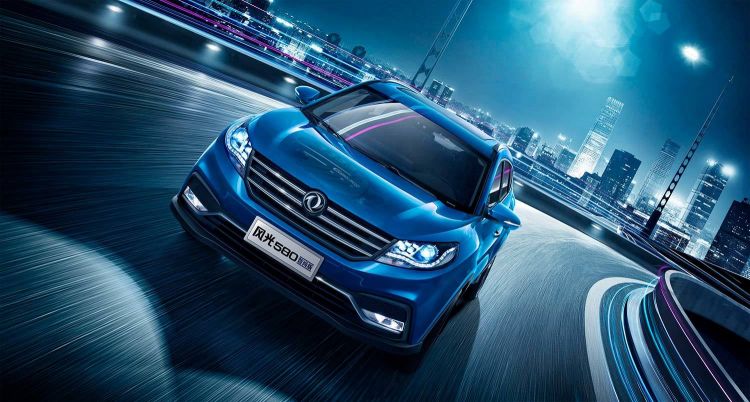
    When we think of buying a 7-seater car, comfortable and suitable for the whole family, large amounts of money inevitably come to mind. But luckily for our pockets there are firms like DFSK, an unknown Chinese manufacturer that offers the DFSK 580, or what amounts to the same thing, a 7-seater SUV but at the price of SEAT Ateca wants to be the definitive purchase. The best of all? That can be ours for 24,995 euros from the hand of the ECO label.

    And surely you are wondering if the Chinese SUV has a trick, but the truth is that no. Thus, DFSK, which has been operating in Spain for many years, wants to break into the SUV segment in style by offering a 7-seater car that is far from its main rivals, such as the Kia Sorento, the SEAT Tarraco and the Hyundai Santa Fe, models that imply an extra outlay of almost 10,000 euros and even more.

    This is the DFSK 580, a 7-seater SUV that can be ours for less than 25,000 euros

    Although it is true that aesthetically it can tell us rather little, the charm of the DFSK 580 resides in its value for money. And it is that in addition to being offered in a 7-seater configuration from the hand of a gigantic trunk, the Chinese SUV sports the DGT ECO label on the windshield, a hallmark that requires us to pay considerably more in many other brands.

    This is achieved through bi-fuel mechanics, or what is the same, the combination of a 1.5-liter four-cylinder engine supercharged by turbo producing 146 hp and 210 Nm of torque with a LPG tank. To this we must add an automatic CVT-type gearbox, a reliable and low-maintenance transmission but that does not shine for its behavior, making it clear from 0 to 100 in 11.4 seconds and a top speed of 190 km/h.

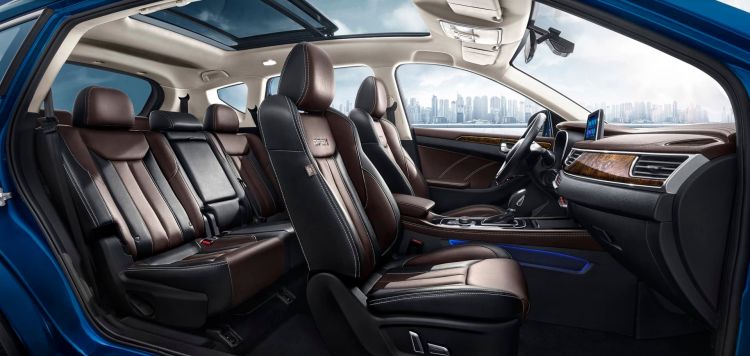
    What it does stand out in is generous standard equipment already in the Luxury finish, which is established as the option of access. This is made up of elements such as an 11-inch touch screen with connection to Apple CarPlay and Android Auto, LED lights, sunroof, keyless access and start, rear parking camera, GPS, 7 seats and speed control, among others.

    The DFSK 580 in What car do I buy?

    However, Is there really any plausible alternative to DFSK 580? To find out we can go to What car do I buy?the Diariomotor comparator where we will find the largest offer not only of new cars, but also secondhand.

    This is how we discovered that an attractive option for our protagonist could be the Dacia Jogger, a model that can end up in our garage. for 21,800 euros in a 7-seater configuration. Another option could be the Renault Grand Scenic, a model that implies a higher outlay, specifically of 29,145 euros. And if we already want to go to more well-known brands like SEAT and get hold of the Tarraco, we must know that the price to pay amounts to 33,660 euros.

  • Mitsubishi ASX 2023, all prices and offers

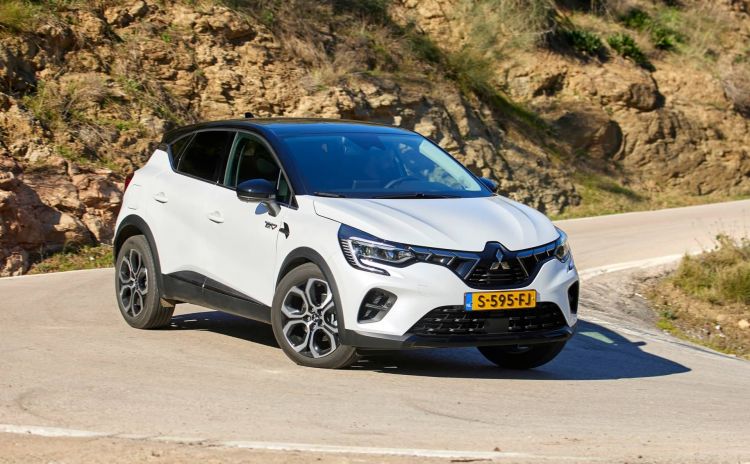
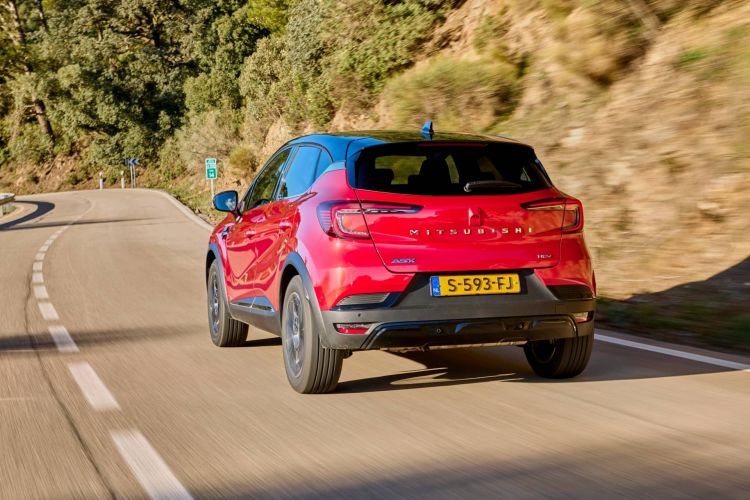
    The urban SUV segment debuts a new member, also being one of the most anticipated releases of 2023 for its interesting quality/price ratio and the possibility of buying it in up to 3 different hybrid versions. Its about 2023 Mitsubishi ASXa crossover whose purchase price starts below 20,000 euros and that it wants to be the best alternative to hybrid cars like the Renault Captur, the Toyota Yaris Cross or the Hyundai Kona.

    The new Mitsubishi ASX 2023 is a model that is already available in the Spanish market and that in fact will begin with the first deliveries next March. Being a model developed from the Renault Captur, it not only inherits its large range of hybrid engines or equipment, but it will also be manufactured at the same plant, the Valladolid (Spain) factory. This allows the ASX to adjust its prices and offer quite short delivery times for our market.

    Within the range of engines of the new Mitsubishi ASX we find a 90 CV 1.0 Turbo gasoline engine, Two 1.33 Turbo microhybrid gasoline engines with 130 or 160 HPa 1.6 hybrid engine with 145 hp and a 1.6 plug-in hybrid with 160 hp. Therefore, we can purchase the new ASX with a C label for its more affordable engine, but also with an ECO label for the microhybrid and hybrid versions, as well as a ZERO emissions label in the case of the ASX PHEV since it offers up to 49 kilometers of electric autonomy.

    Conceived as a compact SUV, but with a family vocation, at 4.23 meters long we find a cabin suitable for 5 passengers and a trunk capable of offering between 422 and 536 liters in the gasoline and micro-hybrid versions, between 305 and 419 in the hybrid version and between 261 and 375 liters in the plug-in hybrid variant. The fact of having two measurements for your trunk is given by the use of a sliding rear benchan extremely practical solution – and unusual in its class – that allows the position of the rear seat to be modified in a travel of 16 cm.

    2023 Mitsubishi ASX Prices

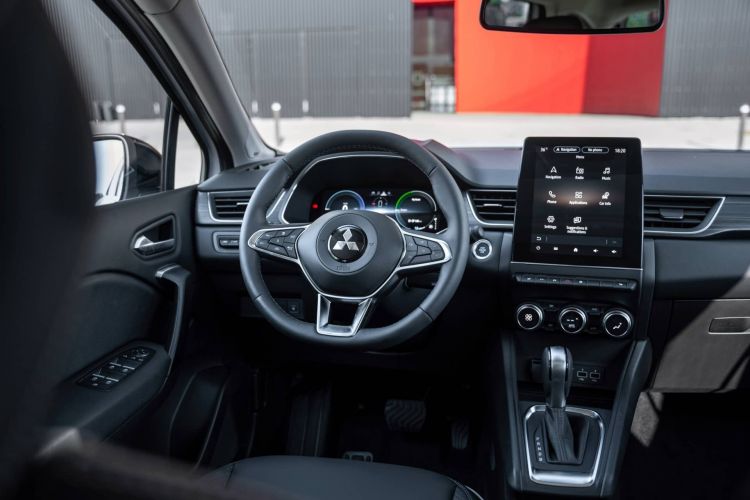
    Once we took a look at the newly announced range, we discovered that the price of the Mitsubishi ASX 2023 is 19,490 euros in its most affordable versionthus including launch promotion and financing discount for the 90 CV gasoline engine and the simplest finish available, the Spirit finish (RRP of 23,490 euros). However, we must bear in mind that in this finish we already find a 7″ multimedia system, compatibility with Apple CarPlay and Android Auto, LED lighting, air conditioning, parking sensors, rear view camera, active cruise control with assistant lane, signal recognition, etc. Another of the positive aspects of the ASX we have it in its 5 year or 100,000 km warranty.

    At Quécochemecompro.com we have all the offers and promotions for the Mitsubishi ASX

    If we want to make the leap to an electrified engine or a higher level of equipment, we discover that the ASX with a 140 hp microhybrid engine is priced from 21,990 euros, the 145 CV hybrid engine amounts to 27,990 euros, reaching the 160 CV plug-in hybrid engine with a price from 29,390 euros (including aid from the MOVES plan). All these prices include current promotions, in addition to the financing discount

  • किआ रियो यूरोप में बंद हो जाएगी: रिपोर्ट

    [ad_1]

    यूरोपीय बी-सेगमेंट में इसके कुछ सबसे पुराने नेमप्लेट गायब हैं। फोर्ड फिएस्टा मर चुकी है और वोक्सवैगन पोलो भी अनिश्चित भविष्य का सामना कर रही है क्योंकि आगामी यूरो 7 उत्सर्जन मानक वाहन निर्माताओं के लिए छोटी कारों को विकसित करना बहुत महंगा बना देंगे। यह पता चला है कि किआ रियो को भी एक नई रिपोर्ट के अनुसार बंद कर दिया जाएगा कार.

    प्रकाशन का कहना है कि दक्षिण कोरियाई सुपरमिनी इस साल के अंत में यूरोपीय और यूके के बाजारों से बाहर निकल जाएगी, जो कि किआ स्टोनिक से संबंधित है, जो शोरूम में सीधे प्रतिस्थापन के रूप में काम कर रही है। छोटा मॉडल अभी भी यूके सहित चुनिंदा यूरोपीय देशों में उपलब्ध है, हालांकि आप अपनी खुद की किट निर्दिष्ट नहीं कर सकते क्योंकि किआ केवल डीलर स्टॉक से बेचती है।

    कोरियाई निर्माता ने पिछले साल यूरोप में सिर्फ 32,506 Rios को शिप किया, जो पिछले साल की तुलना में 9 प्रतिशत कम है। क्रॉसओवर के लिए ग्राहकों की मांग में बदलाव ने भी किआ को रियो को बंद करने का निर्णय लेने के लिए मजबूर किया। कंपनी ने एक बयान में कहा, “रियो को विकसित करने के अलावा, किआ ‘छोटी कार’ ए और बी सेगमेंट के लिए पूरी तरह से प्रतिबद्ध है।” कार गवाही में। एक अनुस्मारक के रूप में, कंपनी यूरोप में Picanto भी बेचती है जो एक A-सेगमेंट वाहन है।

    इस बीच, किआ अभी भी संयुक्त राज्य अमेरिका में रियो बेच रही है। रियो सेडान एक कम खर्चीला मॉडल है जिसकी शुरुआती कीमत महज 16,750 डॉलर है, जबकि पांच दरवाजों वाला रियो 17,690 डॉलर से शुरू होता है। रियो के ठीक ऊपर 19,690 डॉलर की शुरुआती कीमत के साथ फोर्ट है।

    जहां तक ​​​​यूरोप के बी-सेगमेंट का संबंध है, ऐसा प्रतीत होता है कि यदि यूरो 7 उत्सर्जन मानक योजना के रूप में प्रभावी हो जाता है, तो यह महाद्वीप पर छोटे दहन इंजन कारों को प्रभावी ढंग से समाप्त कर सकता है। वोक्सवैगन के सीईओ थॉमस ने हाल ही में एक साक्षात्कार में चेतावनी दी थी कि सबकॉम्पैक्ट हैचबैक आज की तुलना में €3,000 से €5,000 अधिक महंगे हो सकते हैं। नतीजतन, फोर्ड ने फिएस्टा को खत्म करने का फैसला किया और केवल उसी प्लेटफॉर्म को साझा करने वाले प्यूमा क्रॉसओवर को रखा।

    [ad_2]

Back to top button