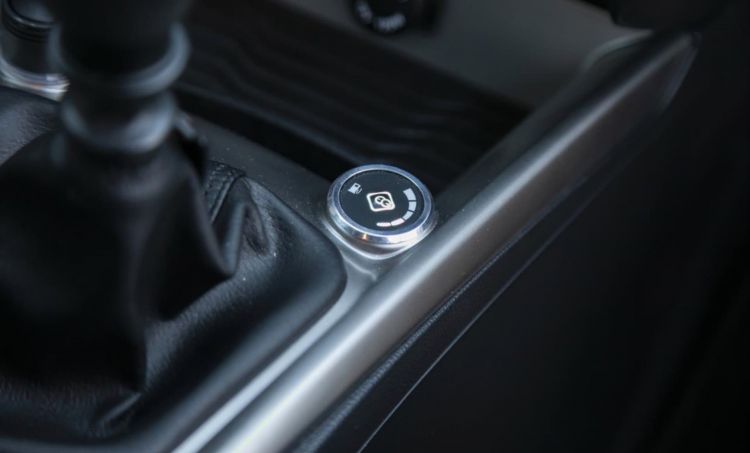
• The most efficient 7-seater SUV is from Mazda, you can buy it diesel and hybrid and it will arrive this 2023

    If you are looking for a Large SUV with 7 seats and you can wait until the end of this year, the next launch of Mazda interests you, and a lot. After getting to know the new Mazda CX-60 as the largest and most familiar SUV of the Japanese brand, now it is time to meet its 7-seater variant referred to as Mazda CX-80. Making use of the same technology, engines and equipment of the CX-60, the new Mazda CX-80 is the answer for all those who need extra space in their car.

    The Mazda CX-60 has rightfully become one of the market benchmarks among large SUVs. Its commitment to a premium vision, but without forgetting that philosophy of the Japanese brand where its own ideas and technologies are used, allows this model to enjoy a differential design, a different way of understanding technology, but above all a range of engines where in addition to a new plug-in hybrid engine, there is also room for large displacement gasoline and diesel engines (3.3 liters and 6 cylinders in line capable of obtaining the ECO label and very low consumption.
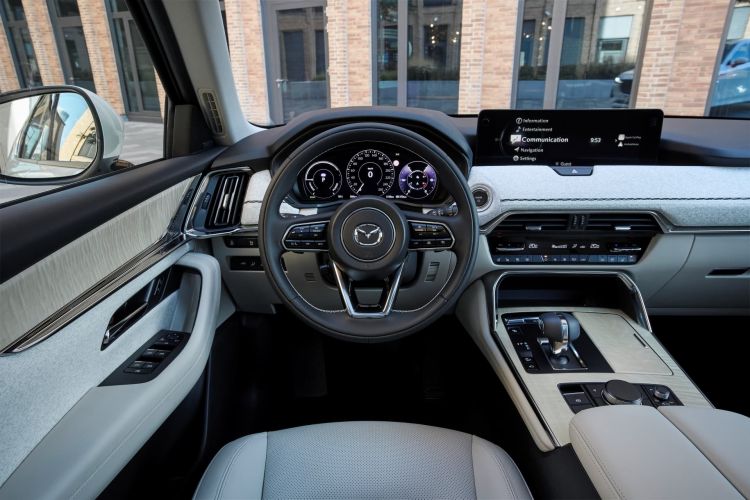
    Mazda’s microhybrid diesel engine is currently one of the most interesting engines on the market due to its low consumption and having the ECO label.

    And now this formula wants to be transferred to a more familiar car concept, extending the wheelbase and length of the CX-60 to bring the Mazda CX-80 to life. This new model will essentially be a variant, but it will gain interior space to enjoy a third row of seats that will allow adding two extra seats, in addition to a more capable trunk in order to have a greater volume of cargo. This redesign of the bodywork does not seem to imply major aesthetic changes on the outside, so the greatest differentiation will be in the 30 cm that the CX-80 is estimated to grow with respect to the CX-60.
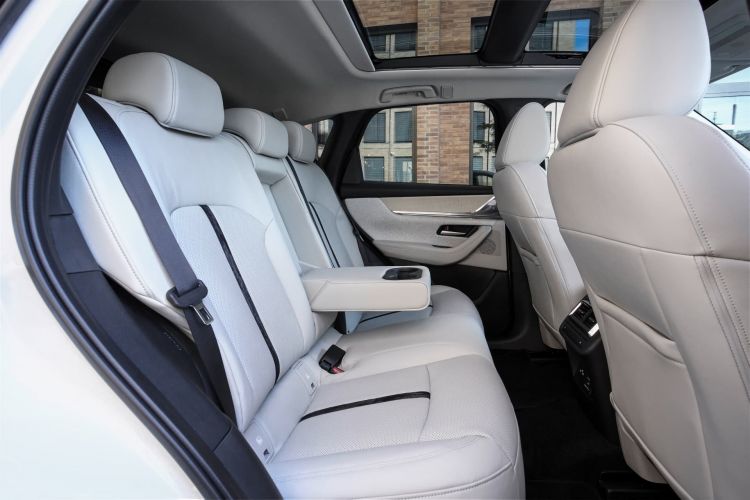
    As confirmed by Mazda itself, the new CX-80 will be presented by the end of this year 2023which makes us think of the start of commercialization in the fourth quarter and the first deliveries to customers as early as 2024. This new Mazda CX-80 will also be a more expensive model than the CX-60a car that currently starts in the €48,719Although since they share the bulk of the elements, the extra cost should not be higher than what we see in some of its rivals, a difference that is around between 3,000 and 5,000 euros with the same engine and equipment.

    Images: Mazda CX-60 Source: AutomotiveNews
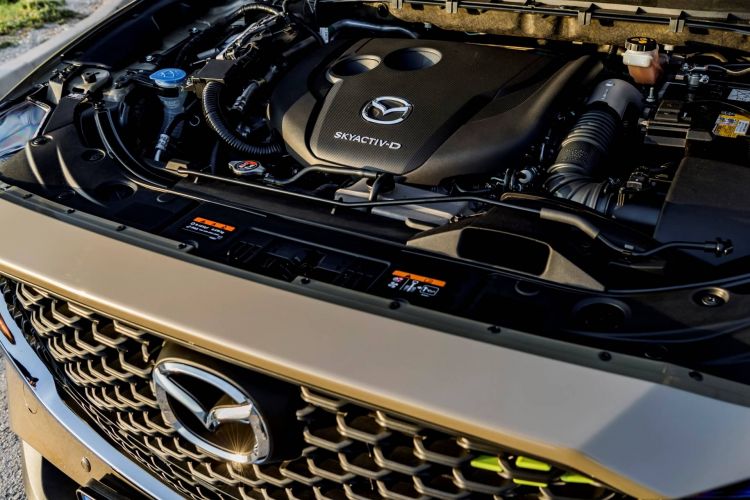
  • This brand only made one recall in 2022… and no, this time it’s not Toyota

    How many studies and reliability indices have you looked for when buying a new or used car? Probably more than you remember. When it comes to obtaining this type of information, numbers continue to be the most aseptic source. On other occasions we have reviewed the models that exceed 400,000 kilometers without problems, but today we are going to focus on the calls to review the brands: there is a manufacturer that, in 2022, only made one.

    Data from the United States National Highway Traffic Safety Administration (NHTSA) reveals that, in 2022, brands carried out more than 300 safety recalls of some of their models. This affected millions of vehicles in the United States, although there was one manufacturer for which this problem was minimal: it is Japanese, but it is not Honda or Toyota. We are talking about Mazda.

    Mazda: a single call in 2022

    As collected in ForbesIn all of 2022, Mazda only had to make one recall. Four more brands were in the same situation: Polestar, Bugatti, Ferrari and Maserati. The range of the first, in our country, is reduced to two models. The production of the remaining three represents a fraction of the vehicles sold by the Japanese manufacturer, which stands as one of the most reliable.

    The call occurred in early 2022 due to a problem detected in some vehicles manufactured between 2018 and 2020: more than 121,000 vehicles were affected. The fault was in the fuel pump, which was failing causing a loss of power and stalling.

    In 2021, Mazda had to fix two issues that affected 24,000 cars. On the one hand, the rear seats of the Mazda CX-9 failed: they could slide during a crash. And on the other, the electric gate of the Mazda CX-30: its software was defective. For now, there have been no calls for the 2022 and 2023 models.

    The brands with the most calls

    On the other side of the scale, we find the brands that have had to make the most recalls during 2022. Ford leads the ranking with 67 and 8,636,265 affected vehicles: They are followed, in second and third place, by Volkswagen Group (45 and 1,040,885 units) and Fiat-Chrysler-Stellantis (38 withdrawals and 3,041,431 units). Behind, the following manufacturers appear:

    • Mercedes: 33 calls and 969,993 units affected
    • General Motors: 32 and 3,371,302
    • Kia: 24 and 1,458,962
    • Hyundai: 22 and 1,452,101
    • Tesla: 20 and 3,769,581
    • BMW: 19 and 1,000,455
    • nissan: 15 and 1,568,385

    Recalls in the US

    Recalls occur, according to NHTSA, when owners, regulators, or manufacturers determine that a defective component presents a risk to vehicle safety or does not meet standards established.

    Among the components that generate the most calls are seat belts, brakes, electrical wiring, tires, door handles, fuel pump, and ignition switches. Of course, not all calls are related to potentially dangerous problems. Sometimes they are repairs as minor as changing a few pages of the vehicle’s manual because information was missing or had an error.

    For some, the recalls have a positive point because the brands are constantly aware of the safety of their models. For drivers, however, they can become a nuisance. because it means that you must make an appointment with the dealer’s workshop and, for a period of time, not have a car

    In addition, when the failure affects hundreds of thousands of models, this problem can be exacerbated due to a shortage of parts or a slowdown in repair due to the large number of cars. Not surprisingly, according to Carfax, There are more than fifty million vehicles on the roads of the United States with one or more known problems that have not yet been fixed.

  • The new particulate filter for electric cars: a brilliant idea or a new problem for the driver?

    Fortunately, particulate filters arrived to drastically reduce one of the most harmful residues for health that are generated in internal combustion engines, microscopic particles, which are released into the air we breathe and, as the Organization warns World Health Organization, can cause serious cardiorespiratory problems. But why would it be interesting to install a particulate filter in an electric car?

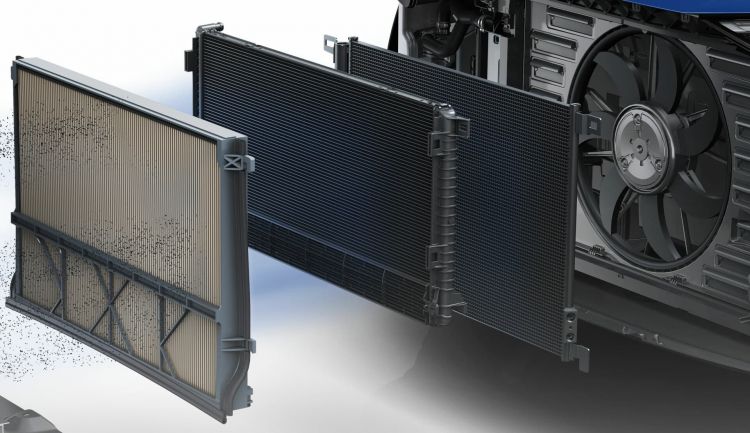
    Audi has worked with the supplier MANN+HUMMEL to develop a kind of particulate filter that, obviously, is not designed to retain the particles derived from its mechanics, since electric motors do not generate particles, but to filter the particles present on the road and the air around the car.

    According to the data with which Audi defends its invention, 85% of the particles generated by automobiles are produced in the brake system, due to tire wear, or road abrasion. Or in other words, electric cars also generate particles.

    Electric cars also generate particles, due to the wear of brakes, tires, or road abrasion, which is why Audi has devised a system that would absorb and compensate for the particles generated.

    The particulate filter for electric cars from Audi

    Audi tells us that this project, which will last for 4 years, began in 2020. The idea behind the Audi particulate filter for electric cars is take advantage of the existing airflow in your vehicles – also in electric vehicles – in the front radiator, so that the passive ventilation on the radiator – which is also necessary in electric vehicles – and the active ventilation of the electric fan, work like a kind of vacuum cleaner and retain the particles in a specific filter , without altering the necessary airflow in the car’s systems.

    The principle that has guided this idea from Audi is that, filtering the particles generated by other cars, electric cars would also be able to compensate for the particles they generate throughout their use. According to tests carried out by Audi, using an Audi e-Tron that has traveled more than 50,000 kilometres, in a large city with a high level of pollution, such as Stuttgart, the filter would be more than sufficient to absorb a volume equivalent to that of all the particles generated by the e-Tron. In more polluted cities, a vehicle could be capable of absorbing up to three times the volume of particles generated.

    Particulate filters, beyond their contribution to making diesel cleaner, first, and gasoline engines for a few years, have been responsible with some frequency for breakdowns, in many cases annoying, and expensive for drivers. According to Audi, this filter is capable of withstanding between maintenance cycles, so that we would only have to replace it at each periodic review.

  • Buying cheap electrics is possible, MG and Tesla start the price war

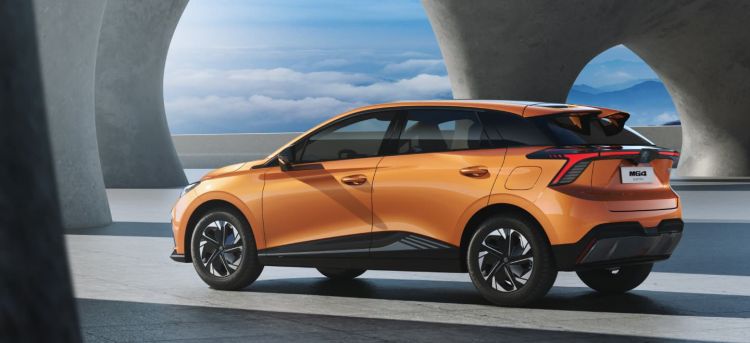
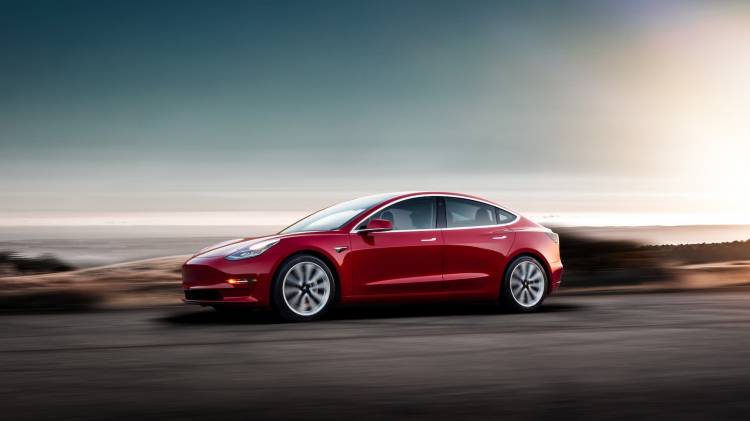
    The price war in the electric car market has begun And that’s great news for buyers. From MG first with the MG 4, and now from Tesla with its notable price cut for the Tesla Model 3, we have seen a price drop in the purchase of electric cars that has put the rest of the market in check. Thus, this situation forces the rest of the brands to make a move if they do not want their electric vehicles to be left out of the market.

    The high price of accessing an electric car is one of the great obstacles in this transition towards more sustainable mobility, however in recent weeks we have seen how the market has begun to shake with the advent of cars like the MG 4, a 100% electric compact of Chinese origin whose main objective is to stand up to models like the Volkswagen ID.3, with a much lower price as its main claim.

    MG 4 Y Tesla Model 3 They have become the benchmark electric cars thanks to prices well below those of their rivals

    And although they say that comparisons are odious, nothing better than taking a look at the prices and features of this scenario to see that indeed MG is willing to break the market. The cheapest MG 4 that we can buy in Spain is part of the €20,480 (Standard finish, with 170 CV and up to 350 km of autonomy), however if we take a look at its direct competition we find that the most affordable Volkswagen ID.3 starts at 38,010 euros (Entry finish, with 204 and up to 426 km of autonomy), the CUPRA Born starts at 34,590 euros (basic trim, with 204 CV and up to 425 km of autonomy) and the Renault Megane E-Tech starts at 28,136 euros (EV40 Standard Charge finish, with 130 CV and up to 302 km of autonomy). All these prices already include aid from the MOVES III Plan.

    And if we are willing, and our budget allows it, to go up a step in performance, size and price, we can opt for the purchase of a Tesla Model 3 which is now part of the €38,970 (standard finish, with 283 CV and up to 491 km of autonomy) after the recent price reduction announced by the brand. By way of comparison, its most direct competition is clearly more expensive, with a Polestar 2 whose most affordable version currently starts at 44,690 euros (Long Range Single Motor finish, with 272 CV and up to 518 km of autonomy) and a BMW i4. whose cheapest version starts at 57,100 euros (eDrive35 version, with 286 CV and up to 482 km of autonomy). These prices include the reduction of up to 7,000 euros available through the MOVES Plan, with the exception of the BMW i4, which is left out for exceeding the limit of 45,000 euros before taxes that access to these aids requires.

    Given this panorama, it is clear that the bets of MG and Tesla, each one in its segment, seek to make clear differences with their competition from a significantly lower price. In both models we are talking about offers that we do not know how long they can be maintained, although in both cases We are talking about two brands that have been able to achieve much lower manufacturing costs for their electric cars than those of their competition, adding in the case of Tesla sales volumes that allow the margin of each unit produced to be adjusted to the maximum. And this brings us to the million dollar question: Will the competition be able – or willing – to respond to this price war in the electric car market?

  • Hybrid SUV at a diesel price, as a smart purchase: October offers

    In a market, that of small compact size cars, in which there are fewer and fewer diesel alternatives, the hybrid stands as a more interesting option than ever. Especially if what we are looking for is a car with acceptable consumption and costs per kilometer, with the advantage of the ECO label and the comfort offered by a full hybrid system.

    If what we are looking for is a Compact SUV, with just over 4 meters in length, we will find that in the Volkswagen Group diesel has been paid in favor of gasoline and bifuel (in models such as SEAT Arona, Volkswagen T-Cross and Skoda Kamiq). Stellantis does preserve the diesel in some models (Peugeot 2008, Citroën C3 Aircross and Jeep Renegade).

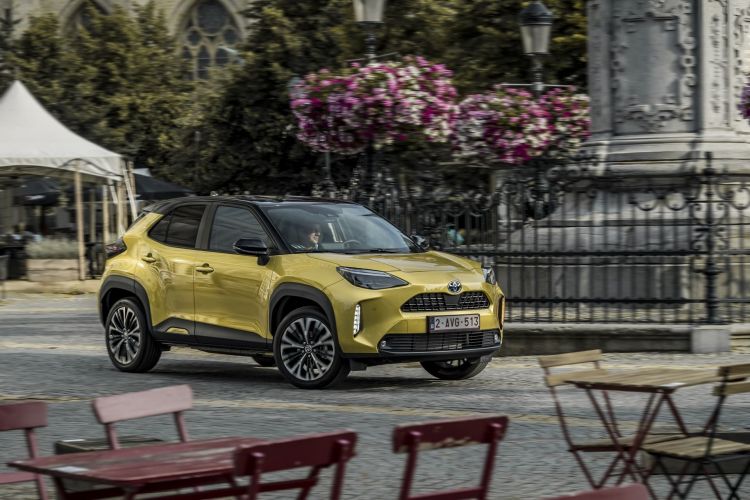
    And as an alternative, we look at the hybrid options offered by the market, looking at the quintessential hybrid brand, Toyota, and its Toyota Yaris Cross. But we will also look at other alternatives no less interesting, and even with more affordable prices than Toyota.

    Hybrid SUV at the price of diesel, as a smart purchase

    €24,100 is the sale price of the Toyota Yaris Cross, a compact SUV, with a very urban approach, with the discounts that are included when financing the purchase. Toyota also offers some discounts to buy it in cash, starting in this case from €25,350.

    The Toyota Yaris Cross is equipped in all cases with a full hybrid systemwith 116 HP of power, and a very complete standard equipment from the cheapest, which already includes LED headlights, keyless entry and start, entertainment system with 8″ touch screen (compatible with Apple CarPlay and Android Auto) , remote connectivity services, automatic climate control, rear view camera and 17″ alloy wheels.

    As we said, Toyota is not the most affordable option if we are looking for a full hybrid of the most compact SUV segment. Renault also has an even cheaper alternative. The hybrid Renault Captur E-Tech also has a full hybrid system with 145 HP of powerbut part with a sale price of € 23,419 for the hybrid Renault Captur more affordable, financing, and €25,419 paying in cash.

    The most affordable hybrid Renault Captur is equipped with the evolution access line, which has a 7″ touch screen, or rear parking aid, but it is somewhat short in equipment or even in exterior design, having 17″ steel wheels with trims. If we want a more attractive design, we have to configure the optional LOOK package, which for €850 includes 17″ alloy wheels, darkened rear windows, automatic change of dipped and high beam lights, and LED headlights and taillights.

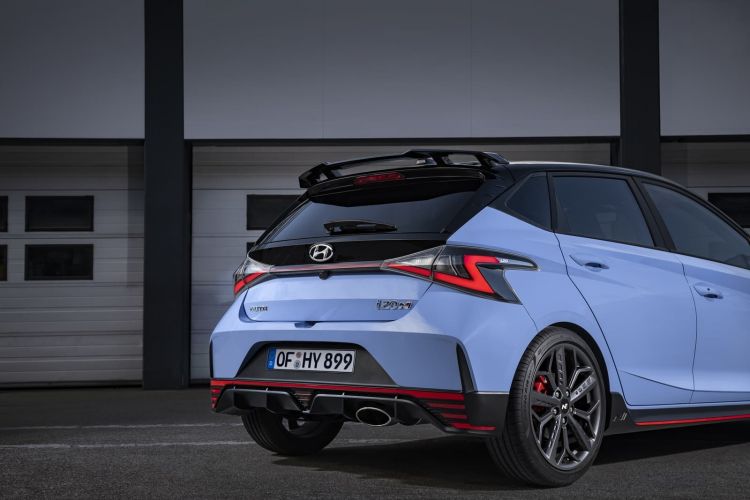
  • Hyundai continues to believe in urban sports: a new Hyundai i20 N will arrive, although it will be decaffeinated

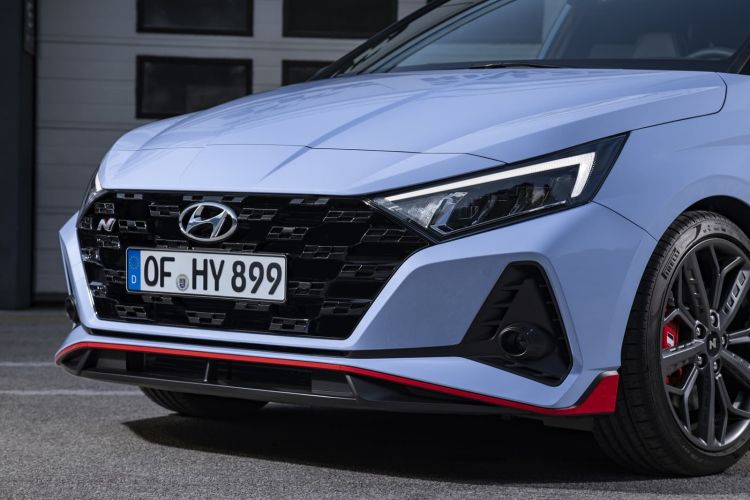
    The same year in which we will say goodbye to the Renault Mégane RS, we can say hello to the ‘new’ Hyundai i20 N. The presence of the quotes is relevant because Hyundai has prepared a facelift for its urban sports car, not a new generation. And in these updates we know that there are news, but will there be in the mechanical section?

    Confirmation came in hyundai n festival held last December at The Bend Motorsport Park, a circuit located on the outskirts of Adelaide (Australia). It was there that Albert Biermann (former head of the N division and current Hyundai technical advisor) was asked if the brand is working on a new Hyundai i20 N. And his answer was a breath of fresh air for a segment as questioned as that of the urban sports

    There is indeed good news. Hyundai is working on a refreshed version of the Hyundai i20 N: “Yes, there will be a face lift. It will come next summer so we still have to wait a bit.” His words mean that we should see the outcome of this update sometime between June and August of this year.

    A watered down update

    It will, however, be a decaffeinated version because the Hyundai i20 N is unlikely to receive any significant mechanical upgrades. The ‘facelift’ will respect its 1.6-liter four-cylinder turbo engine, which delivers (through a six-speed manual gearbox) a power of 204 HP and has a maximum torque of 275 Nm. There would be no changes to other key mechanical components either: Hyundai has already ruled out the option of a dual-clutch automatic transmission, due to the cost of developing it and its weight. We may see some retouching in the set-up.

    The theories have been supported by Albert Biermann: “From a technical point of view, there is no need to be afraid. The new model will continue to be the same crazy as now. Everything indicates, therefore, that the updates will focus on the redesign of certain parts of the front, the rear and maybe some new features for the interior.

    And the second generation of the Hyundai i20 N?

    The second generation of the Hyundai i20 N is still in the air because Hyundai has not yet made any decision on it. The brand is aware that the urban segment and, above all, that of urban sports cars is becoming smaller due to gradual disappearances. The South Korean manufacturer does not believe that it will die, they assume that a successor will arrive… but, for now, they have “difficulties” to guarantee a new model.

    For Hyundai “we can never have enough Hyundai i20 N”. For now, we will have to wait until next summer when they have anticipated the arrival of the new urban sports car… if the limitations of semiconductors, which have affected them up to now, allow it.

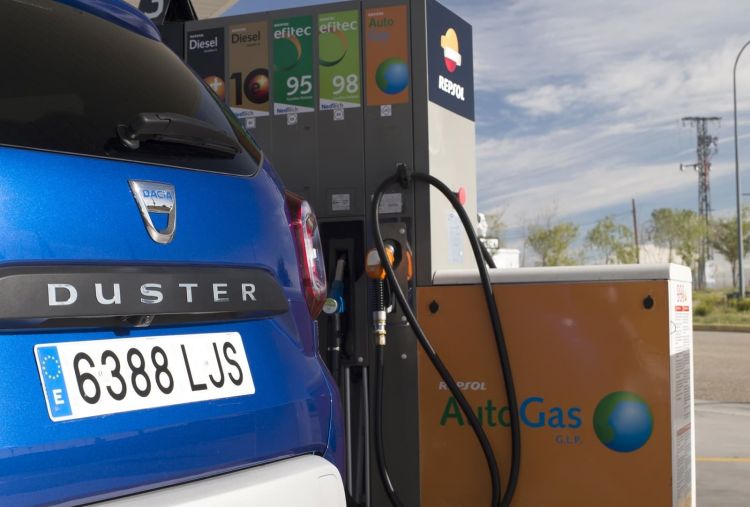
  • Is it profitable to convert your car to LPG to get the Eco label and circulate freely throughout all LEZs?

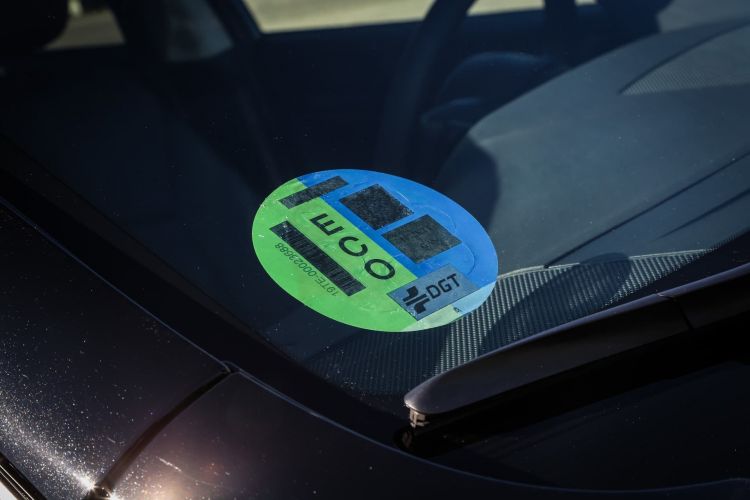
    All Spanish towns with more than 50,000 inhabitants must have their Low Emission Zone, areas where access and circulation of cars will be limited: it will depend on each town hall, but the most polluting, those vehicles without an environmental label, are in the eye of the hurricane For them there is a formula that would help them avoid all these restrictions: Convert to LPG to get the Eco badge, but does it pay off?

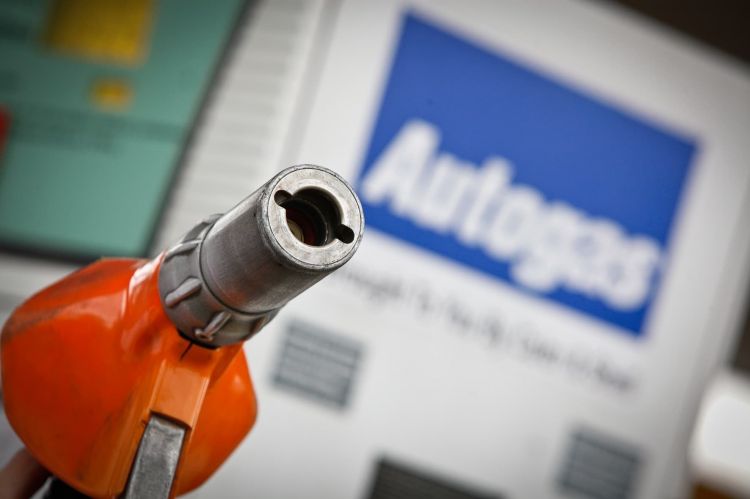
    Liquefied petroleum gas is one of the most widely used alternative fuels in the motor world, and it is mainly due to the economic advantage it offers compared to gasoline and diesel: It usually costs half also in the current inflationary scenario. Another point in its favor is the lower level of emissions and its availability: refueling is possible at more than 700 gas stations.

    When is it paid off?

    Despite all these ‘pros’, the question is inevitable: is it worth the investment that must be carried out to transform a car and make it LPG? The conversion is profitable for those drivers who do many kilometers a year with a model whose engine has a high consumption: in this case, the fuel savings will be 40% (approximately) and The operation will be amortized between 30,000 and 50,000 kilometers.

    there is a calculator which helps to know how profitable this conversion is to be able to access the ZBE without limits. To do the accounts, it is necessary to enter the number of kilometers that are done per year, the consumption of our car, the cost of the transformation, that of LPG and that of gasoline. We have put the following data: 20,000 kilometers per year, 7 l/100 km, 1,500 euros, €1.006/liter and €1.62/l (average price of gasoline, according to the latest European Union Oil Bulletin). The conversion would be amortized in 32 months, that is, in just over two and a half years.

    The conversion

    Now that we have the accounts done, it is time to find out what the process is like, its requirements, its price… To convert your car, in the workshop they will have to install a tank for gas (which is usually located in the trunk area), a circuit (with a specific injector, valves, filters and sensors), an electronic control unit and a control, in the driving position, to choose what fuel we will use at all times.

    This process has to be approved in a laboratory certified by the Ministry of Industry, Tourism and Commerce which will issue the corresponding report. Together with him, the one who gives you the workshop that has made the conversion and the one who legitimizes the tightness of the tank, you will have to go to the ITV so that everything is reflected on the technical inspection card. The last step is to modify the technical data of the vehicle in the Traffic registry: a process for which you will have to make an appointment and pay a fee of 8.50 euros. Only then can you request your Eco label.

    Transformation is not for all engines

    Switching to LPG is not an option for all engines. if your car is diesel, It is not the most recommended option because, although it is technically possible, the transformation is more expensive and the savings that you will achieve are not worth it. However, if you want to carry out the process, you must take into account that You can only go ahead if it meets the Euro 6 standard.

    If your vehicle is gasoline, the conversion is easier, although it has its conditions: if the engine has more than 460 HP, this option is completely ruled out. Only models that comply with the the Euro 3 standard, that is, those enrolled from 2001: yes, They will not be entitled to the Eco label. Only Euro 4, Euro 5 and Euro 6 gasoline cars will be able to access it.

    How much?

    We finish with another of the key data to consider a conversion to LPG: how much does it cost? As we said before, It depends on the type of engine and also on the fuel.

    For diesel, this operation has a high price because the process is more complicated: we are talking about figures that range between 1,900 and 2,500 euros. If the engine of your car is gasoline, the cost will depend on its characteristics: for a four-cylinder engine, the transformation can cost about 1,500 euro, while for a larger one (six or eight cylinders) it is easy to overcome the barrier of 2,000 euros.

Back to top button